
Politics
NEW: NPR Editor-In-Chief Rage Quits After Congress Pulls Funding
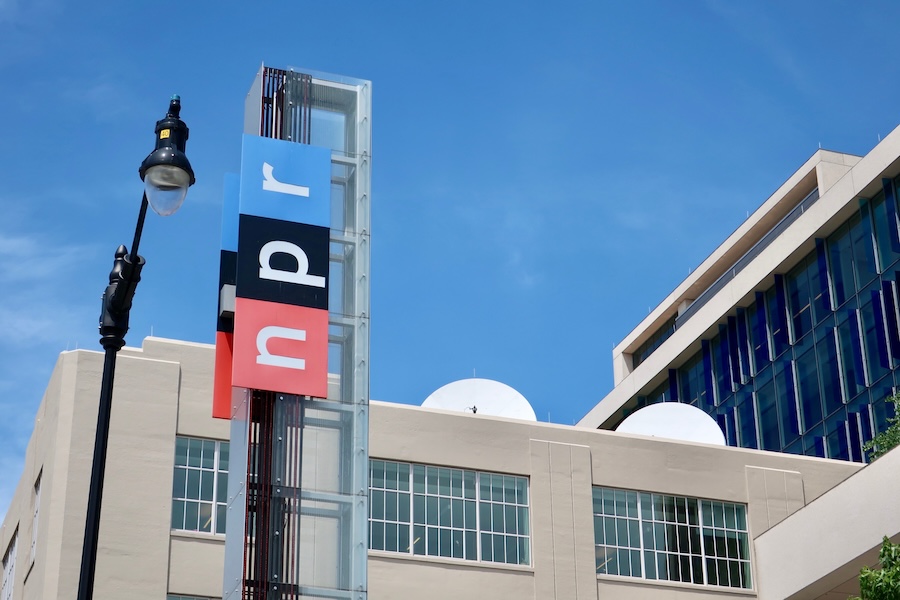
NPR leadership is looking for the exit following Congress’s decision to cut federal subsidies that have buttressed the station’s bottom line for years.
Edith Chapin, NPR’s editor-in-chief for decades, announced she will be stepping down following a rescissions package that slashed $1.1 billion from federal government spending dedicated to the Corporation for Public Broadcasting, the entity which has provided financing to NPR, PBS, and other publicly-funded stations for decades.
The cuts are expected to devastate NPR despite longtime claims from the outlet that it receives less than 1% of its funding from taxpayers. Chapin and network executives now say they anticipate the shuttering of dozens or hundreds of location affiliates across the country.
Katherine Maher, NPR’s chief executive, accepted Chapin’s resignation shortly before it became clear that Congress was on the cusp of sending the $9 billion rescissions bill to President Donald Trump’s desk for his signature. Chapin told her outlet that she will stay on for an interim period to help with the transition.
Chapin has been with NPR since 2012 and became its editor-in-chief in 2023. Before then, she spent 25 years at CNN.
In a recent interview with NPR’s media reporter, David Folkenflik, Chapin revealed she had tendered her resignation about two weeks ago.
“I have had two big executive jobs for two years and I want to take a break. I want to make sure my performance is always top-notch for the company,” she said.
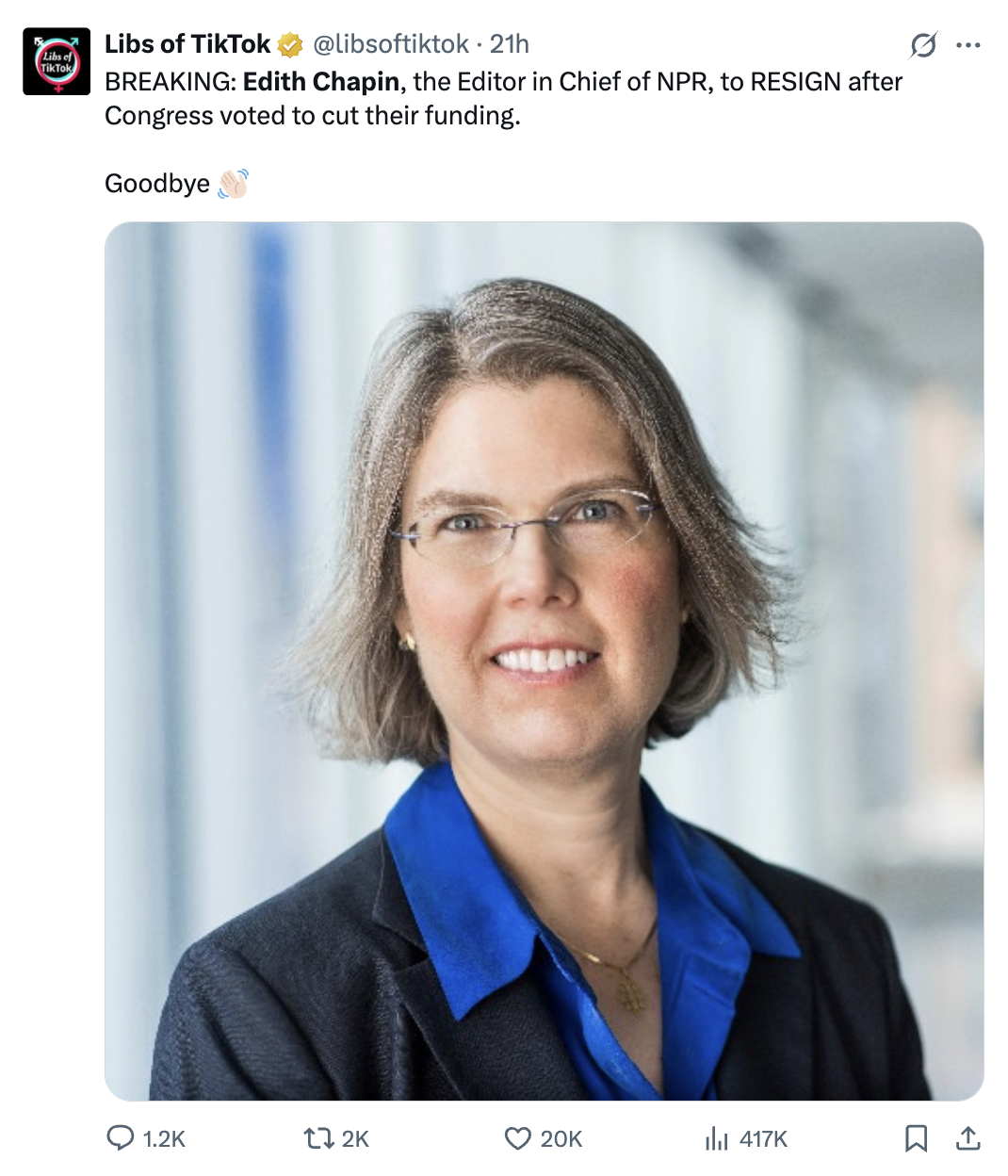
Her departure will undoubtedly be seen as a sign of weakness at NPR, which has been under siege since the start of the second Trump administration as the president sought to make good on his promise to defund the left-leaning network.
Back in March, Maher testified before lawmakers about alleged bias within her reporters’ ranks. She apologized for failing to cover the Hunter Biden laptop investigation and repeating the U.S. intelligence community’s false assertion that it was a “product of Russian disinformation.”
“I do want to say that NPR acknowledges we were mistaken in failing to cover the Hunter Biden laptop story more aggressively or sooner,” Maher told a U.S. House committee.
“We recognize our reporting at the time, but we recognize that the new CIA evidence is worthy of coverage and have covered it,” she added.
Asked by a Republican lawmaker about a column by Uri Berliner, a former editor who alleged 99% of NPR staffers are registered Democrats, Maher fired back, “We don’t track voter registration.”
President Trump has described NPR leadership as “radical left monsters.” In March, he signed an executive order calling for an end to taxpayer subsidization of the network.
“Unlike in 1967, when the [Corporation for Public Broadcasting] was established, today the media landscape is filled with abundant, diverse and innovative news options,” Trump’s order said, the Guardian reported. “Government funding of news media in this environment is not only outdated and unnecessary but corrosive to the appearance of journalistic independence.”
Paula Kerger, PBS’s president and chief executive officer, blasted Congress’s decision to cut its budget as a vote that “goes against the will of the American people.”
“These cuts will significantly impact all of our stations but will be especially devastating to smaller stations and those serving large rural areas,” Kerger said. “Many of our stations which provide access to free unique local programming and emergency alerts will now be forced to make hard decisions in the weeks and months ahead.”
