
Sponsored
The Wonky Policy Fight That Has Silicon Valley Tech Companies Defending a Biden Admin Rule
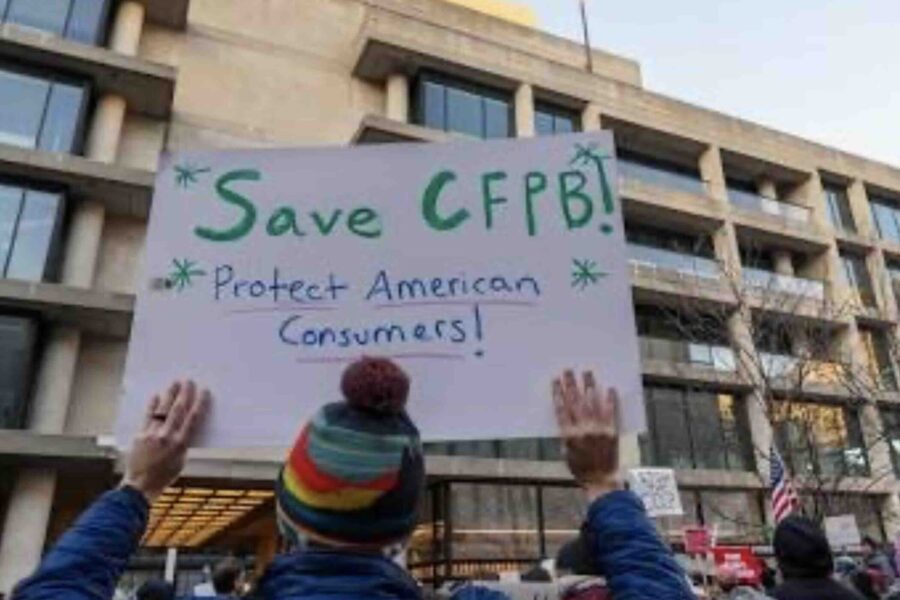
Deep-pocketed tech companies are coming to the defense of an obscure banking rule, introduced under the Biden administration, that some industry leaders claim is an exception to the rule when it comes to opposing government overreach.
At the heart of the debate is the Consumer Financial Protection Bureau’s Section 1033 open banking rule, a European-inspired regulation pushed by Biden-appointed CFPB Director and Elizabeth Warren protégé, Rohit Chopra. The rule requires America’s largest banks to share consumer financial data with third-party fintech companies, free of charge, under the banner of promoting competition and consumer choice.
Silicon Valley executives are hailing the move as a rare bright spot from Chopra’s tenure. One that could offer a critical lifeline to fintech innovation at a time when the Trump administration has moved to rein in the CFPB, the agency Warren created over a decade ago. Despite the regulation’s populist framing, critics note it forces banks to give up valuable data, raising new questions about fairness and long-term consumer impact.
The push puts them at loggerheads with Russ Vought, who leads the Office of Management and Budget and serves as Acting Director of the CFPB. He has previously voiced doubts about Section 1033, arguing in legal filings that it undermines consumer privacy protections, imposes significant costs on banks, and offers an unfair advantage to data brokers who profit by shuttling information between banks and fintech companies.
That hasn’t stopped multi-billion-dollar companies from lobbying for Vought to change course. Leading the charge are Yodlee and Plaid, some of the biggest names in financial tech. They service many of the high-tech tablets covering the counters of coffee and retail shops across the U.S.
Conservatives like Vought have crossed swords with these companies before. In 2021, a similar company, Stripe, infamously cut off President Trump’s campaign from its platform after the Jan. 6, 2021, riots at the Capitol. PayPal, the behemoth payment platform co-founded by Peter Thiel, also nixed Gays for Groomers, raising concerns on the right about political bias.
The true crux of the debate may lie beneath the surface: Industry insiders say fintech companies are motivated to maintain a business model that receives valuable consumer data for free.
“The fintechs are calling this a ‘backdoor tax on consumers,’ but what they really mean is their free ride is coming to an end,” one industry insider said. “They’ve been extracting value from bank-built infrastructure without contributing to its costs, and now they’re crying foul because they might have to pay to play.”
To be sure, data aggregators are pushing back on that argument, claiming consumer transactions would be at risk without companies like Plaid and PayPal able to rely on streamlined and standardized data sharing. Instead, Silicon Valley leaders say, workarounds like screen scraping run the risk of exposing vulnerabilities in a brick-and-mortar company’s digital transactions.
Banks, however, have historically delineated ways for fintech companies to obtain similar data outputs without Section 1033. Before the policy’s creation, voluntary partnerships allowed customers to link their apps to their banks, seamlessly transferring funds from a credit card swiped on a fintech cash register to their bank accounts.
Those partnerships also come with considerable oversight, banking advocates say, including routine audits, security upgrades from engineering teams, and constant maintenance.
As one banking official told TPN, “APIs don’t run on vibes. They run on security audits, uptime SLAs, redundancy frameworks, and engineering talent. That stuff costs money.”
Critics of the Biden-era policy chastise it as a classic bait-and-switch progressive handout to fintech companies with no compensation for sharing data with left-leaning Silicon Valley startups.
It now falls on Vought and members of the Trump administration to decide who will control the pipelines that shuttle data between the nation’s financial institutions. One thing is clear: The fight over which side will gain the most leverage with them is far from over.
