
Politics
NEW: Residents Of Red State Capital Ordered To Evacuate Amid Emergency Threat
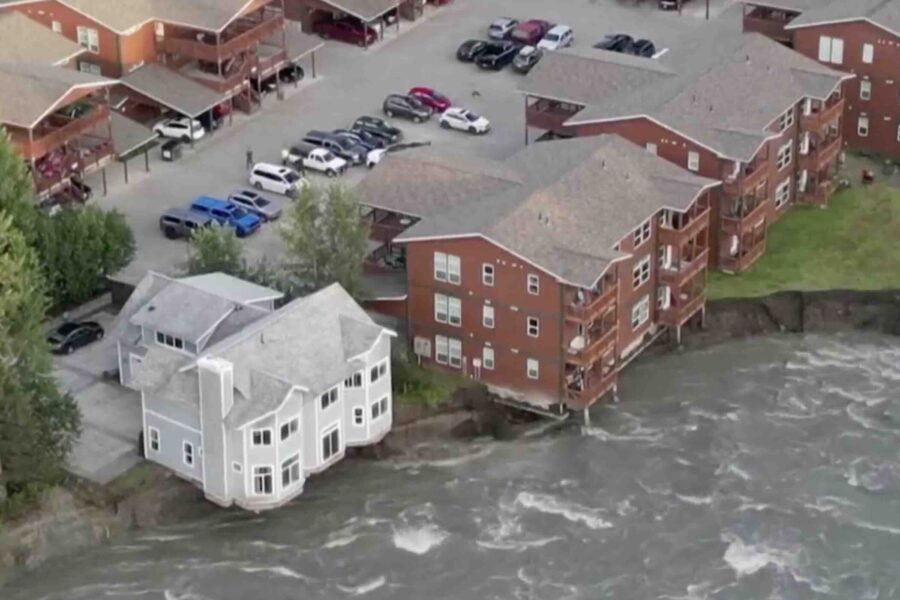
Residents of Alaska’s capital city are being ordered to evacuate their homes and businesses as a historic natural disaster threatens to level all their possessions and properties.
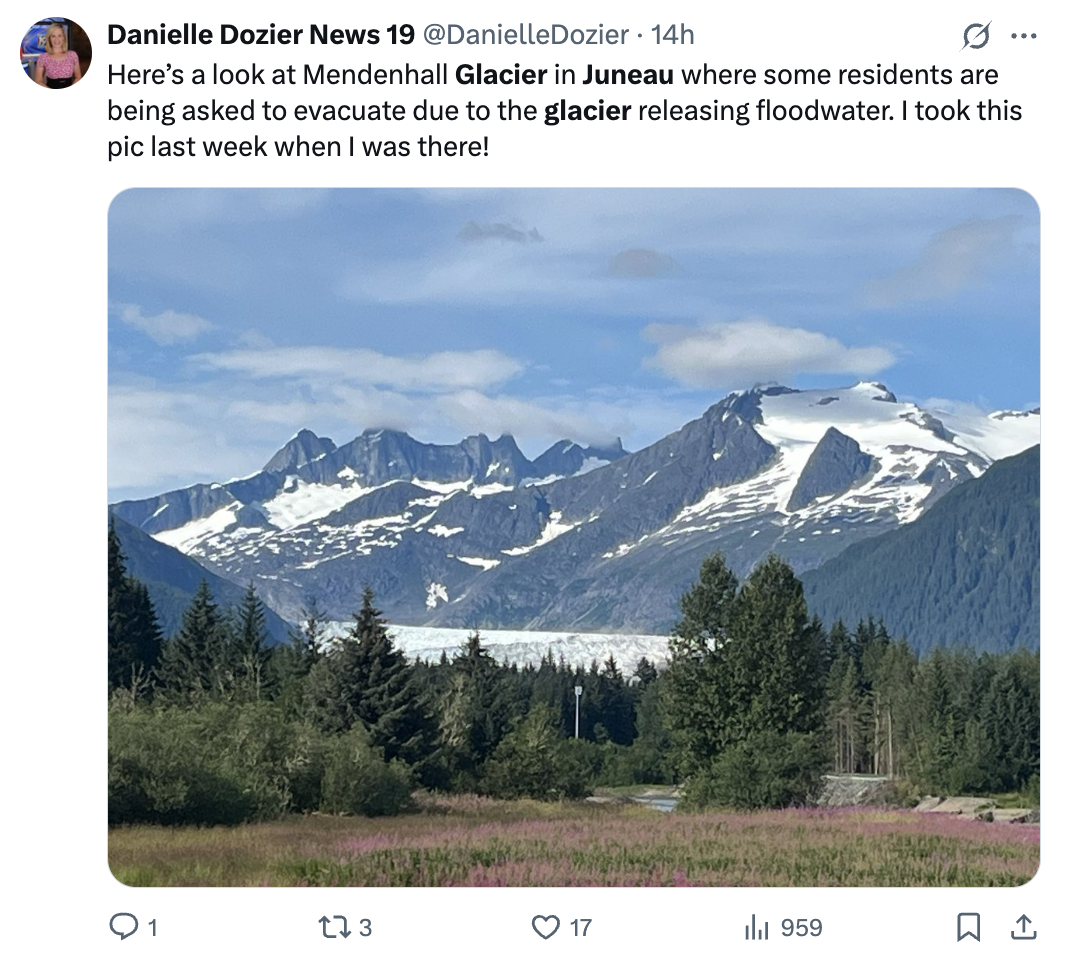
Emergency managers believe Juneau is at risk of being buried by an overflowing glacier, which currently rests in the Mendenhall River but is nearly ready to overflow. Officials are directing anyone within a 17-foot lake inundation zone to leave in the next 24 hours to avoid being swept away by the icy storm.
Already, a glacial outburst has occurred at Suicide Basin, officials said in a Facebook post on Wednesday. Heavy melting this summer has given rise to a Mendenhall Glacier that’s flowing deeper and faster than at any period in modern history.
“The basin is releasing, and flooding is expected along Mendenhall Lake and River late Tuesday through Wednesday,” the post read.
If water levels maintain their current rate of rising, experts except the glacier to crest around 4 p.m. local time, or 8 p.m. ET, on Aug. 13.
That’s put emergency personnel on the clock to protect Juneau’s 32,000 residents, who have just hours to gather everything they hold dear and flee for their lives.
A large glacial outburst from the Mendenhall River may hold as many as 15 billion gallons of water — enough to fill 23,000 Olympic-size swimming pools, officials said.
Nicole Ferrin, a meteorologist with the National Weather Service, told the Daily Mail that the expected crest would be a new record for the glacier.
“This will be a new record, based on all of the information that we have,” she said.
Storm watchers last measured the Mendenhall River around 3:30 a.m. local time, when it was 15 feet high. If that pace continues, the glacier will break a new record height of 16.25 and 16.75 feet between 8 and 12 p.m. on Wednesday.
Low-level backyards and driveways could see flooding as soon as the river’s height hits 11 feet, which it passed well ago. By 15 to 16 feet, parts of the city, including View Drive, Meander Way, and River Road, could be submerged by icy waters, making them impassable.
By 17 feet, entire homes and businesses in the areas of Meadow Lane, Vintage Park Boulevard, and all of View Drive may be submerged and overtopped.
A glacial lake outburst flood (GLOF) is very different from your typical flood. According to the US Geological Survey (USGS), GLOFs form when debris blocks the path of portions of the glacier, creating lakes that stagnate and rise with no outlet.
Over time, their basins fill with icy water until the pressure becomes too great.
“These events are unpredictable and have caused significant loss of life and infrastructure worldwide,” the USGS told the outlet.
“Furthermore, it is unclear how these lake hazards may change as temperatures rise and glaciers continue to melt.”
Residents are being directed to a Red Cross shelter at the Floyd Dryden Gymnasium, and officials say they will not feel confident returning some residents to their homes until the glacier lake’s level has fallen below 12 feet.
