
Politics
WATCH: Liberal Fox News Host Flips, Praises Trump
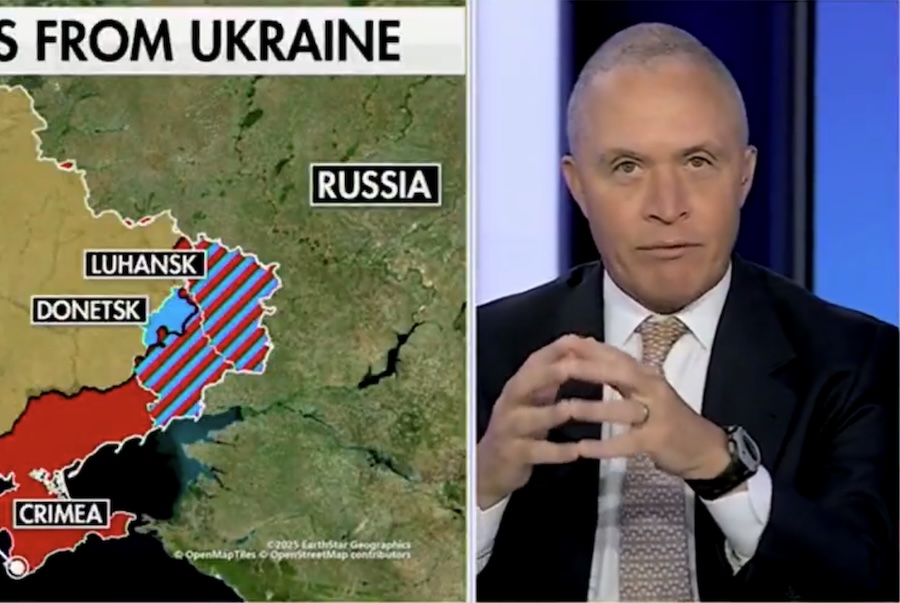
In a rare moment of bipartisan recognition on Fox News’ The Five, former Democratic Rep. Harold Ford Jr. stunned viewers by offering strong praise for President Donald Trump’s efforts to broker peace in the ongoing Russia–Ukraine conflict. Ford, who represented Tennessee in Congress until 2007, said Monday that Trump deserves “tremendous credit” for his recent diplomatic push—and went as far as to suggest the former president could be worthy of a Nobel Peace Prize.
“I give President Trump tremendous credit for where we are,” Ford said during the panel discussion. “And if he is able, again, to engineer this deal, we’ve been saying for weeks on this show, I would be the first. I would hope you would invite me down to the White House when the president is awarded the Nobel Peace Prize, because he would absolutely deserve it.”
“If Trump is able to engineer this deal,” Ford said firmly, “he would absolutely deserve the Nobel Peace Prize.”
The comments came during a discussion about Trump’s high-profile diplomatic meetings in recent weeks. In a notable departure from the tone many Democrats typically strike when speaking about Trump, Ford said he was not concerned about the president’s direct talks with Russian President Vladimir Putin in Alaska. He instead emphasized the stakes of the war, warning that Russia’s push for expanded territorial control could have devastating consequences.
WATCH:
Ford likened the scenario to an unimaginable demand on American soil: “Russia may be seeking up to 30 percent of Ukraine’s territory. That’s the equivalent of someone telling America, ‘We want 30 percent of your country and Miami.’”
The praise comes as Trump intensifies his direct involvement in efforts to end the nearly three-year-old war. Earlier this month, he met face-to-face with Putin in Alaska, a summit that was followed by a high-level gathering at the White House with Ukrainian President Volodymyr Zelenskyy and several European leaders.
According to reports, Trump is now preparing for a trilateral summit involving himself, Putin, and Zelenskyy in an attempt to advance concrete peace negotiations. The move is being closely watched by global leaders, given the limited progress seen under previous administrations.
British Prime Minister Keir Starmer, who participated in recent discussions in Washington, called the meetings “good and constructive,” signaling that Trump’s diplomatic engagement is being taken seriously abroad.
Behind the scenes, U.S. and allied officials are working on a framework that could provide Ukraine with long-term security assurances. Rather than committing American troops on the ground, the United States is weighing options such as increased air support, bolstered air defense systems, and a multinational “coalition of the willing” to deter further Russian aggression.
Trump has already made his expectations clear. At the Alaska summit, he pressed for an immediate ceasefire and warned that if Russia refused to participate in meaningful talks, his administration would impose sweeping sanctions designed to cripple Moscow’s economy.
NATO-aligned strategists are also developing post-war security measures that could stabilize Ukraine if an agreement is reached. These include new defense deployments and international monitoring systems to ensure compliance with any ceasefire deal.
Ford’s remark about the Nobel Peace Prize was not just a passing comment—it highlighted how even longtime Democrats are acknowledging the scope of what Trump is attempting. If Trump manages to deliver a negotiated settlement that stops the bloodshed and protects Ukraine’s sovereignty, Ford suggested, it would be worthy of the world’s most prestigious honor for peacemaking.
That statement stood out given the backdrop of years of partisan clashes over Trump’s foreign policy record. Ford, once floated as a rising star in Democratic politics, has carved out a reputation on Fox News as a centrist voice willing to credit political opponents when he believes it is warranted.
For Trump, the stakes are enormous—not only for international stability but also for his legacy.
