
Politics
NEW: GOP Midterm Hopes Surge As Texas Formally Passes New Congressional Maps
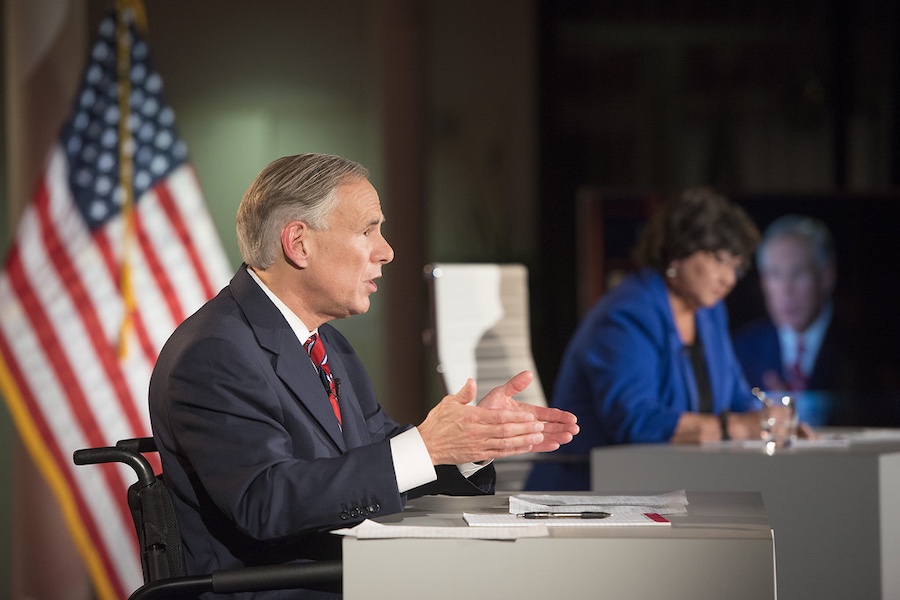
The Republican-controlled Texas State Senate on Saturday formally passed new congressional maps that will solid five new Republican-majority districts in the 2026 midterm elections. State House Republicans had already passed the new maps earlier this week after Democrat lawmakers ended their illegal blockade of a vote after fleeing to third-party states.
With the vote completed, Texas Governor Greg Abbott, a Republican, is expected to sign the new maps into law after he previously called for a redraw when calling for a special legislative session last month.
The announcement comes after the Trump Administration raised “serious concerns” about the legality of four congressional districts in the Lonestar State. “As stated below, Congressional Districts TX-09, TX-18, TX-29 and TX-33 currently constitute unconstitutional ‘coalition districts’ and we urge the State of Texas to rectify these race-based considerations from these specific districts,” the Justice Department’s civil rights division wrote in a letter addressed to Governor Abbott and Attorney General Ken Paxton.
The letter cited Allen v. Milligan, a case focusing on redistricting in Alabama that went before the U.S. Supreme Court in 2023, which dealt with racial gerrymandering and the Voting Rights Act of 1965. The court ruled in a 5-3 decision, with Justices John Roberts and Bret Kavanaugh joining the courts three liberals, that Alabama “likely violated” Section 2 of the Voting Rights Act by failing to provide minority voters “equal opportunity” to elect candidates of their choosing.
In its letter to Texas, the DOJ pointed to Justice Kavanaugh’s opinion, which noted that “even if Congress in 1982 could constitutionally authorize race-based redistricting under § 2 for some period of time, the authority to conduct race-based redistricting cannot extend indefinitely into the future.”
“In SFFA v. Harvard, the Supreme Court reiterated that “deviation from the norm of equal treatment” on account of race ‘must be a temporary matter.’ 600 U.S. 181, 228 (2023). When race is the predominant factor above other traditional redistricting considerations including compactness, contiguity, and respect for political subdivision lines, the State of Texas must demonstrate a compelling state interest to survive strict scrutiny,” the letter noted.
The letter further cited Perry v. Galveston County, which, “made it abundantly clear that “coalition districts” are not protected by the Voting Rights Act.” The decision further found that any minority group must be “geographically compact enough” to constitute more than 50 percent of the voting population in a single-member district to be protected under the Voting Rights Act.
“It is the position of this Department that several Texas Congressional Districts constitute unconstitutional racial gerrymanders, including the logic and reasoning of Perry v. Galveston County. Specifically, the record indicates that TX-09 and TX-18 border voters along racial lines to create two coalition seats, while TX-29 and TX-33 follow similar patterns of racial gerrymandering. Therefore, the State of Texas must rectify these districts,” the DOJ wrote.
“Although the State’s intent when configuring these districts was to comply with Fifth Circuit precedent prior to the 2024 Perry decision, that intent no longer exists. Post-Perry, the Congressional Districts at issue are nothing more than vestiges of an unconstitutional racially based gerrymandering past, which must be abandoned, and must now be corrected by Texas.”
The passage follows a weeks-long process that saw State House Democrats flee the Texas state capital of Austin in order to block a vote on the legislation. Under Texas law, at least two-thirds of House members must be present for any vote to be taken.
Texas Democrats ultimately returned to the capital — following a number of legal maneuvers undertaken by Texas Attorney General Ken Paxton and Governor Abbott — after California Governor Gavin Newsom vowed to draw out five Republican-controlled districts in his state in “retaliation” for the Texas redraw.
Newsom’s plan has drawn significant criticism due to the current reality of California’s maps, which are currently drawn by an independent commission at the behest of voters, when compared with his “retaliation.”
Under the maps created by California’s “independent” redistricting commission, Republicans control just 17 percent of the state’s congressional districts despite the fact that 40 percent of voters went for President Donald Trump back in November. Under the new Texas maps, Democrats will control 21 percent of the available seats after receiving 42 percent of the vote.
Despite the fact that California is already severely gerrymandered, prominent Democrats like Newsom and former President Barack Obama have described giving Republicans eight percent of available House seats as an “acceptable” move.
Newsom’s plan will face an uphill battle, however, as California voters must agree to do away with the independent commission system at the ballot box this November. The plan will also require a constitutional amendment and will likely face additional legal challenges.
In addition to the real and potential hurdles, Newsom’s plan is underwater by 28 percentage points among California voters.
