
Politics
Gavin Newsom’s First Major Scandal Resurfaces Amid 2028 Rumors
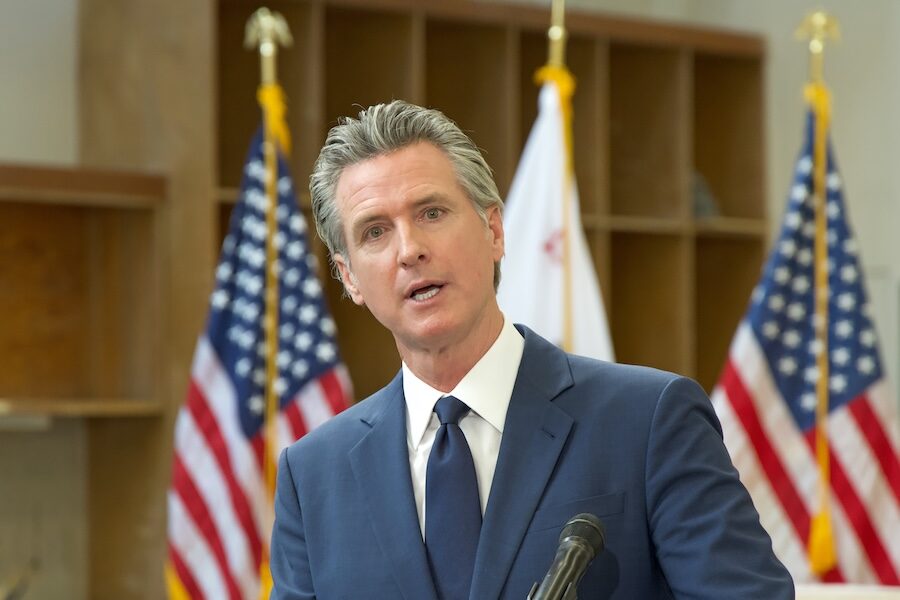
As speculation heats up over whether California Gov. Gavin Newsom could mount a presidential run in 2028, one of his most notorious scandals is making headlines again.
The story is familiar to many Californians: in 2007, while serving as mayor of San Francisco, Newsom admitted to having an affair with Ruby Rippey Gibney, the wife of his longtime friend and campaign manager, Alex Tourk. The revelation stunned the Bay Area political scene, upended personal relationships, and nearly derailed his career.
At the time, Newsom stood before cameras and delivered a public mea culpa. “I want to make it clear that everything you’ve heard and read is true,” he said in a halting statement. “I am deeply sorry about that. I’ve hurt someone I care deeply about, Alex Tourk and his friends and family. That is something I have to live with.”
The fallout was immediate. Tourk, who had been one of Newsom’s closest allies, resigned as the mayor’s chief of staff. The scandal ignited questions about trust, responsibility, and the blurred lines between personal judgment and public duty.
In his statement, Newsom went beyond apologizing to Tourk and Gibney, extending his regret to the people of San Francisco. “I’m also sorry that I’ve let the people of San Francisco down,” he said. “They expect a lot of their mayor… I am committed to restoring their trust and confidence and will work very hard in the upcoming months to make sure that the business of running the city is framed appropriately.”
WATCH:
Remember When Gavin Newsom SLEPT With His Friend’s Wife? pic.twitter.com/oiTEAQSf15
— Daily Caller (@DailyCaller) August 25, 2025
The apology did little to shield him from backlash. News outlets ran relentless coverage, late-night comedians lampooned him, and opponents painted him as untrustworthy. For many voters, the affair became shorthand for questions about his integrity.
Though Newsom weathered the political storm and continued his rise — eventually becoming governor of California — the episode remains a blemish on his record, one that critics argue could haunt him on the national stage.
In recent years, as #MeToo reshaped political discourse, questions arose over whether the relationship, which involved a subordinate, could be viewed as workplace misconduct. But Gibney herself came to Newsom’s defense.
“To be clear, I fully support the Me Too movement,” she wrote on Facebook years after the scandal. “In this particular instance, however, I am doubtful that it applies.” She acknowledged she was a subordinate but placed responsibility on her own choices, attempting to shield Newsom from the harshest allegations.
Even so, the controversy has remained in the background, resurfacing whenever Newsom’s ambitions push him into the national spotlight. Newsom, a polished speaker with national fundraising power, is widely seen as a likely contender. Yet as speculation mounts, so too do reminders of his past.
For him, the challenge is clear: if he chooses to enter the 2028 race, he will not only have to sell his record as governor but also confront a scandal that refuses to disappear.
And while his political career survived it once, a presidential campaign would guarantee the affair is revisited under an unforgiving national spotlight.
