
Entertainment
Legendary Actor Dies At 89
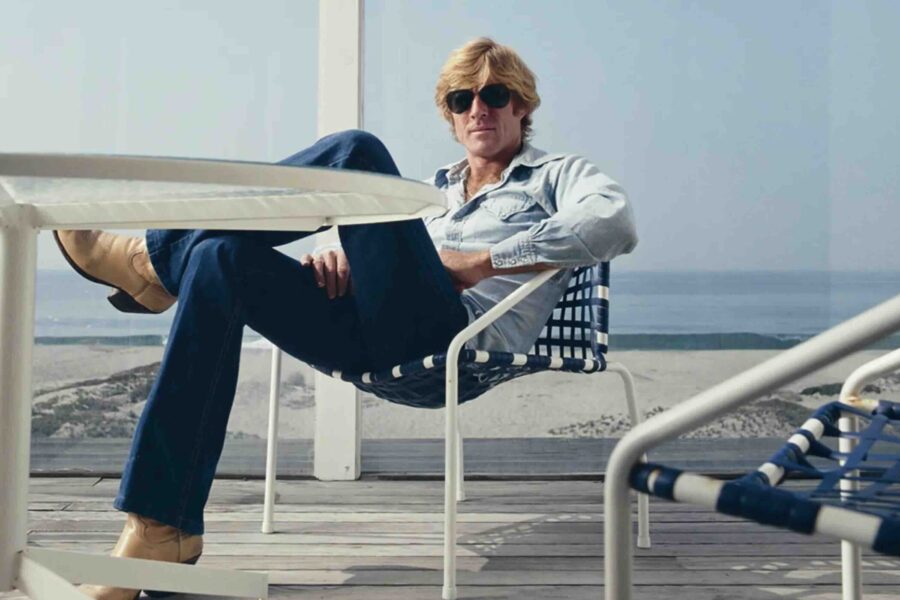
Oscar-winning actor Robert Redford, who spent the latter half of his career in the director’s chair and as a political activist, died at 89 on Tuesday morning, his rep announced.
Redford’s movies helped America make sense of itself, wading through sensitive topics like political corruption and grief as he forced audiences to look beyond their own superficial points of view.
He died early Tuesday morning at his home in the Utah mountains outside Provo, according to Cindi Berger, the chief executive of the publicity firm Rogers & Cowan PMK. She did not list a specific cause of death but stated that Redford died in his sleep in “the place he loved surrounded by those he loved.”
Over decades, Redford converted his charisma and good looks into cultural currency through blockbuster hits like “Butch Cassidy and the Sundance Kid” (1969) and “All the President’s Men” (1976), both of which explored weighty themes like the death of the Old West and corruption in the Nixon administration.
He received his first and only Oscar nomination for “The Sting” (1973), a film about Depression-era grifters.
Although he preferred exploring thoughtful topics in his films, Redford accepted many assignments as a Hollywood sex symbol, pairing off with some of the greatest actresses of his generation — Jane Fonda in “Barefoot in the Park” (1967), Barbra Streisand in “The Way We Were” (1973), and Meryl Streep in “Out of Africa” (1985), for example.
“Redford has never been so radiantly glamorous,” the critic Pauline Kael wrote in The New Yorker, “as when we saw him through Barbra Streisand’s infatuated eyes.”
His natural extension into directing began in his 40s with “Ordinary People” (1980), his Oscar-winning film about the disintegration of a middle-class family following the death of its son. The film won three Oscars, including Best Picture.
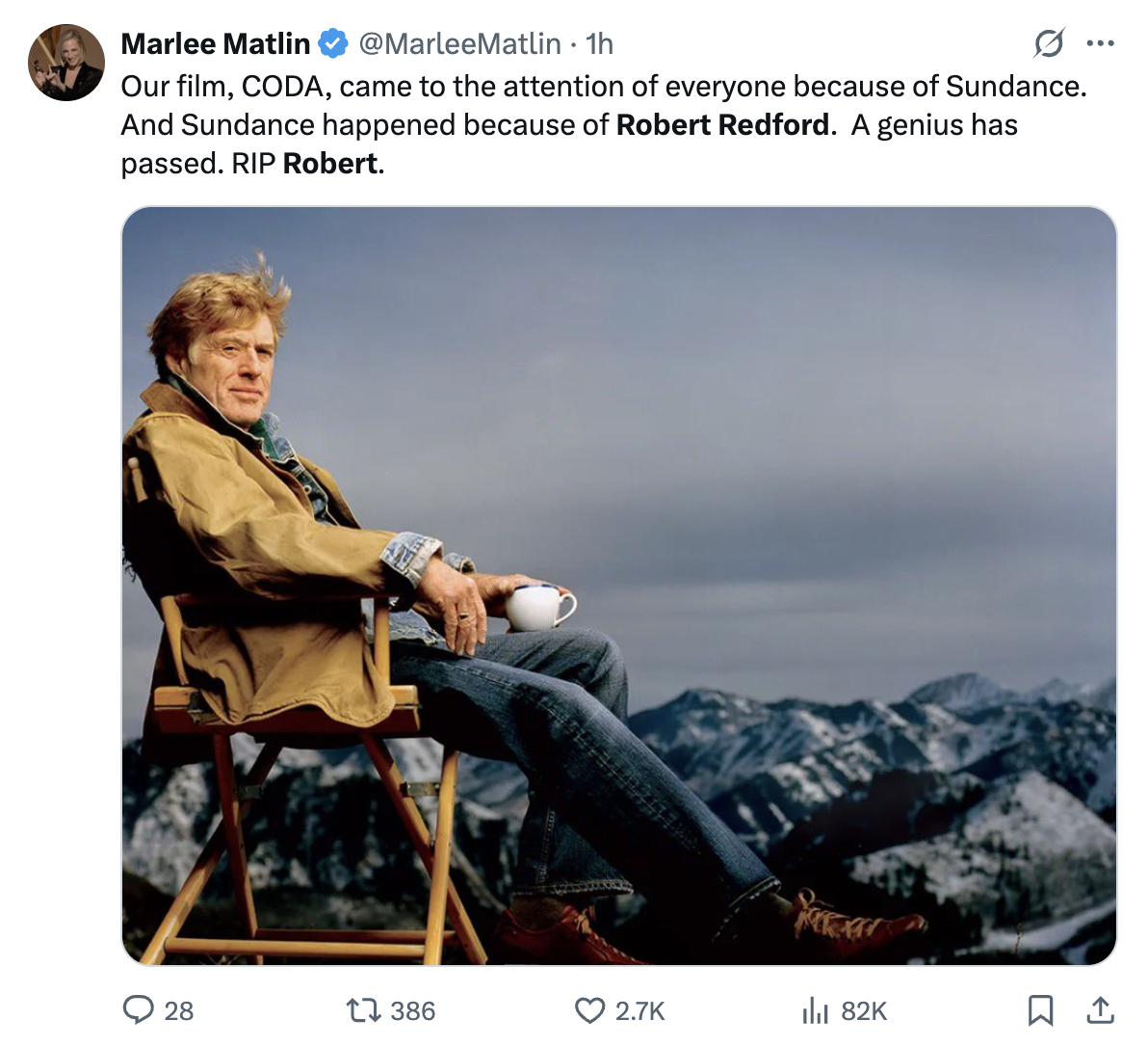
Fourteen years later, he returned with four Oscar nominations for “Quiz Show” (1994), about a notorious 1950s television scandal.
Redford was a benefactor to fledgling actors as well. He founded the Sundance Institute to focus on cultivating independent films, and in 1981, he took over the struggling film festival in Utah, renaming it after the institute a few years later. It has since become synonymous with cutting-edge filmmaking, pushing the boundaries that major studios still won’t cross.
Directors like Quentin Tarantino, James Wan, Darren Aronofsky, Nicole Holofcener, David O. Russell, Ryan Coogler, Robert Rodriguez, Chloé Zhao, and Ava DuVernay all got their start thanks to Sundance, which Redford complained grew overcrowded as more than 85,000 attendees flocked to the festival in 2025, up from just a few hundred in the 1980s.
“I want the ambush marketers — the vodka brands and the gift-bag people and the Paris Hiltons — to go away forever,” he told a reporter in 2012 as he headed into the festival, the NYT reported. “They have nothing to do with what’s going on here!”
He applied his star power to environmental causes, such as his opposition to a six-lane highway in Utah in 1970 and a coal-fired power plant in 1975.
“I was born with a hard eye,” he told The Hollywood Reporter in 2014. “The way I saw things, I would see what was wrong. I could see what could be better. I developed kind of a dark view of life, looking at my own country.”
“It was authentic,” Redford told his biographer. “I got my way.”
