
Politics
NEW: North Carolina Votes To Outlaw Cashless Bail After Iryna Zarutska Slaying
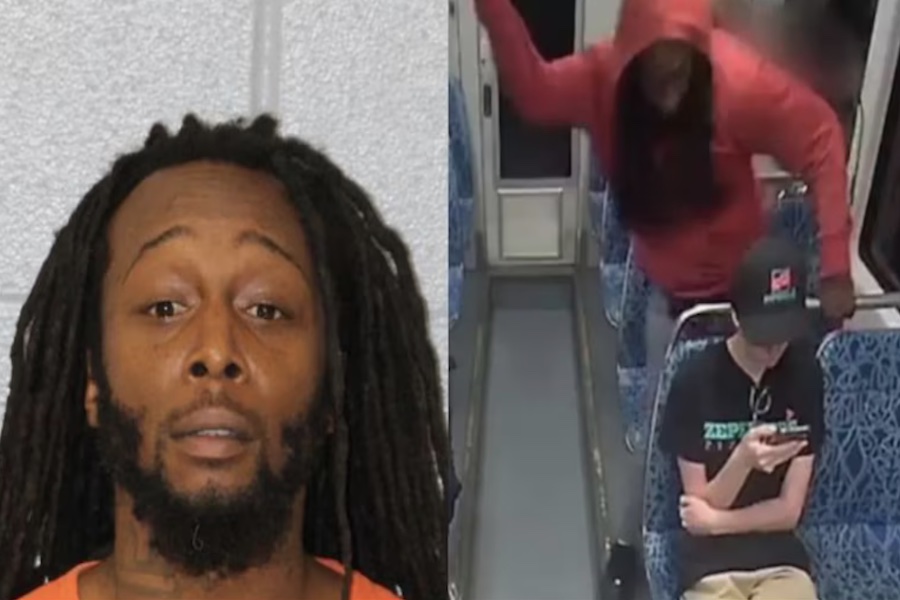
North Carolina lawmakers on Monday voted in favor of a series of criminal justice legislative measures dubbed “Iryna’s Law” in response to the brutal murder of Iryna Zarutska, a Ukrainian refugee who was stabbed to death by a career criminal with a history of violence in an unprovoked attack.
House Bill 307, which was introduced in response to concerns from Republican lawmakers over crime and procedures in Charlotte and Mecklenburg County, aims to ensure that violent and offenders repeat offenders are subjected to increased scrutiny before they can be granted pretrial release. The House approved HB307 by an 82-30 vote on Tuesday afternoon, which sent the bill to Democrat Governor Josh Stein’s desk.
“We’re dealing with a local government, really Mecklenburg County and the city of Charlotte, two local governments that in my opinion have lost institutional control of their areas,” Rep. Destin Hall, the Republican House speaker, said.
The legislation would eliminate the practice of cashless bail in North Carolina, a policy that has been widely adopted by progressive prosecutors across the country. Critics have argued that such policies lead to a “revolving door” in the criminal justice system, where repeat offenders are released within hours of their arrest.
Cashless bail policies have also led to the release of a number of violent criminals who have gone on to commit murder. A recent study conducted by Yolo County, California, District Attorney Jeff Reisig found that there was an alarming 169 percent jump in later crimes committed by those released on cashless bail as opposed to those forced to pay for their release.
The results were even more troubling for violent criminals, who went on to commit 171 percent more crimes after being released on cashless bail.
At the federal level, President Donald Trump recently signed an executive order that will place increased penalties on states that allow cashless bail practices. “Cashless bail policies allow dangerous individuals to immediately return to the streets and further endanger law-abiding, hard-working Americans because they know our laws will not be enforced,” a White House memo on the executive action states.
North Carolina’s House Bill 307 will also implement stricter criteria for violent offenders to be eligible for pretrial release. The bill was introduced in March, but was altered last week under the title “Iryna’s Law” in order to respond to the brutal murder of Iryna Zarutska.
Iryna Zarutska suffered multiple knife wounds and was pronounced dead at the East/West Boulevard light rail station in South End, Charlotte just before 10 p.m. on August 22.
According to a GoFundMe page established by the victim’s family, Zarutska had “recently arrived in the United States, seeking safety from the war and hoping for a new beginning,” the page reads. “Tragically, her life was cut short far too soon.”
Horrific footage of the scene shows the alleged killer, Decarlos Brown Jr., a 34-year-old homeless individual, stabbing Zarutska with a butcher knife after she sat down on a city bus. Brown — who has a lengthy criminal history — then got up and left the bus as the victim bled to death.
The accused killer had 14 criminal cases brought against him by the time of the attack, including a robbery with a deadly weapon conviction that resulted in a five-year prison stint.
Brown was initially arrested at the scene of the Zarutska stabbing and charged with first-degree murder by North Carolina prosecutors. He is now facing a federal charge of causing death on a mass transportation system, which carries up to life in prison or the death penalty.
