
Politics
JUST IN: GOP Senator Now Holding Out, Threatening Shutdown Agreement
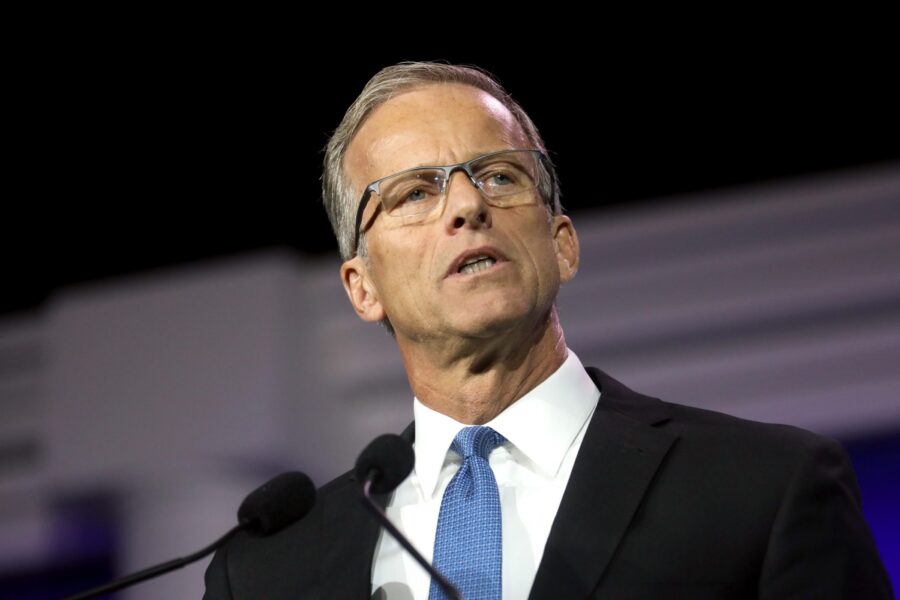
Senate leaders say just one man stands in the way of ending the 41-day government shutdown.
Kentucky Republican Rand Paul is objecting to a provision in the bipartisan funding deal that would crack down on unregulated sales of hemp-based products, like Delta-8, which are made in his home state.
Senate Majority Leader John Thune (R-S.D.) told reporters Monday that Paul is the lone holdout blocking efforts to fast-track the package. “I don’t think it’s anyone’s best interest to drag this out,” Thune said.
Paul insists he’s not holding anything up — just protecting Kentucky jobs.
“Just to be clear: I am not delaying this bill. The timing is already fixed under Senate procedure,” Paul said in a post on X. “But there is extraneous language in this package that has nothing to do with reopening the government and would harm Kentucky’s hemp farmers and small businesses.”
“Standing up for Kentucky jobs is part of my job,” he added.
RELATED: Deal Reached To End The Government Shutdown
Paul’s office said he supports reopening the government immediately but won’t accept a deal that “unfairly target[s] Kentucky’s hemp industry.” His team argues the contested language is “unrelated to the budget and the government-reopening goal.”
The Senate advanced the funding package Sunday night with a procedural vote, moving closer to passing a bill that includes money for military construction, veterans’ affairs, agriculture, and the legislative branch. But under Senate rules, 30 hours of post-cloture debate must run before the next vote — unless all 100 senators agree to speed things up.
That’s where Paul comes in.
If he lifted his objection, the chamber could move immediately to final votes. Instead, the process could drag on for days as the Senate holds four separate votes before sending the measure back to the House.
For now, Paul’s stand on hemp could keep Washington’s lights dimmed a little longer.
The federal government shutdown, now entering its sixth week, continues to create chaos across the country as lawmakers remain divided over how to reopen the government. The Senate took a major step over the weekend, voting 60–40 to advance a bipartisan funding measure that would temporarily restore government operations through January 30, 2026. The deal would fully fund several key agencies and offer a stopgap fix to end the stalemate, which began on October 1 after Congress failed to pass appropriations for the new fiscal year.
Still, the proposal faces opposition from within the Democratic Party, as it does not guarantee the long-term extension of Affordable Care Act subsidies—one of the party’s core demands. Instead, the bill includes only a promise to hold a separate vote on that issue in December, leaving many Democrats unsatisfied and progressives openly criticizing their leadership for agreeing to the compromise.
The effects of the shutdown are being felt nationwide. More than 1,500 flights were canceled on Monday as air traffic control staffing shortages worsened, and thousands of federal employees remain furloughed or working without pay.
Lawmakers have pledged back pay for affected workers, and the deal under consideration includes protections against mass layoffs by the Office of Management and Budget while temporary funding is in place. But the uncertainty is taking its toll, both economically and politically.
The measure still needs approval from the House of Representatives, where Democratic leaders have signaled they may oppose the bill unless further changes are made. That leaves the future of the shutdown unclear—though momentum appears to be building toward a resolution.
Still, even if this plan passes, the political fallout within the Democratic caucus and the lingering frustration among federal workers will likely last long after the government reopens.
Download the FREE Trending Politics App to get the latest news FIRST >>
