
Politics
JUST IN: Judge In Comey Case Makes ‘Unusual’ Move, Lobs Stunning Accusations At DOJ

A federal magistrate judge took the rare step of questioning the handling of the criminal case against former FBI Director James Comey, saying possible “government misconduct” may have affected grand jury proceedings.
Magistrate Judge William Fitzpatrick on Monday ordered prosecutors to turn over secret grand jury materials to Comey’s defense — an unusually aggressive remedy that courts seldom grant. He said the move was necessary because the case raised several fact-based concerns.
“The Court recognizes this is an extraordinary remedy,” Fitzpatrick wrote, “but given the factually based challenges the defense has raised to the government’s conduct and the prospect that government misconduct may have tainted the grand jury proceedings, disclosure of grand jury materials under these unique circumstances is necessary.”
Fitzpatrick reached his conclusion only after reviewing the grand jury records himself. The indictment, returned Sept. 25, was signed by prosecutor Lindsey Halligan, who was appointed to lead the case under Attorney General Pam Bondi.
The opinion heightens the chance that the charges — false statements and obstruction of Congress — could be dismissed before trial. Fitzpatrick noted both procedural errors and disputes over whether Halligan’s appointment followed the proper process.
He raised questions about the timeline the government provided for the grand jury’s deliberations. Halligan said her last contact with the panel came at 4:28 p.m. while they were still deliberating. Records then show the grand jury rejected one count, leading prosecutors to prepare a new indictment. Yet Fitzpatrick said the file contained no record of that initial vote or of further deliberations on the revised charges.
He said the sequence appeared too short to accomplish all the necessary steps.
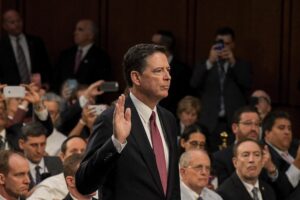
Former FBI Director James Comey testifies in front of the Senate Intelligence Committee during hearing in the Hart Senate Office building June 8, 2017, in Washington DC.
“The short time span between the moment the prosecutor learned that the grand jury rejected one count in the original indictment and the time the prosecutor appeared in court to return the second indictment could not have been sufficient to draft the second indictment, sign the second indictment, present it to the grand jury, provide legal instructions to the grand jury, and give them an opportunity to deliberate and render a decision on the new indictment,” Fitzpatrick wrote.
He also found that Halligan, who had not previously prosecuted a case, appeared to make two “fundamental misstatements of law” while answering grand jurors’ questions. One suggested Comey might need to testify at trial to explain his innocence. Another suggested the panel could assume the government possessed additional evidence not shown to them.
“The record points to a disturbing pattern of profound investigative missteps, missteps that led an FBI agent and a prosecutor to potentially undermine the integrity of the grand jury proceeding,” he wrote.
Download the FREE Trending Politics App to get the latest news FIRST >>
