
Politics
NEW: Venezuela Agrees To Buy US-Made Goods & Equipment As Part Of Trump’s Oil Deal
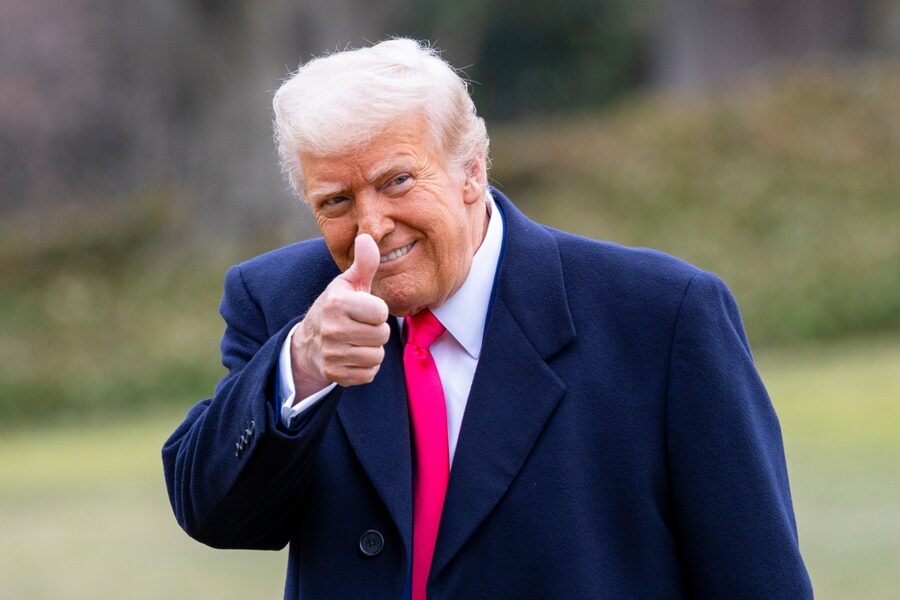
President Donald Trump announced Wednesday that the interim government in Venezuela had agreed to buy American-made products with the proceeds received as part of their new oil deal with the United States.
“I have just been informed that Venezuela is going to be purchasing ONLY American Made Products, with the money they receive from our new Oil Deal,” Trump announced in a Truth Social post. “These purchases will include, among other things, American Agricultural Products, and American Made Medicines, Medical Devices, and Equipment to improve Venezuela’s Electric Grid and Energy Facilities.”
In short, Trump continued, Venezuela has agreed to doing business with the United States as their principal partner. “A wise choice, and a very good thing for the people of Venezuela, and the United States,” the president added.
The deal stems from negotiations following the U.S. military capture of former Venezuelan leader Nicolás Maduro on January 3, 2026, and his replacement by interim president Delcy Rodríguez, who has agreed to terms dictated by the Trump administration.
On Tuesday, Trump announced that Venezuela would “turn over” 30 to 50 million barrels of sanctioned oil to the U.S. at fair market prices — currently around $56 to $60 per barrel — in a deal that could be worth north of $3 billion. This will allow the United States to refine Venezuelan heavy crude and sell it globally.
In exchange, Venezuela must sever ties with China, Russia, Iran, and Cuba, prioritize U.S. companies for future oil sales, and use all proceeds exclusively for purchasing American goods, including agricultural products, medicines, and infrastructure equipment to upgrade its crumbling electric grid and energy facilities.
Trump added that the U.S. plans to control Venezuela’s oil sales “indefinitely,” effectively making it a dependent partner. In order to ensure compliance, the president dispatched U.S. naval assets to the Panama Canal in order to crack down on smuggling of sanctioned oil. U.S. forces made good on the president’s word by seizing a sanctioned oil tanker bound for Russia on Wednesday morning.
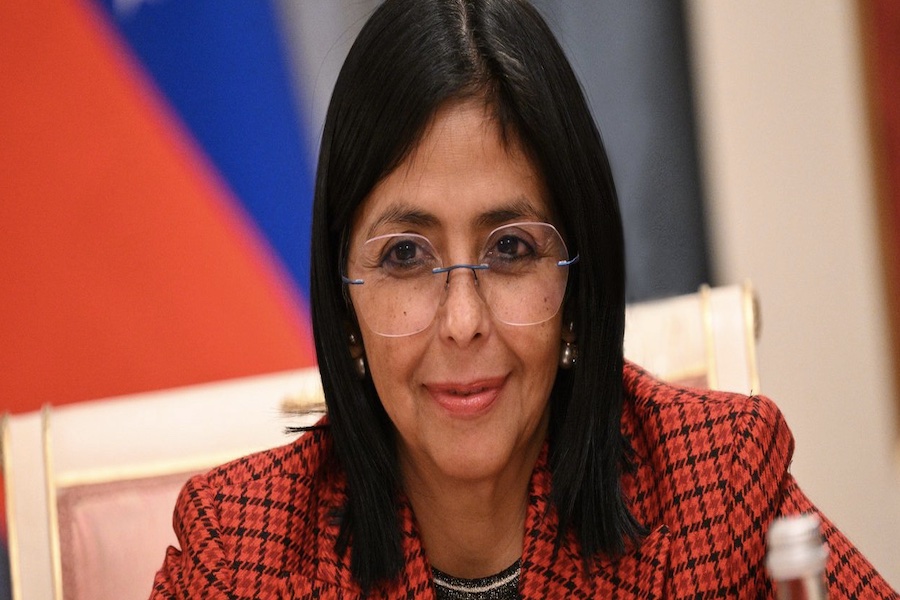
Venezuelan Vice President Delcy Rodriguez meets with the Russian government in September 2024
Economically, this deal could provide the U.S. with a short-term oil supply boost equivalent to about two to two-and-a-half days of national consumption, potentially stabilizing or slightly lowering global oil prices by increasing supply and diverting shipments from China, analysts with the U.S. Department of Energy have said.
In the long-term, Trump has said the deal will funnel billions in Venezuelan funds into American agriculture, manufacturing, and energy sectors.
“All of their revenue from oil, which is the dominant way they fund the government, is controlled by the United States. We’re going to sell that crude, we’re going to put it in accounts, and we’re going to distribute that funds to the interim authorities in Venezuela and align that with incentives to improve their behavior, end the criminality, reduce the risk to America and the risk to their own citizens, and work with us to to construct more confidence in that,” U.S. Energy Secretary Chris Wright said while speaking with CNN.
Wright further noted that the interim government will eventually be phased out once the Venezuelan people have the opportunity to hold their own elections, but cautioned that such a transition will take time. “We want to keep the country from collapsing, and we want to immediately stop its enormous damage to the United States, exporting gangs, drugs, money, bringing our adversaries into the Western Hemisphere, giving them bases of operations. There’s a lot of improvement we can do right away,” he said.
American firms like ExxonMobil (formerly Creole) and ConocoPhillips played a major role in developing Venezuela’s oil industry, investing millions in exploration and production under lease agreements. In 1976, under President Carlos Andrés Pérez, Venezuela nationalized its oil sector and agreed to compensate U.S. companies with about $1 billion for expropriated assets, which was largely accepted at the time.
However, in 2007, under President Hugo Chávez, the government seized control of major Orinoco Belt projects without adequate compensation, affecting stakes held by ExxonMobil, ConocoPhillips, Chevron, and others. This led to international arbitration where ExxonMobil won $1.6 billion in 2014, and ConocoPhillips pursued ongoing claims for billions more.
Trump has contended that the oil proceeds from Venezuela were “stolen” from the United States and has vowed to retake control of the sector to the benefit of the people of both the United States and Venezuela.
The Trending Politics News app is your home for breaking news. Download it free today!
