
Politics
NEW: Expert Claims China Is Funding Anti-ICE Protests
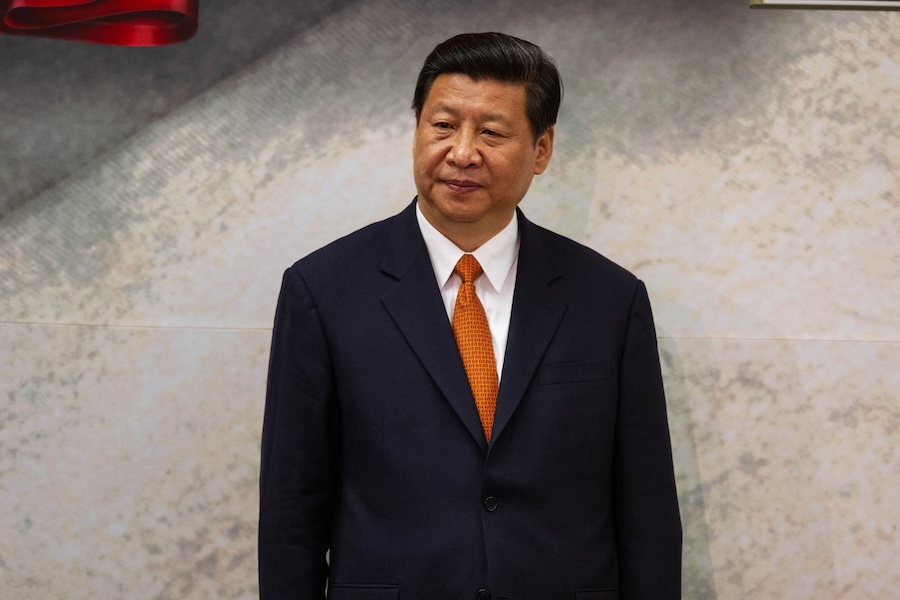
A leading China expert is warning that the recent surge of anti-ICE protests in the United States may not be as organic as they appear.
During Monday’s broadcast of Newsline, Asia analyst and author Gordon Chang alleged that the Chinese Communist Party is secretly financing and directing activist networks tied to demonstrations targeting U.S. Immigration and Customs Enforcement, using American intermediaries to mask Beijing’s involvement.
Chang, a member of the CPAC board and author of Plan Red: China’s Project to Destroy America, said the CCP has increasingly relied on proxies to destabilize adversaries abroad while maintaining plausible deniability.
“A friend tells me that China appears to be behind events disrupting stability in both Syria and Venezuela,” Chang wrote earlier on X, adding that Beijing is “acting through proxies to try and mask its involvement.” On Newsline, he argued that similar tactics are now being deployed on American soil.
According to Chang, the alleged funding pipeline runs through Neville Roy Singham, an American tech billionaire who lives in Shanghai and has drawn scrutiny from lawmakers over his ties to Chinese state-linked organizations. Singham is married to the leader of Code Pink, a far-left activist group that has been highly visible in protests opposing U.S. foreign and immigration policy.
Chang said Singham is part of an influence operation that blends financial backing with propaganda amplification, all aligned with CCP strategic interests. He added that some U.S. officials believe those demonstrators were not simply private Chinese citizens, but operatives connected to the CCP itself.
Anti-ICE protests have intensified across the United States in recent weeks, driven largely by anger over aggressive immigration enforcement actions and several high-profile confrontations between demonstrators and federal authorities. The most significant flashpoint has been in Minnesota, where protests erupted in Minneapolis and St. Paul.
Chang argued that the same networks and messaging strategies used during the unrest following George Floyd’s death are now being “replayed” in the current wave of anti-ICE activism. The difference, Chang suggested, is that immigration enforcement has become a particularly useful pressure point for foreign adversaries seeking to inflame domestic divisions in the United States.
He also placed the alleged CCP involvement in U.S. protests within a geopolitical context, pointing to recent instability in Venezuela, Iran, and the Middle East. He argued that China, Russia, and Iran form an informal axis that benefits from chaos in democratic societies.
WATCH:
Chang urged U.S. officials to take the allegations seriously and dismantle what he described as CCP-linked funding and propaganda networks operating inside the country. While the Chinese government has repeatedly denied interfering in U.S. domestic affairs, Chang warned that ignoring the pattern could leave the country vulnerable to sustained foreign manipulation.
Daily demonstrations have drawn large crowds demanding the removal of U.S. Immigration and Customs Enforcement from local communities, accusing the agency of excessive force and unchecked authority. The unrest prompted heightened federal involvement and legal scrutiny, culminating in a federal judge placing temporary limits on how immigration agents may interact with protesters in the Twin Cities area.
Similar protests have been reported in parts of Arizona and California, where activists have organized in response to stepped-up enforcement operations. Some demonstrations, however, have turned contentious. In St. Paul, protesters disrupted a church service connected to an ICE official, prompting the U.S. Department of Justice to review potential violations related to interference with religious worship.
Elsewhere, clashes between protesters and federal officers have resulted in injuries.
