
Politics
NEW: Senior Iranian Military Commanders Confirmed Dead After U.S. Strikes
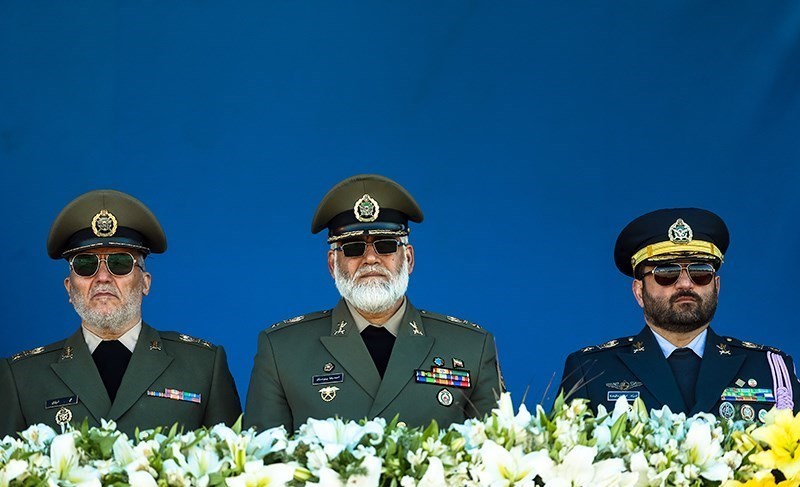
Multiple senior Iranian defense and military commanders are confirmed dead after a series of U.S. and Israeli military strikes launched early Saturday morning. The strikes have been described by U.S. officials as the first wave in a military operation that could last for several days.
According to a report from the New York Post, Iran’s Defense Minister Amir Nasirzadeh and the commander of the Islamic Revolutionary Guard Corps (IRGC), General Mohammad Pakpour, were killed in the strikes. Pakpour had assumed leadership of the IRGC following the death of his predecessor, Hossein Salami, in an Israeli strike during the Twelve-Day War last June.
Three sources familiar with Israeli military operations, including regional and intelligence contacts, confirmed the deaths of Nasirzadeh and Pakpour, according to a report from the Times Of Israel.
In a statement to NBC News, Iranian Foreign Minister Abbas Araghchi acknowledged that the regime had suffered high-profile casualties, but stopped short of providing specifics. “We may have lost one or two commanders,” he said.
Araghchi further stated that Supreme Leader Ayatollah Ali Khamenei and President Masoud Pezeshkian were alive, as well as senior leaders in parliament and the judiciary.
Satellite images confirm that strikes were indeed launched on Khamenei’s compound in downtown Tehran, which was reduced to rubble. It is believed that Khamenei, 86, was evacuated before the strikes, though his whereabouts and condition are unknown as of this report.
Iran's Islamic Revolutionary Guard Corps commander Gen. Mohammed Pakpour and Iranian defense minister Amir Nasirzadeh were killed in Israeli strikes in Iran this morning according to sources to Reuters. pic.twitter.com/cj6qSZ09Eq
— OSINTdefender (@sentdefender) February 28, 2026
Assessments from Israeli officials suggest that Iran’s chief of intelligence may also have been killed, though this remains unconfirmed, The Times Of Israel reported.
The operation, referred to by U.S. officials as “Epic Fury” and by Israeli forces as “Operation Roaring Lion,” involved airstrikes and missile attacks aimed at Iranian military infrastructure, nuclear facilities, and leadership. The strikes followed weeks of unsuccessful negotiations over Iran’s nuclear program and came amid significant U.S. military build-up in the Middle East.
The strikes targeted a range of Iranian assets, including nuclear facilities, ballistic missile programs, military bases, and leadership compounds. Reuters reported that U.S. strikes primarily targeted Iranian military installations, while Israel targeted leadership.
President Donald Trump announced the strikes in a video message, describing them as “major combat operations” to address threats from Iran’s nuclear ambitions. Trump also called for regime change and urged Iranians to take to rise up against their government.
House Speaker Mike Johnson (R-LA) noted that congressional leaders were briefed on the potential need for action to protect U.S. personnel.
Iran responded to the strikes with a series of missile and drone attacks across the Middle East, targeting Israel and American military installations in the Gulf states, Iraq and Jordan. The Iranian Revolutionary Guard Corps (IRGC) announced the operation as “Truthful Promise 4” and claimed strikes on the U.S. 5th Fleet headquarters in Bahrain, bases in Qatar and the United Arab Emirates (UAE), as well as military sites in Israel.
In the UAE, one civilian was killed by shrapnel from an intercepted Iranian missile in Abu Dhabi, marking the first fatality attributed to Iranian counterattacks. Additional damage was reported in Kuwait, Qatar, Jordan and other targeted nations, mainly from missiles that were shot down.
No American casualties have been reported at this time.
The Trending Politics News app is your home for breaking updates. Download it FREE today!
