
Politics
REPORT: Ground Operation Launched In Iran (UPDATED)
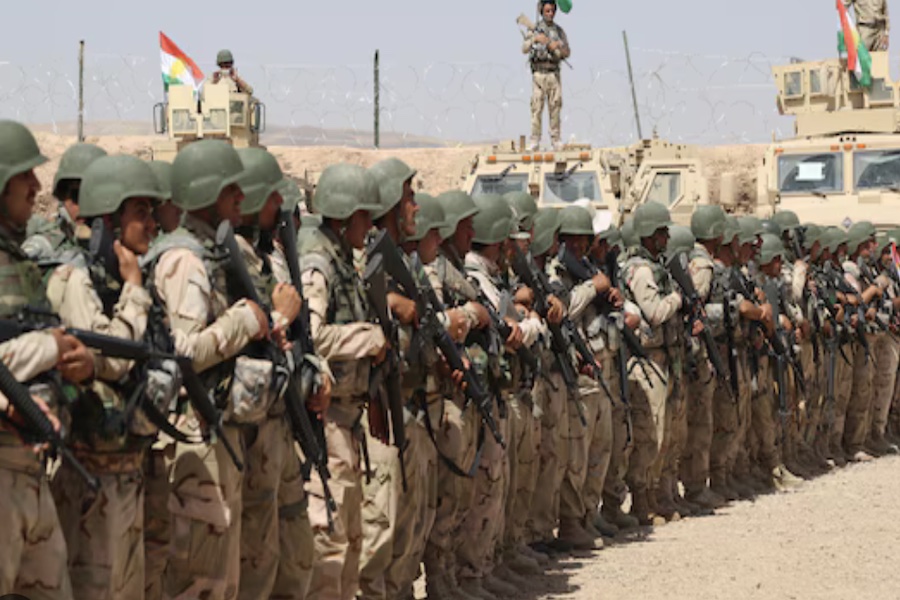
UPDATE: The Kurdistan Freedom Party (PAK) has denied reports from Axios, Fox News and a number of Middle Eastern outlets that widely reported a “ground offensive” launched in Northwestern Iran. The statement indicated that no Iranian Kurdish militias had crossed over from Iraq to Iran as of March 4.
“Claims that our forces have crossed the border into Rojhalat are false. We firmly reject these statements, no such movements have taken place,” the statement reads.
Original story:
Fox News’ Jen Griffin is reporting that Kurdish forces have launched a ground offensive against Iranian regime forces in the country’s northwest, a region home to a sizable Kurdish population.
“Thousands of Iraqi Kurds have launched a ground offensive in Iran,” Griffin reported at 4:13 p.m. Eastern Time, citing an unnamed U.S. official. Barak Ravid, the senior foreign affairs correspondent, further confirmed that Iranian Kurdish forces had launched attacks within Iranian territory.
Involvement of Iraqi Kurds has been disputed as of this report. The Kurdistan Democratic Party (KDP), the leading political party in the Kurdistan Region of Iraq, has denied involvement in any ground operation or the broader US-Israel war against Iran.
Aziz Ahmad, deputy chief of staff to Iraqi Kurdistan Prime Minister Masrour Barzani, explicitly disputed Griffin’s reporting on involvement of Iraqi Kurds. “Not a single Iraqi Kurd has crossed the border,” he said in response to Griffin’s post, calling reports to the contrary “patently false.”
Not a single Iraqi Kurd has crossed the border.
This is patently false. https://t.co/MOFdlcvQ9N
— Aziz Ahmad (@azizkahmad) March 4, 2026
Several media outlets, including CNN and Reuters, had reported that discussions between U.S. officials and Iranian Kurdish opposition groups regarding the possibility of a limited ground operation into western Iran. The discussions had reportedly been taking place over several months, though the reports have surfaced in the wake of ongoing U.S. and Israeli combat operations against Iran, which have led to retaliatory attacks throughout the region.
Sources familiar with the planning described the talks as exploratory, with focus placed on whether and how armed Kurdish groups could engage Iranian security forces in border areas.
Primary actors involved are Iranian Kurdish opposition organizations based along the Iran-Iraq border in Iraq’s semiautonomous Kurdistan Region. A coalition formed on February 22, known as the Coalition of Political Forces in Iranian Kurdistan, includes the Democratic Party of Iranian Kurdistan (PDKI or KDPI), the Kurdistan Free Life Party (PJAK), the Kurdistan Freedom Party (PAK), Komala of the Toilers of Kurdistan, and the Organization of Iranian Kurdistan Struggle.
These groups have a history of periodic clashes with Iran’s Islamic Revolutionary Guard Corps (IRGC) and maintain armed wings often referred to as Peshmerga-style fighters.
Alongside our brave men stand the women of the Peshmerga (PAK) from East Kurdistan, occupied by Iran..
Kurds for Kurds – fighting for an independent Kurdish state. A distinctly Kurdish and Kurdistani vision, free from hostile, corrosive ideologies that stand against the Kurdish… pic.twitter.com/bBNFnUwdWg
— Kurdistan (@Kurdistan_C) March 2, 2026
Kurdish forces in northern Iraq, particularly the KRG’s Peshmerga, possess established combat experience from operations against ISIS in 2014-2017 and earlier conflicts. Peshmerga units number in the tens of thousands across the region and operate effectively in mountainous terrain along the Iran border, relying on light infantry tactics, small arms, and limited artillery.
Recent U.S. transfers of 105 mm howitzers have modestly improved their indirect-fire capabilities, though they lack combat aircraft, advanced air defenses, or large-scale armored formations. The Iranian Kurdish opposition groups themselves field smaller forces, with estimates across each coalition group numbering between 1,000 and 2,000 fighters each.
Iran is home to an estimated 9 to 10 million Kurds, comprising roughly 10 percent of the national population. They are concentrated in northwestern provinces including Kurdistan, Kermanshah, West Azerbaijan, and Ilam — regions Kurds refer to as Rojhelat or Eastern Kurdistan historically. The Kurds do not currently have an internationally recognized state, but comprise sizable minority populations in parts of four countries.
A state of their own has long been a desired goal. U.S. and coalition forces previously supported Kurdish forces against ISIS in Iraq and Syria.
