
Politics
‘STUNNING SUCCESS’: Liberal News Outlet Shocks Audience, Praises Iran Campaign
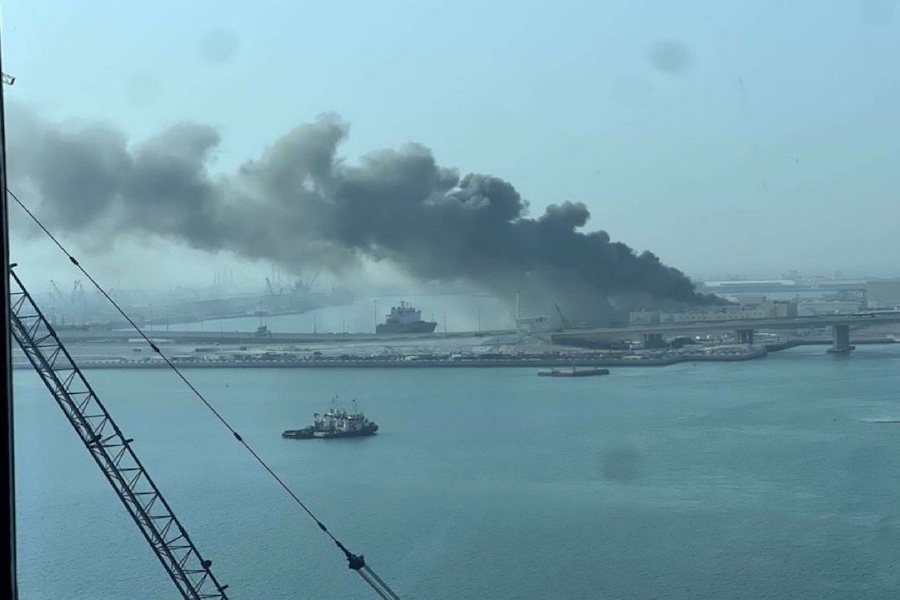
Even The Economist is calling it what it is: a military campaign marked by overwhelming force and striking results.
In a detailed new analysis, the London-based outlet said the U.S. and Israeli operation against Iran has been “a stunning operational success,” praising the planning, the firepower and the pace of strikes, even while taking shots at the politics and the shifting public explanations coming out of Washington.
The piece opens with a snapshot that says everything about how lopsided this fight has become. On March 4, an Israeli Air Force pilot scored an air-to-air kill for the first time in more than 40 years, downing an Iranian Yak-130 with an F-35. The Yak-130 was originally designed as a trainer. The F-35 is one of the most advanced warplanes on the planet.
“We are punching them while they’re down,” declared Pete Hegseth, America’s secretary of war, “which is exactly how it should be”.
The Economist argued that while American officials have offered “dubious and sometimes contradictory rationales for war” and war aims that appear to shift, the actual military execution looks like the opposite. The outlet described it as carefully planned, massive in scale and delivering rapid results.
RELATED: NEW: Polls Reveal Where Americans Stand On Iran Strikes
In a March 3 video, Adm. Brad Cooper, head of U.S. Central Command, said American forces had struck almost 2,000 targets in four days, including 17 ships. The Economist also noted that an American submarine appears to have sunk an Iranian frigate near Sri Lankan waters, roughly 3,000 kilometers from Iran, describing it as America’s first use of a torpedo since 1945.
Cooper described the first day of the war as “nearly double the scale” of America’s “shock and awe” strikes in Iraq in 2003.
Israel’s bombing, the outlet said, has been even more intense, with the Israel Defense Forces claiming about 1,000 targets a day. That tempo is being helped by American tankers refueling Israeli jets in the air.
The Economist said the operation began Feb. 28 after a rare opportunity presented itself to eliminate Iran’s supreme leader, Ayatollah Ali Khamenei. It described that opening wave as a surprise strike carried out with long-range missiles fired from stealth aircraft and distant warships. After that, the report said, the collapse of Iran’s air defenses opened the skies and let the U.S. and Israel shift to cheaper, more plentiful guided bombs.
RELATED: BREAKING: Iranian Supreme Leader Ayatollah Khamenei Confirmed Dead
“We have a nearly unlimited stockpile” of those weapons, Hegseth boasted.
Israeli officers, The Economist reported, have joked that unlike past operations this is a “war in English,” planned in close coordination with the United States. The two countries divided Iran into large zones for missile operations. Israel focused on western and central Iran, including Tehran. The United States took southern Iran and adjacent waters, operating from Jordanian bases and carrier groups in the region.
The Economist said the war plan has unfolded in phases, starting with the opening strike, then an intense 100-hour push against top targets. A third phase is now underway, with planners saying there are enough targets for four or five weeks of strikes. That aligns with Trump’s own comments about the timeline.
“We will now begin to expand inland,” said General Dan Caine, America’s chairman of the joint chiefs of staff. “striking progressively deeper into Iranian territory.”
The report acknowledged serious mistakes, including a strike that killed more than 160 people at a girls’ school on Feb. 28. But it said the campaign has mostly unfolded as planned and has sharply reduced Iran’s ability to launch missiles and drones.
Download the FREE Trending Politics App to get the latest news FIRST >>
