
Politics
Trump Refuses To Accept Khamenei’s Son As Iran’s Next Supreme Leader
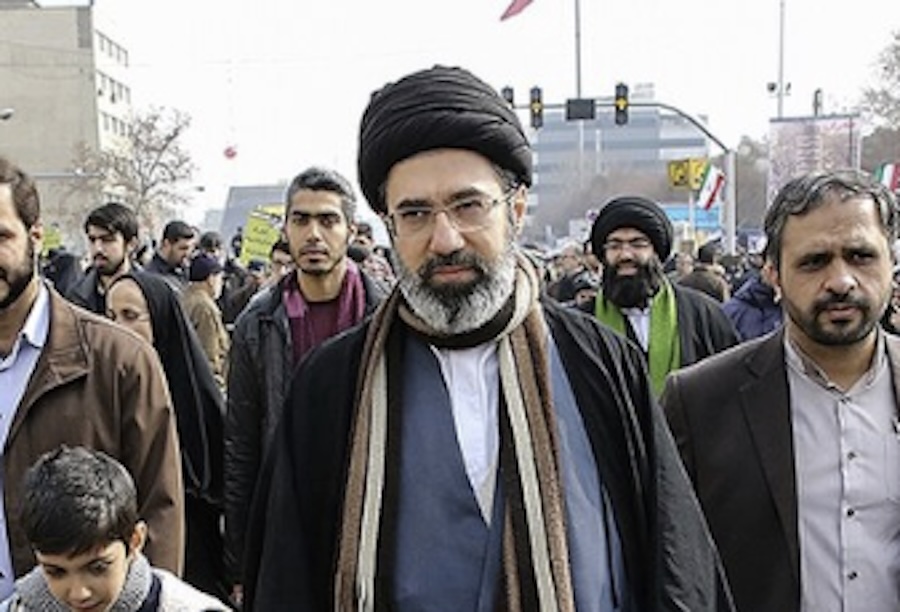
President Donald Trump said Thursday that he will not accept Mojtaba Khamenei, the son of Iran’s assassinated supreme leader Ayatollah Ali Khamenei, as the country’s next leader, signaling that the United States intends to play a direct role in shaping Iran’s political future.
Trump said he plans to personally involve himself in the process of determining who ultimately takes power in Tehran, drawing a comparison to the U.S. intervention in Venezuela earlier this year.
“They are wasting their time. Khamenei’s son is a lightweight. I have to be involved in the appointment, like with Delcy in Venezuela,” Trump said during a call with Axios.
Trump’s comments come as Iran’s ruling establishment continues to delay announcing its next supreme leader following Khamenei’s death in an Israeli strike. Iranian officials have suggested an announcement could come soon, though internal negotiations among the country’s clerical leadership appear to still be underway.
The Islamic Republic’s constitution states that the nation’s supreme leader is selected by the Assembly of Experts, an 88-member body of senior clerics responsible for appointing and supervising Iran’s highest authority. The position holds sweeping power over the country’s military, judiciary, and foreign policy.

Among the names most frequently mentioned as a possible successor is Mojtaba Khamenei, a 56-year-old cleric who for years operated as a powerful behind-the-scenes figure within the Iranian system. Though he has never held elected office, Mojtaba reportedly maintained close relationships with Iran’s Islamic Revolutionary Guard Corps and was widely seen as one of the key gatekeepers to his father.
His potential rise to the position has been controversial even inside Iran, with critics arguing that a father-to-son succession would resemble a hereditary monarchy — the very system the Islamic Republic overthrew during the 1979 revolution.
“Khamenei’s son is unacceptable to me. We want someone that will bring harmony and peace to Iran,” the president said.
Trump also warned that allowing a hardline figure to take power could set the stage for renewed conflict between Washington and Tehran.
“If they continue the same policies, we’ll be back in war in five years,” he said.
The president’s remarks add uncertainty to an already volatile situation in Iran following Khamenei’s death and the U.S.-Israeli military campaign targeting the country’s nuclear and missile infrastructure. While Trump has repeatedly defended the operation as necessary to neutralize Iran’s military threat, members of his administration have insisted that overthrowing the Iranian regime is not the official objective.
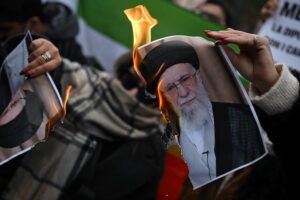
Milan, Italy – January 17, 2026: People burn a photo depicting Ali Khamenei, Supreme Leader of Iran during a demonstration in solidarity with Iranian protestors
Defense Secretary Pete Hegseth and other senior officials have said the mission is focused on degrading Iran’s missile capabilities, dismantling elements of its nuclear program, and weakening the country’s naval forces.
Trump’s comments about influencing the country’s leadership, however, appear to go further than those public statements.
Earlier this week, Trump was asked at the White House who could potentially replace Khamenei. His response suggested that many of the regime figures previously considered possible successors were killed during the recent military campaign.
“Most of the people we had in mind are dead,” he told reporters.
In the meantime, the Iranian political system is scrambling to determine its next leader. Israel reportedly bombed a building in the city of Qom earlier this week that housed members of the clerical body responsible for selecting the next supreme leader, an attack believed to have disrupted internal discussions.
Beyond Mojtaba Khamenei, analysts have floated several possible candidates to lead the Islamic Republic. Some point to Hassan Khomeini, the grandson of the country’s founding revolutionary leader Ayatollah Ruhollah Khomeini, whose name recognition and religious credentials could potentially unite competing factions within Iran’s leadership.

Hassan Khomeini
Others believe the position could go to a senior conservative cleric from the country’s traditional religious establishment, such as former judiciary chief Sadeq Amoli Larijani or other influential figures tied to Iran’s seminaries.
Ultimately, the decision will likely be shaped by negotiations among Iran’s ruling elite, particularly the Assembly of Experts and the powerful Revolutionary Guard.
Whoever emerges as Iran’s next supreme leader will play a critical role in determining the country’s domestic direction and its relationship with the United States, Israel, and the broader Middle East. Trump, for his part, made clear he believes Washington should have a say in that outcome.
