
Politics
NEW: European Nation Expresses Interest In Developing Nuclear Weapons
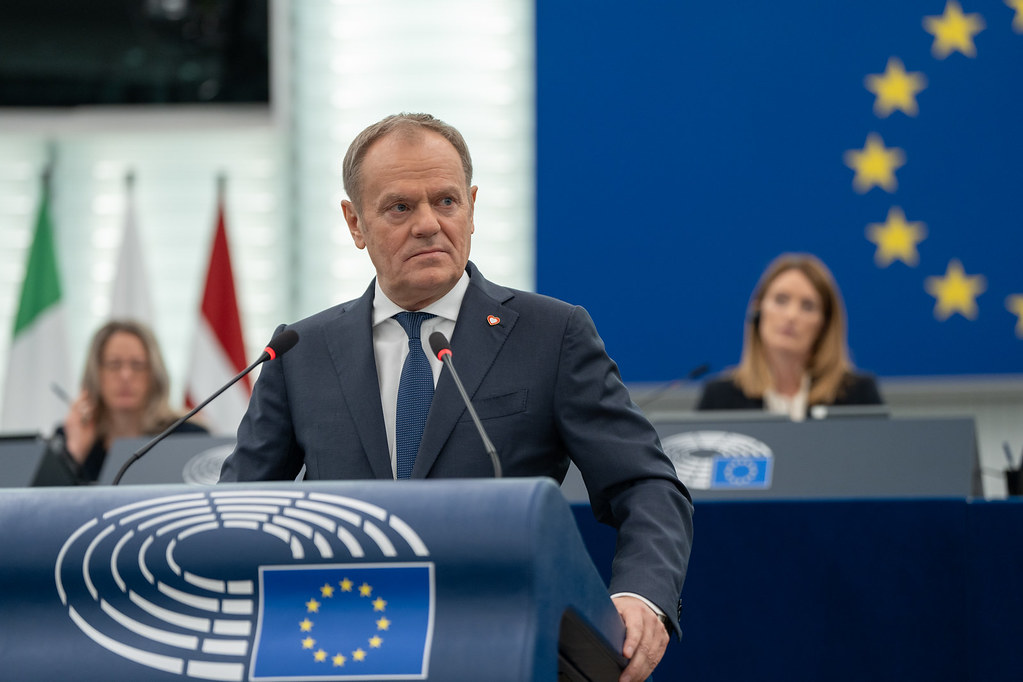
The Polish government is expressing increased interest in developing nuclear weapons, a move aimed at deterring threats from Russia.
Polish Prime Minister Donald Tusk recently made statements indicating a long-term goal of greater independence in nuclear deterrence. On March 3, ahead of a government meeting, Tusk confirmed ongoing discussions with France and other European allies about an “advanced nuclear deterrence” program proposed by French President Emmanuel Macron.
He emphasized Poland’s commitment to not remaining passive on nuclear security matters in a military context, linking it to heavy investments in future nuclear power plants.
“We will cooperate with our allies… as our capabilities increase, we will try to prepare Poland for autonomous action in this matter,” Tusk said. The statement comes amid French-led efforts to strengthen European deterrence in order to bolster continental defense.
Tusk’s recent remarks build on earlier positions from Polish leaders. President Karol Nawrocki, who took office after Andrzej Duda, has advocated for Poland to pursue a nuclear deterrent, describing it as necessary against threats from Russia.
This past February, Nawrocki expressed strong support for the idea. Previous President Duda had repeatedly raised the topic, including in 2025 when he welcomed Macron’s proposal for extending France’s nuclear umbrella to European allies and expressed openness to hosting allied nuclear weapons.
Poland’s discussions have focused on multilateral options rather than immediate independent development. Talks with France involve potential participation in a shared deterrence framework, which could include consultations, joint exercises, and planning without transferring ownership of weapons.
Poland has also consulted countries like Sweden, Denmark, and others invited to Macron’s initiative. This approach aligns with broader European debates on reducing reliance on U.S. nuclear guarantees while maintaining NATO cohesion.
Public opinion in Poland shows notable support for enhanced nuclear capabilities. Polls from recent years, including one in early 2026, indicated around half of respondents favoring steps toward a deterrent, with higher approval among certain political groups.
Poland remains bound by the Nuclear Non-Proliferation Treaty (NPT), which it signed in 1969, prohibiting the acquisition or development of nuclear weapons. As a non-nuclear-weapon state under the treaty, any move toward an independent arsenal would require withdrawal from the NPT, likely leading to international sanctions and diplomatic isolation.
Still, the nation could participate in NATO nuclear sharing, where non-nuclear allies host U.S. nuclear weapons (such as B61 bombs) and train personnel for delivery systems, without owning them outright. Belgium, Germany, Italy, the Netherlands, and Turkey currently do this.
Poland could also join extended deterrence arrangements, like France’s proposed European framework, providing consultation and guarantees without physical weapon possession.
Globally, nine countries possess nuclear weapons: the United States, Russia, the United Kingdom, France, China, India, Pakistan, and North Korea. Israel also possesses nuclear weapons, though these are undeclared.
Several NATO members host U.S. weapons under sharing agreements, but no additional European countries have developed their own arsenals since the Cold War era. The NPT framework, joined by most nations, has largely prevented further proliferation.
RELATED: European Firm Announces $4.5 Billion U.S. Manufacturing Investment
