
Politics
REPORT: Russia Helping Iran Refine Drone Warfare Tactics
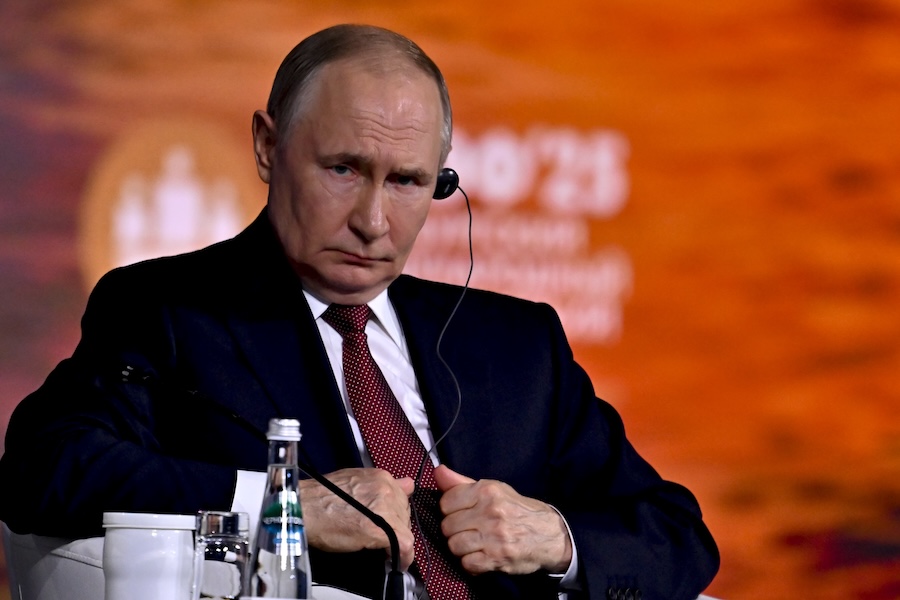
New reporting that Russia may be assisting Iran with drone warfare tactics is raising concerns among U.S. officials as the Middle East conflict continues to expand. While Iran has long possessed its own drone program, the latest suggests the relationship between Moscow and Tehran may now be evolving beyond simple technology transfers into deeper battlefield cooperation.
According to reporting from CNN, Russia has recently provided Iran with guidance on how to deploy drones more effectively against U.S. and Gulf-linked targets. The assistance reportedly includes tactical lessons drawn from Russia’s ongoing war in Ukraine, where drone warfare has become a defining feature of the battlefield.
The report follows an account last week stating that Russia had also shared intelligence with Iran, including information about the locations of U.S. warships and aircraft operating in the region. If accurate, the developments would signal a notable expansion of military coordination between the two countries at a time when tensions between Iran and the United States are already high.
Iran is not new to drone warfare. For years, Tehran has invested heavily in unmanned aerial systems and has supplied drones to proxy groups across the Middle East. Iranian-designed Shahed drones have also become widely known after Russia began using them extensively during its war in Ukraine to strike Ukrainian infrastructure and military targets.
What may now be changing is the direction of expertise flowing between the two countries. Analysts say that while Iran originally provided Russia with drone technology, Moscow’s experience in Ukraine has produced valuable operational lessons about how to deploy drones in large numbers and overwhelm modern air defense systems.
Those lessons could prove significant if shared with Iran. The war in Ukraine has effectively become a testing ground for modern drone warfare, with both Russia and Ukraine experimenting with new tactics involving drone swarms, decoys, electronic warfare countermeasures and layered waves of unmanned aircraft designed to exhaust air defenses.
Recent reports suggest those methods could now be influencing Iranian operations.
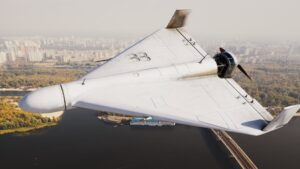
Russian kamikazes combat drone in the sky against clouds, war in Ukraine.
The Middle East is already demonstrating how difficult it can be to stop large numbers of relatively inexpensive drones. In one recent attack, Iranian drones reportedly penetrated defenses and struck a U.S. operations center in Kuwait, killing six American soldiers.
Defense cooperation between Russia and Iran has been expanding for several years. The two countries signed a 20-year strategic partnership agreement in January 2025 that included provisions to expand military cooperation, joint exercises and defense technology exchanges.
Russia has also moved to produce Iranian-designed drones domestically. Factories in Russia’s Tatarstan region have been used to assemble Shahed-style drones for use in Ukraine, illustrating how the relationship has developed into a defense-industrial partnership rather than a one-way transfer of weapons.
Still, some officials have urged caution about the latest claims.
Much of the reporting about Russian assistance relies on anonymous intelligence officials, and the details have not been independently confirmed publicly. Trump administration envoy Steve Witkoff said Kremlin officials denied providing targeting information to Iran.
“So, you know, we can take them at their word,” Witkoff told CNBC’s “Money Movers” during an interview Tuesday. “Let’s hope that they’re not sharing.”
The comments came after President Trump spoke with Russian President Vladimir Putin on Monday. During the interview, Witkoff was asked whether he believed Russia might be providing Iran with intelligence on the location of U.S. military assets, and if that possibility raised concerns about the Trump administration’s decision to waive sanctions that had previously prevented Indian refiners from purchasing Russian oil.
“Well, I’m not an intel officer, so I can’t tell you,” Witkoff replied. “I can tell you that yesterday, on the call with the president, the Russians said they have not been sharing. That’s what they said.”
Witkoff added that he and Trump’s son-in-law, Jared Kushner, also held a separate phone conversation Monday morning with Yuri Ushakov, Putin’s foreign policy adviser.
According to Witkoff, Ushakov “reiterated the same,” that Russia is not sharing intelligence with Iran.
Russia has publicly warned that expanding military operations against Iran could destabilize the broader region, though Moscow has not acknowledged any direct role in guiding Iranian strikes. Earlier in the Ukraine war, Iran helped Russia sustain a drone campaign against Ukrainian cities and infrastructure.
Now, Russia may be returning the favor by sharing intelligence and battlefield lessons learned during that conflict.
