
Politics
JUST IN: Thune Throws Cold Water On Passing The SAVE Act
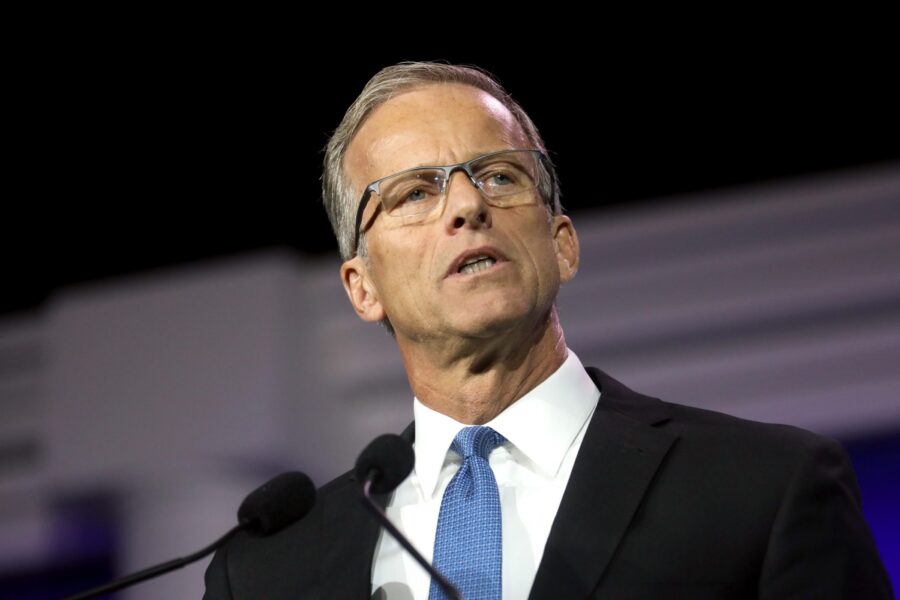
Senate Majority Leader John Thune (R-SD) indicated that the GOP-controlled Senate does not have the necessary votes to deploy a “talking” filibuster, an older Senate procedure that requires members opposed to a piece of legislation to physically block it through speeches. Failure to deploy the talking filibuster essentially means that the Safeguard American Voter Eligibility Act, commonly known as the SAVE Act, will not pass.
“We don’t even have 51 votes for that,” Thune told Fox News’ Bret Baier when asked about the possibility of passing the key election integrity bill. President Trump has vowed to back primary challenges against any Senators who vote against the bill, or the talking filibuster in order to pass it.
The majority leader also cast doubt on the idea of deploying the talking filibuster. “People don’t like to hear this…the talking filibuster, [we] can’t find an example in modern history where a piece of legislation passed via the talking filibuster,” he added.
A talking filibuster is the traditional Senate procedure under which one or more senators must hold the floor and speak continuously, without yielding except in limited circumstances permitted by Senate rules, in order to delay or block a vote on a measure. This approach demands sustained physical presence and oratory endurance from the obstructing senators
It stands in contrast to the contemporary practice often referred to as the zombie filibuster. Under the zombie filibuster, a senator may simply register an objection or place a hold on legislation, which then requires a cloture motion to end debate. Cloture itself demands a supermajority of 60 votes out of the 100-member Senate.
The shift toward the zombie filibuster became more common after Senate rule changes in the 1970s that eased the process for invoking cloture without mandating extended floor debate
Proponents of a talking filibuster in the current context have argued it could compel the minority party to engage actively, potentially allowing the majority to maintain control of the floor and advance a measure with a simple majority of 51 votes if the minority exhausts its capacity to sustain the effort. Senator Mike Lee (R-UT) has been a vocal proponent of this approach, pointing to the chamber’s two-speech limit.
🚨 JUST IN: Senate Leader John Thune says NO, he does NOT have the votes for a talking filibuster to pass the SAVE America Act — the only way without 60
"We don't even have 51 votes for that." pic.twitter.com/jeRqP11YRT
"People don't like to hear this…the talking filibuster,…
— Eric Daugherty (@EricLDaugh) March 17, 2026
The Senate is currently engaged in debate on the SAVE America Act as of this report. The measure, which the House of Representatives passed earlier in 2026 on a 218-213 vote, would require individuals to provide documentary proof of U.S. citizenship when registering to vote in federal elections and to present identification at polling places.
Senate Republicans initiated the process with a motion to proceed that advanced on a narrow, largely party-line basis. Thune has indicated that the chamber will conduct an extended period of open debate, potentially spanning days or weeks, to allow senators to address the provisions and record their positions
Despite this, failure to advance the talking filibuster essentially means that the bill is doomed.
RELATED: Sen. Thune Under Fire After Downplaying Support For SAVE Act: ‘Paid Influencer Ecosystem’
