
Politics
NEW REPORT: Missile Threat To U.S. Is Rapidly Growing
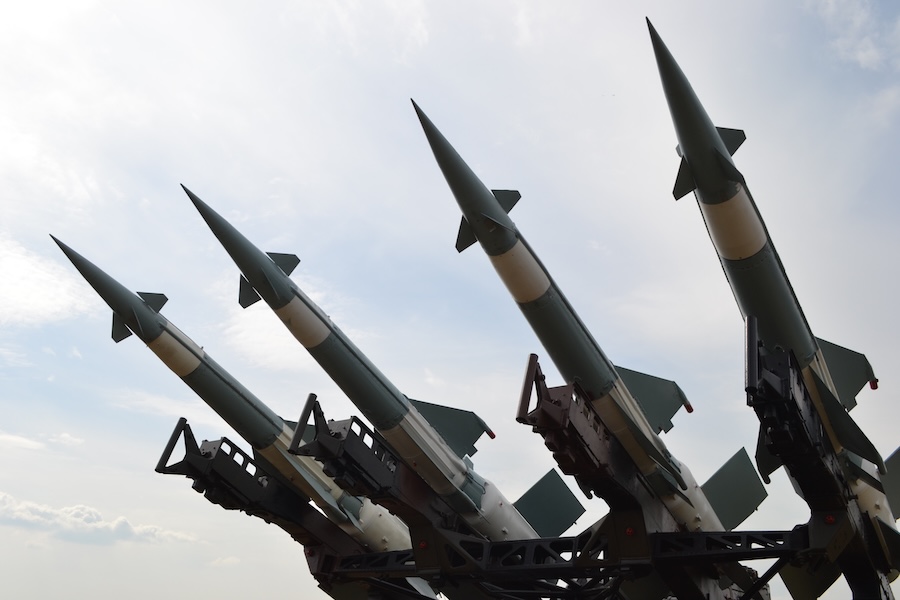
Director of National Intelligence Tulsi Gabbard told lawmakers this week that the missile threat to the United States is rising quickly, pointing to a new intelligence estimate that projects a major surge in the number of weapons capable of reaching the homeland. She delivered the warning Wednesday while presenting the 2026 Annual Threat Assessment to the Senate Intelligence Committee, describing missile proliferation as one of the most serious long-term risks facing the country.
The report makes clear that the concern goes well beyond a single adversary. U.S. intelligence officials say China, Russia, North Korea, Iran, and Pakistan are all actively working on missile systems, including both conventional and nuclear-capable platforms, that could potentially strike American territory.
That framing is significant because it broadens the scope of the threat, putting multiple nations into the same conversation about risks to the U.S. homeland rather than focusing only on traditional nuclear powers.
“These countries are developing an array of advanced missile delivery systems with nuclear and conventional payloads that put our homeland in range,” Gabbard said.
One of the most striking takeaways from the assessment is the projected growth. Officials estimate that the number of missiles capable of threatening the United States could climb from more than 3,000 today to over 16,000 by 2035.
That figure does not mean those weapons are currently aimed at the U.S., but it reflects a trend: missile technology is spreading, improving, and becoming more difficult to defend against as more countries build up larger and more complex arsenals. North Korea stands out as a clear example of the evolving threat.
According to the report, the regime has already tested intercontinental ballistic missiles that can reach anywhere in the United States.

White House Press Secretary Karoline Leavitt speaks during with Director of National Intelligence Tulsi Gabbard speaks during a press briefing at in Washington, Wednesday, July 23, 2025.
Iran’s situation is described with more nuance. The assessment notes that prior to Operation Epic Fury, Iran had developed space-launch technology that could eventually be adapted into an intercontinental ballistic missile by 2035 if it chose to move in that direction.
While the report does not claim Iran currently has a missile capable of striking the United States, it warns that the foundation is there and could develop into a more serious threat over time. The report also stresses that the danger is not just about the number of missiles.
U.S. adversaries are advancing a mix of “novel, advanced, or traditional” delivery systems and are expected to combine high-end weapons with lower-cost tools like one-way attack drones. This layered approach could make future attacks more difficult to stop by overwhelming U.S. defense systems with multiple types of threats at once.
Gabbard said that the assessment reflects the collective judgment of the intelligence community, not her personal views. She said the goal of the briefing was to outline the risks facing “U.S. citizens, our homeland, and our interests.”
The findings come as policymakers continue debating how far the United States should go in strengthening its missile defense systems. Rival nations are closely watching U.S. plans in this area and may adjust their own military development in response. It also notes that Chinese officials are likely concerned that a system like “Golden Dome for America” could shift Washington’s decision-making in a crisis, lowering the barrier for military action.
That dynamic suggests missile defense is no longer just about protection, but also plays a growing role in deterrence and the balance of global power.
