
Politics
BREAKING: Iranian Man Arrested After Attempted Breach Of Nuclear Base
A suspected security breach at one of the United Kingdom’s most sensitive military installations has led to the arrest of two individuals, including an Iranian national, raising new concerns as conflict in the Middle East intensifies.
Authorities confirmed that the incident took place Thursday evening at HM Naval Base Clyde in Scotland, a facility widely regarded as the backbone of Britain’s nuclear deterrent. Police Scotland said officers were alerted around 5 p.m. after two individuals attempted to gain access to the base without proper authorization.
“Around 5pm on Thursday, 19 March, 2026, we were made aware of two people attempting to enter HM Naval Base Clyde,” Police Scotland said in a statement. “A 34-year-old man and 31-year-old woman have been arrested in connection and enquiries are ongoing.”
According to The Telegraph, the man is an Iranian national, while the woman’s identity and nationality have not yet been disclosed. Officials say the pair were initially turned away after failing to present the required credentials to enter the base. They were later detained nearby after allegedly behaving suspiciously in the surrounding area.
A spokesperson for the Royal Navy confirmed the arrests but declined to provide further details, citing the active investigation.
“Police Scotland have arrested two people who unsuccessfully attempted to enter HM Naval Base Clyde on Thursday 19 March. As the matter is subject to an ongoing investigation, we will not comment further,” the spokesperson said.

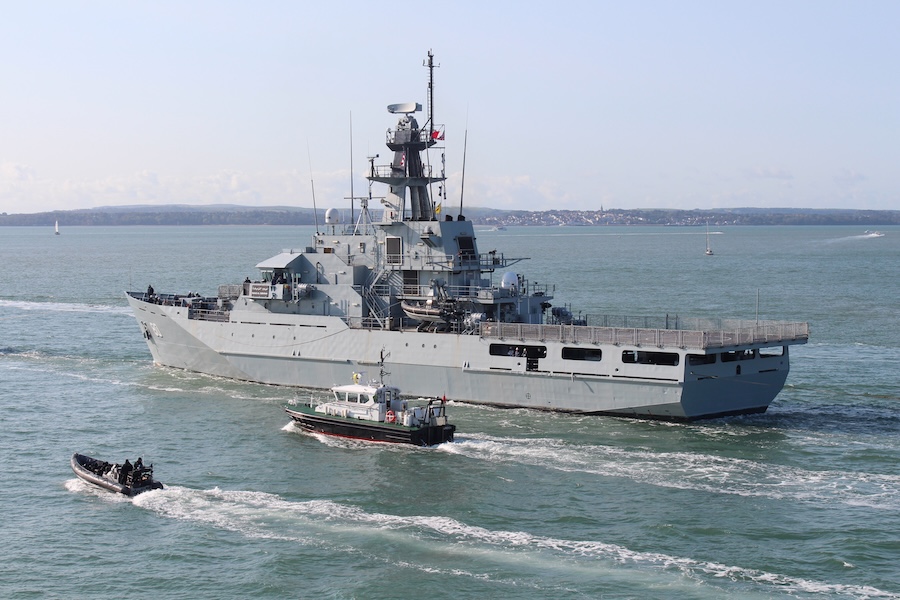
HER MAJESTY’S NAVAL BASE CLYDE, Scotland (July 2, 2018) The Ohio-class ballistic missile submarine USS Alaska (SSBN 732) arrives at Her Majesty’s Naval Base Clyde, Scotland, for a scheduled port visit July 2, 2019. The port visit strengthens cooperation between the United States and United Kingdom, and demonstrates U.S. capability, flexibility, and continuing commitment to NATO allies.
The location of the incident is particularly significant. HM Naval Base Clyde, also known as Faslane, serves as the primary hub for the United Kingdom’s submarine fleet, including vessels tied directly to the country’s nuclear weapons program. The base houses both conventionally armed attack submarines and the Vanguard-class ballistic missile submarines responsible for carrying the UK’s nuclear deterrent.
“Five of those are conventionally-armed nuclear-powered attack submarines of the Astute class. A further four are ballistic missiles submarines (SSBN) of the Vanguard class that comprise the UK’s submarine-based nuclear deterrent,” the U.K. Parliament said.
Military officials have long considered Faslane one of the most strategically critical sites in Britain, making any unauthorized attempt to access the facility a serious security concern. While investigators have not publicly linked the suspects to any larger operation, the timing of the incident is drawing attention due to the rapidly escalating conflict involving Iran, the United States, and Israel.
The war, now entering its third week, has already expanded beyond its initial flashpoints. U.S. and Israeli forces launched coordinated strikes targeting Iran’s nuclear infrastructure and military leadership, prompting a large-scale retaliation from Tehran.
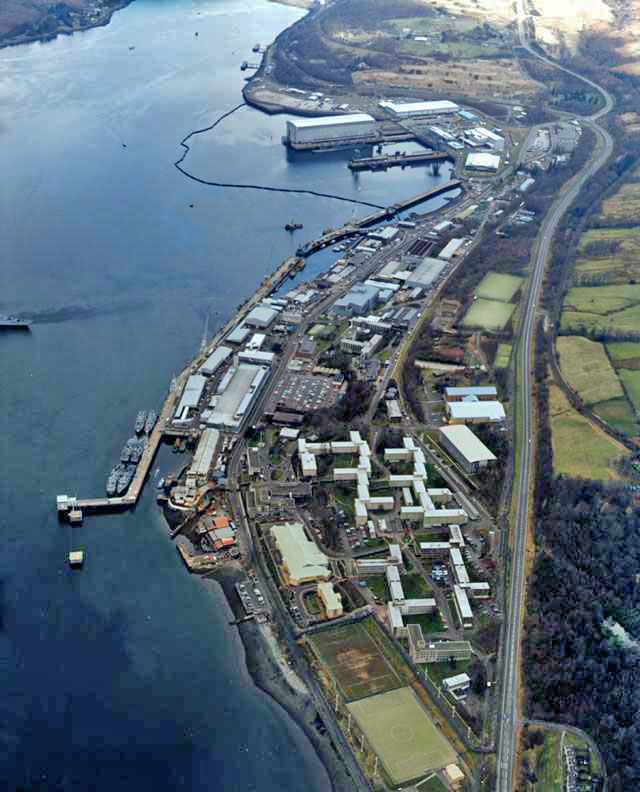
HM Naval Base Clyde Faslane base harbor view from the SE
Iran has responded with sustained missile and drone attacks across the region, striking targets in Israel as well as U.S. military installations and key energy infrastructure in Gulf nations. Countries such as Saudi Arabia, Qatar, and Kuwait have all reported impacts on oil and gas facilities, fueling concerns about disruptions to global energy markets.
Tehran has signaled it is prepared to escalate further, warning it will show “zero restraint” if additional strategic sites are targeted. That rhetoric, combined with the scale of ongoing attacks, has raised alarms among Western officials about the potential for the conflict to widen even further.
The human cost is also continuing to climb. Thousands have reportedly been killed across Iran and neighboring regions, with additional casualties reported among Israeli forces, civilians in Lebanon, and U.S. personnel stationed in the Middle East.
Against that backdrop, security incidents in Europe—even those that appear limited in scope—are being viewed through a different lens. An attempted entry at a nuclear-linked military base, particularly involving a suspect tied to a country currently engaged in active hostilities with Western allies, is likely to draw heightened scrutiny from intelligence and defense officials.
