
Politics
Iran Appoints Hardline Security Veteran To Key Post After Deadly Strike
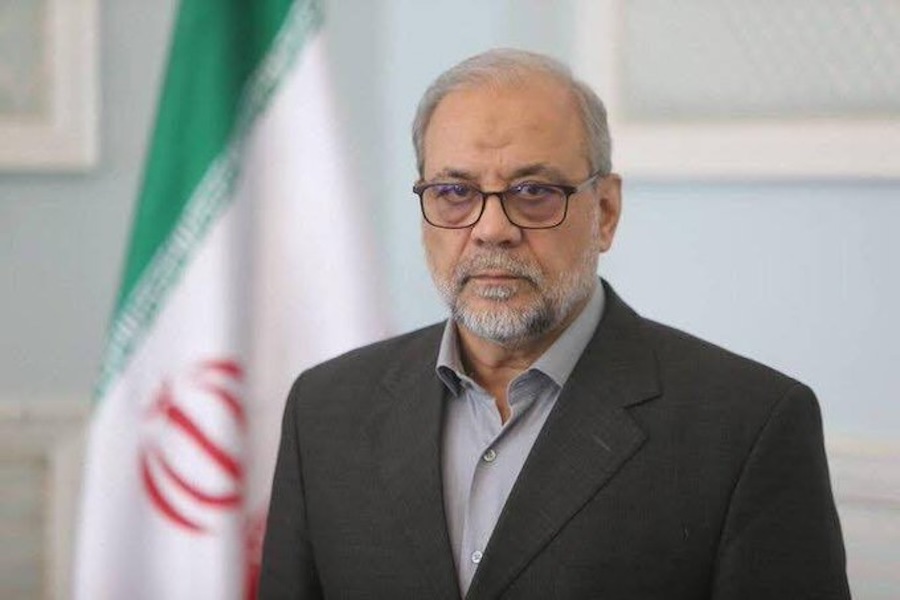
Iran moved quickly Tuesday to install a new top security official, appointing Mohammad Baqer Zolqadr as secretary of the Supreme National Security Council following the killing of Ali Larijani in last week’s strike.
The announcement, shared by the Iranian president’s deputy of communications on X, marks one of Tehran’s most significant leadership reshuffles in the wake of escalating turmoil at the highest levels of government.
Zolqadr, a longtime insider with deep roots in Iran’s security establishment, steps into a position that sits at the center of the country’s most critical decisions. A former commander in the Islamic Revolutionary Guard Corps, he is widely viewed as a hardline figure with decades of experience across multiple pillars of the regime.
His appointment comes at a moment when Iran’s leadership is under intense pressure, both internally and across the region. By elevating a figure closely tied to the Revolutionary Guard and the broader security apparatus, Tehran appears to be signaling a focus on continuity, discipline and control following a series of high-profile losses.
The Supreme National Security Council plays a central role in shaping Iran’s military and foreign policy strategy. Chaired by President Masoud Pezeshkian, the council includes senior officials from across the government, military and intelligence sectors. While it helps coordinate key decisions, ultimate authority still rests with the country’s supreme leader.

Mohammad Baqer Zolqadr
That dynamic makes the role of secretary especially influential. The position often acts as a bridge between competing power centers inside the Iranian system, linking the presidency, armed forces and intelligence agencies with the supreme leader’s inner circle. In times of crisis, that coordination becomes even more critical.
Zolqadr brings a résumé built almost entirely within those power structures. He has held senior roles in the Interior Ministry, the armed forces and the judiciary. He also previously led political efforts tied to conservative factions and most recently served as secretary of the Expediency Discernment Council, which helps resolve disputes between Iran’s legislative bodies.
The choice of Zolqadr suggests Iran’s leadership is leaning heavily on trusted security figures rather than turning to more moderate or diplomatic voices. With tensions rising and uncertainty growing, the regime appears focused on tightening internal cohesion and ensuring that key posts are held by individuals with proven loyalty and operational experience.
Larijani’s death left a significant void at a critical time. Reports indicate Iran has been forced to rapidly reorganize after losing several senior figures in recent strikes, with the Revolutionary Guard taking on an even more prominent role in stabilizing the system.
Zolqadr’s elevation fits squarely within that broader shift. Rather than signaling any pivot in direction, the move reinforces the idea that Iran is doubling down on its existing power structure, placing security veterans at the forefront as it navigates a volatile and uncertain landscape.
As of Tuesday Iran and Israel are still trading strikes, with missiles hitting Israel and retaliatory attacks inside Iran and Lebanon. The U.S. paused some strikes to allow possible talks, but Iran says negotiations aren’t happening.
