
Politics
Hollywood Actor Blasts Late Night TV, Says Shows Have Become The Same Show
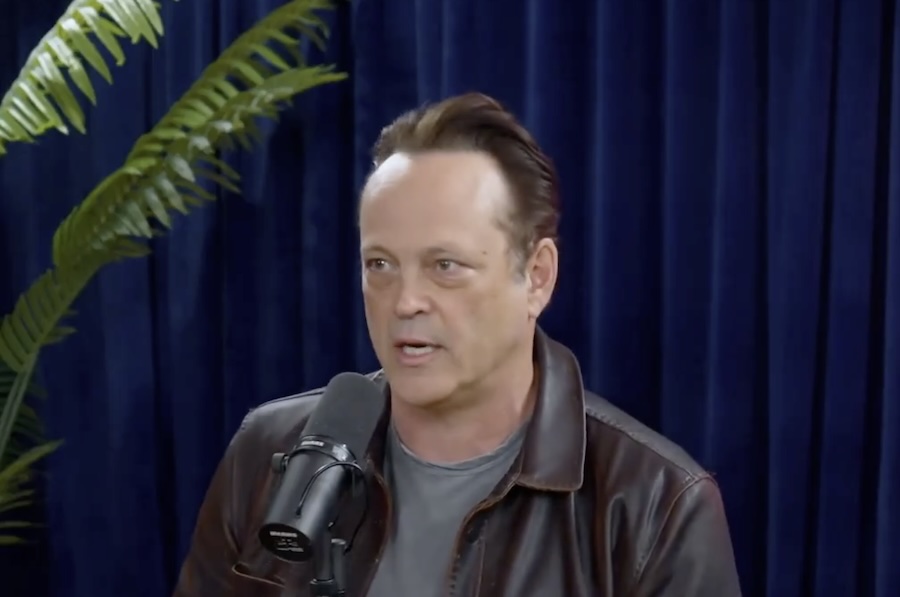
Actor Vince Vaughn is taking aim at the current state of late-night television, arguing that many of the genre’s biggest names have drifted away from comedy and into political messaging.
Appearing on This Past Weekend with comedian Theo Von in a newly released March episode, Vaughn didn’t hold back when discussing how he views the evolution of shows hosted by figures like Jimmy Kimmel and Stephen Colbert.
“It stopped being funny, and it started feeling like I was in a f*cking class I didn’t want to take,” Vaughn said. “They all became the same show.”
The Wedding Crashers star went further, arguing that the shift has fundamentally changed the viewing experience for audiences who once tuned in for humor rather than political commentary.
Von, echoing Vaughn’s sentiment, suggested that late-night shows may have narrowed their comedic focus in recent years, which he believes has hurt their appeal.
“A lot of the late shows have struggled,” Von said, adding that at one point, “the only person they could make fun of… was just like white redneck kind of people. And it f*cking tanked [ratings].”
“Oh, bro,” he responded, before doubling down on his view that the genre has lost its edge by becoming overly political and repetitive, “They all became the same show.”
“And they all became so about their politics and who’s good and who’s bad,” Vaughn added.
WATCH:
Actor Vince Vaughn calls out late-night comedians, says people like Jimmy Kimmel, Stephen Colbert, and others have all become the “SAME SHOW.”
“It stopped being funny, and it started feeling like I was in a f*cking class I didn’t want to take.”
THEO VON: “A lot of the late… pic.twitter.com/9gTyBfdWtc
— The Vigilant Fox 🦊 (@VigilantFox) March 24, 2026
Vaughn, who rose to fame in the late 1990s and early 2000s with a string of hit comedies, has long been known for his more independent and often contrarian views within Hollywood. His latest comments are likely to resonate with audiences who feel similarly disconnected from the current late-night format, while also drawing pushback from those who argue that political satire has always been a staple of the genre.
The episode, which runs more than an hour and 40 minutes, covers a wide range of topics beyond late-night television, including Vaughn’s upbringing in the Midwest, old-school football culture, and his experiences navigating Hollywood over the years.
Late-night television has increasingly shifted toward a more political and uniform style, and both data and viewer feedback back that up. Polling shows that many viewers feel the shows are no longer broadly entertaining, with some describing them as more focused on pushing viewpoints than delivering jokes.
Studies have also found a heavy imbalance in political guests and targets, which contributes to a perception that the humor leans in one direction. At the same time, media analysts note that late-night has moved away from general comedy and toward commentary, making the shows feel more like nightly opinion segments than entertainment.
Combined with declining ratings and the rise of podcasts and online content, this shift has narrowed the audience and led to a more repetitive format. With hosts often covering the same political topics in similar ways, it’s not surprising that many viewers now feel like the shows have all started to blend together.
