
Entertainment
‘Summer Breeze’ Singer Passes Away
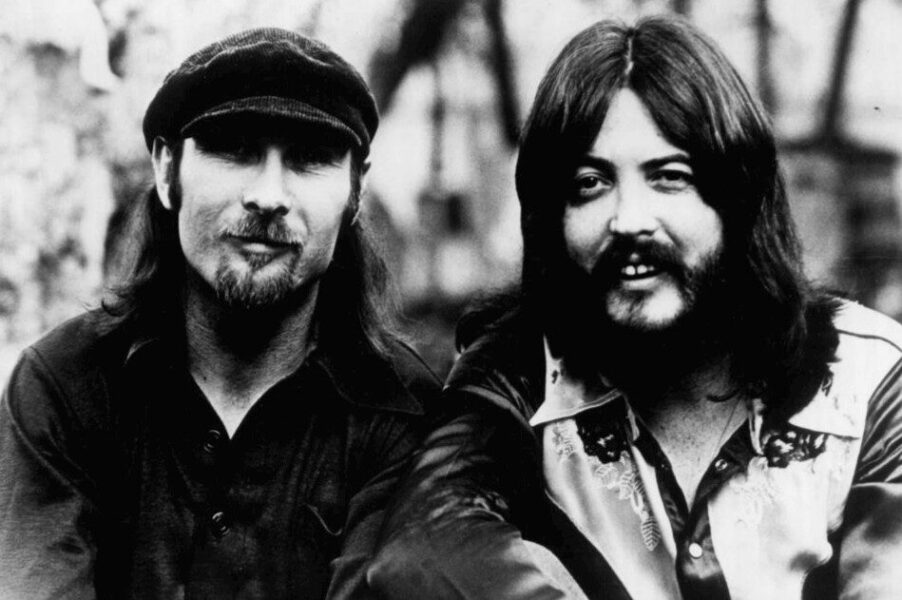
Darrell “Dash” Crofts, one-half of the soft-rock duo Seals & Crofts behind 1970s hits like “Summer Breeze,” “Diamond Girl,” and “Get Closer,” has died at 87.
Crofts died Wednesday of heart failure at the Heart Hospital of Austin in Austin, Texas, his daughter, Lua Crofts Faragher, said. She said he had battled heart problems for years and had been hospitalized for about a month.
Crofts and Jim Seals, both Texas natives, first met in high school and played in several bands before forming Seals & Crofts in the late 1960s. Their mellow blend of pop, country, folk, and jazz helped define the soft-rock sound of the era, alongside acts like America, Bread, and Loggins and Messina.
The duo notched multiple Top 10 hits, including “Summer Breeze,” “Diamond Girl” and “Get Closer.” Other fan favorites included “I’ll Play for You,” “Hummingbird” and “We May Never Pass This Way (Again),” a wistful track that became a staple in high school yearbooks:
“Life / So they say / Is but a game and they’d let it slip away / Love / Like the autumn sun / Should be dyin’ / But it’s only just begun.”
TRENDING: Beloved Actor’s Cause Of Death Revealed
While their lyrics often leaned into themes of love, peace, and nature, Crofts and Seals drew heavily from their Baha’i faith, which they embraced in the 1960s.
“It became a driving force in their careers and the way they lived their lives,” Faragher said.
The pair wove Baha’i ideas into their music — “Hummingbird” references the Baha’i prophet Bahaullah — and even shared elements of their beliefs during performances, including an appearance on “Tonight” with Johnny Carson.
“You start out writing songs like ‘the leaves are green and the sky is blue and I love you and you love me’ — very simple lyrics — but you grow into a much, much broader awareness of life, of love, and of unity,” Crofts told Stereo Review in 1971. “It’s really great to be able to say something real in your music.”
TRENDING: Beloved Actor’s Cause Of Death Revealed
That spiritual influence also sparked backlash. In 1974, a year after the Supreme Court’s Roe v. Wade decision, the duo released “Unborn Child,” a ballad tied to their beliefs about when life begins.
The song was inspired by a poem written by their recording engineer’s wife after watching a television documentary about abortion. Lines included: “Oh tiny bud, that grows in the womb, only to be crushed before you can bloom.”
The track drew protests and radio bans, though the album still went gold, selling more than 500,000 copies.
“I think we got more good results out of it than bad,” Crofts later told the St. Petersburg Press, “because a lot of people called us and said, ‘We’re naming our children after you, because you helped us decide to save their lives with that song.’ That was very fulfilling to us.”
Download the FREE Trending Politics App to get the latest news FIRST >>
