
Politics
RNC Sues To Stop Blue State Law That Allows Non-Residents To Vote
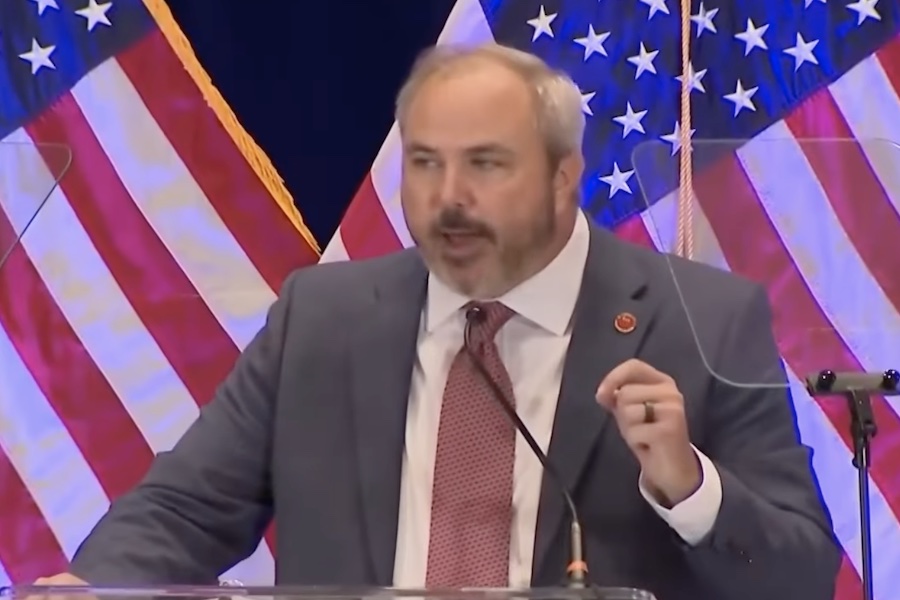
The Republican National Committee has filed a lawsuit to block provisions of Virginia law that allow certain non-residents to register and vote in the state’s elections.
The suit centers on segments of Virginia law that implements the federal Uniformed and Overseas Citizens Absentee Voting Act through the state’s Uniform Military and Overseas Voters Act.
Under one such provision, a “covered voter” includes an overseas voter who was born outside the United States, has not registered or voted in another state, and “is eligible to vote in the last place in which his parent or legal guardian was eligible to vote before leaving the United States,” except for a state residency requirement.
Virginia law further states that the voting residence of such a voter “shall be the last place in which his parent or legal guardian was eligible to vote in the Commonwealth before leaving the United States.”
These sections permit individuals who have never lived in Virginia — and in some cases have never lived in the United States — to use the Federal Post Card Application, the Federal Write-In Absentee Ballot, or the Virginia Voter Registration Application to register. Applicants identify as U.S. citizens living abroad who have never resided in the United States and list as their Virginia address the last place of residence of a parent or legal guardian.
Local election officials then assign them to a precinct in Virginia and issue federal-only absentee ballots. The provisions took effect as part of Virginia’s adoption of the Uniform Military and Overseas Voters Act in 2012, with the specific language addressing never-resident overseas voters added through legislative action in that period to align with federal requirements for military and overseas citizens.
On Monday, April 6, the RNC, RITE PAC, and Virginia resident Matthew Hurtt filed suit against the Virginia State Board of Elections and related officials, challenging the constitutionality of the two code sections.
“This is an action challenging the constitutionality of Va. Code §§ 24.2-452(1)(e) and 24.2-456, which collectively permit the registration and voting of individuals who (a) were born outside of the United States and (b) have never resided in the Commonwealth, in direct violation of Va. Const. art. II, § 1. Virginia has relaxed the Virginia Constitution’s residency requirement for such individuals based solely on the adult individual’s parent’s or legal guardian’s last place of residence in Virginia before leaving the United States,” the lawsuit reads.
The suit argues that while Virginia may accommodate qualified voters who previously resided in the state and are now abroad (such as military personnel or their dependents), it cannot extend voting rights to individuals who have never established residency in the Commonwealth. The complaint explains that assigning a voting residence based solely on a parent’s historical eligibility “negates a constitutional requirement” and that such registration practices authorize ballots for non-residents in federal elections.
It further notes that defendants have approved registrations where applicants explicitly stated they “have never lived in the United States.”
RNC Chairman Joe Gruters commented on the lawsuit in an accompanying press release. “People who have never lived in Virginia — or even in the United States — should not be voting in Virginia’s elections. Virginia officials are ignoring the Virginia Constitution and allowing ineligible voters to cast ballots. The RNC and RITE PAC are taking this action to enforce the law and ensure non-residents are not diluting the votes of Virginians,” he said.
The plaintiffs contend that the challenged provisions cause vote dilution for qualified Virginia residents, impose administrative burdens on political parties, and undermine election integrity. They note that Virginia may comply with federal law for true overseas residents without creating new voters who lack any personal connection to the state.
Similar challenges have succeeded in other states, where courts have ruled that state constitutions’ residency requirements bar registration of individuals who never lived there. The lawsuit seeks a declaration that the provisions are unconstitutional under the Virginia Constitution to the extent they authorize voting by never-residents, along with injunctive relief preventing their enforcement.
RELATED: RNC Holds Significant Cash Advantage Over Dem Rivals Ahead Of Midterm Elections
