
Politics
Snap Survey Finds Overwhelming Support For Trump-Negotiated Ceasefire
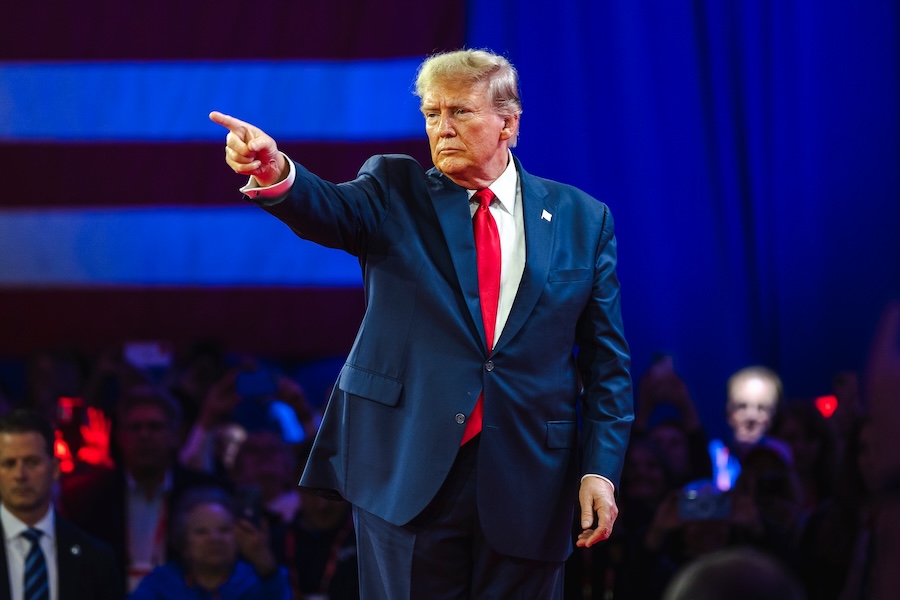
A YouGov daily question released less than 24 hours after the announcement of a ceasefire in the US-Iran conflict found that 41 percent of U.S. adults approve of the United States agreeing to a two-week ceasefire with Iran if the country reopens the Strait of Hormuz.
An additional 25 percent of respondents expressed disapproval, while the remainder expressed no opinion or were unsure. The survey was conducted the same day among 2,854 U.S. adults.
The question was posed shortly after President Donald Trump announced the ceasefire late Tuesday night. Full demographic crosstabs for this specific daily question were not immediately available in the public release, which is consistent with YouGov’s standard practice for many single-question trackers.
Earlier YouGov surveys on related Iran topics, such as support for negotiating a ceasefire, had shown somewhat higher overall support in prior days, but the conditional framing tied to the Strait of Hormuz produced the 41-25 split.
Trump’s announcement of the two-week ceasefire came just ahead of his imposed deadline for further escalation, which would have included extensive strikes on Iranian infrastructure.
Trump stated that the pause in U.S. and allied attacks on Iran was conditional on Iran’s “complete, immediate and safe reopening” of the Strait of Hormuz to commercial shipping. He described the agreement as allowing time to finalize a longer-term peace deal, noting that the United States had already “met and exceeded all military objectives.”
Iran’s Supreme National Security Council confirmed acceptance of the ceasefire. The arrangement was mediated with the help of Pakistani officials, including Prime Minister Shehbaz Sharif and the country’s military chief, as well as contributions from Vice President JD Vance on the U.S. side.
Iran had previously submitted a 10-point proposal, which the U.S. described as a “workable basis” for negotiations during the two-week period. Vice President Vance pushed back on reports that the U.S. had “accepted” the proposal, however, stating that a number of provisions are non-starters.
Under the reported terms, the United States and Israel agreed to halt strikes on Iran for the initial two weeks. Iran committed to allowing safe passage through the strait, pending cooperation with their armed forces for the time being.
Throughout the day Wednesday, the ceasefire has held, but with significant challenges. Direct U.S.-Iran strikes have paused, and initial ship-tracking data indicate that some vessels have begun moving through the Strait of Hormuz, though traffic volume is reported as low and no oil tankers had fully transited according to some monitoring services by mid-day.
Israel and the Gulf States have also accused Iran of violating the agreement by launching attacks, while Iran has claimed that the cessation of Israeli operations against Lebanon is part of the agreement and claimed the U.S. and Israel are responsible for violations.
RELATED: Trump Launches Investigation Linked To CNN Over ‘Fake News’ Iran Letter
