
Politics
Trump’s Iran Ceasefire Rocked Within Hours As Regional Attacks Erupt
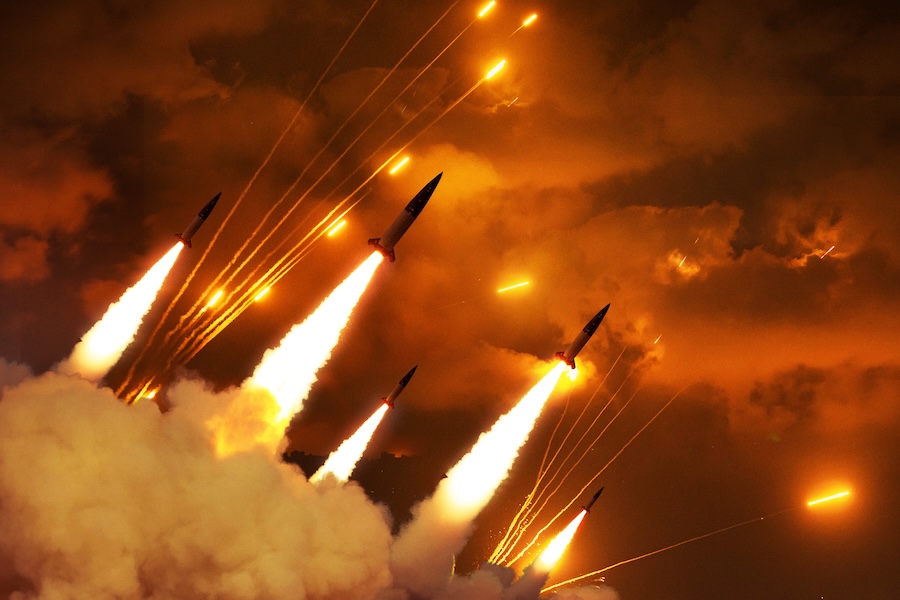
President Donald Trump’s much-touted Iran ceasefire was almost immediately tested, with missile and drone activity erupting across the region within hours—raising doubts about whether the agreement can hold.
The two-week ceasefire, brokered in part through backchannel diplomacy involving regional players, was announced after weeks of escalating conflict between U.S., Israeli, and Iranian forces. Trump framed the pause as a potential off-ramp, halting planned strikes and signaling a willingness to negotiate. But the reality on the ground shifted quickly.
According to Trump, the pause was contingent on the “complete, immediate, and safe” reopening of the Strait of Hormuz, a vital corridor for global energy shipments, as talks continue behind the scenes.
However, conflicting signals quickly emerged. The Iranian navy reportedly told vessels anchored near the waterway on Wednesday that they would still need authorization from Tehran to pass through, raising questions about whether the agreement is being fully honored.
“The president was made aware of those reports before I came to the podium,” press secretary Karoline Leavitt told reporters Wednesday. “That is completely unacceptable. And again, this is a case of what they’re saying publicly is different. Privately, we have seen an uptick of traffic in the strait today. And I will reiterate the president’s expectation and demand that the Strait of Hormuz is reopened immediately.”
Within hours of the announcement, multiple Gulf nations reported intercepting incoming threats. Saudi Arabia said it destroyed nine drones in recent hours, while the United Arab Emirates reported intercepting 17 ballistic missiles and 35 drones.
Kuwait’s military said it intercepted 42 drones and four ballistic missiles launched since early Wednesday, with some targeting oil facilities, power stations, and other critical infrastructure.
The regional strikes followed a wave of Iranian missile barrages targeting Israel around Tuesday night’s ceasefire announcement, setting off sirens in major cities including Tel Aviv and Jerusalem.
Part of the challenge lies in the scope of the ceasefire itself. While U.S. strikes on Iran have been paused, other fronts remain active. Israeli operations targeting Hezbollah in Lebanon have continued, and Iran appears to be applying pressure through indirect channels, including drone and missile activity across the Gulf. That disconnect has created a situation where a “ceasefire” exists on paper, but conflict persists across multiple theaters.
Officials have also cautioned that both sides may be operating under different interpretations of the agreement. Trump has suggested larger goals, including stabilizing key shipping routes like the Strait of Hormuz and opening the door to negotiations on Iran’s nuclear program. Tehran, however, has shown little indication it is prepared to fully scale back its regional posture.
“This is a fragile truce,” press secretary Leavitt told reporters Wednesday when asked about reported violations at a White House press briefing. “Ceasefires are fragile by nature. We’ve seen this with respect to the 12-day war with Iran in Israel last year. It takes time sometimes for these ceasefires to be fully effectuated.”
Concerns about isolated incidents were echoed by Pakistani Prime Minister Shehbaz Sharif, who played a role in brokering the deal. He acknowledged Wednesday that “violations of ceasefire have been reported at few places,” while calling on all parties involved to show restraint and uphold the agreement.
Defense Secretary Pete Hegseth issued a blunt warning to Tehran, making clear that any attempt to exploit the ceasefire would carry consequences.
“It takes time sometimes for ceasefires to take hold,” War Secretary Pete Hegseth cautioned in a news conference Wednesday morning. “We’re prepared if necessary, but we hope and believe it will hold.”
