
Politics
JUST IN: Bombshell Disclosure Reveals Dems’ 2019 Impeachment ‘Whistleblower’ As Biased Actor
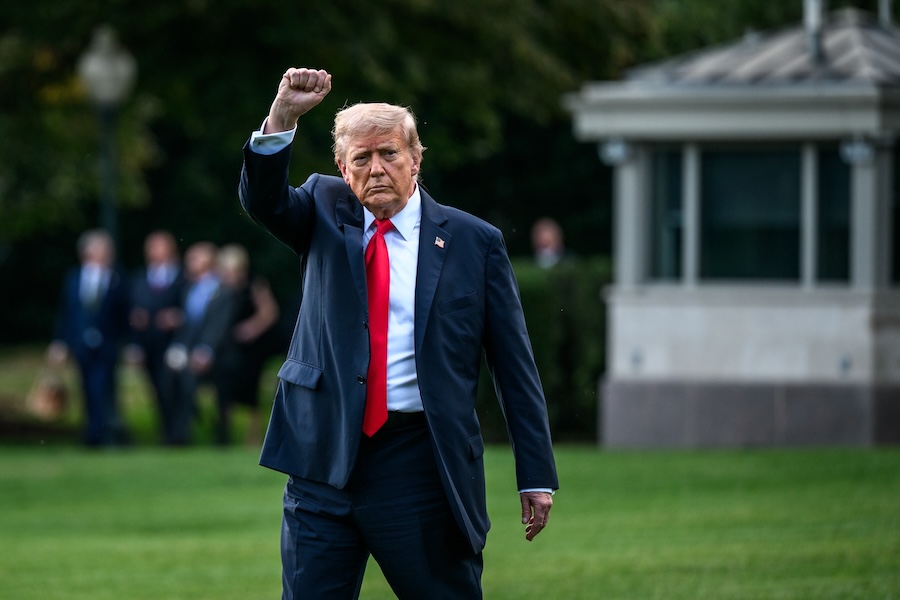
Newly declassified documents are reviving one of the biggest unanswered questions from Democrats’ first impeachment drive against President Donald Trump in 2019: Who was really behind the “whistleblower” complaint, and how political was it from the start?
The papers show the former intelligence community inspector general who fast-tracked the complaint, Michael Atkinson, knew the whistleblower was a registered Democrat with prior ties to Joe Biden, yet still told Congress the complaint was urgent and “appeared credible.”
The records also indicate the anonymous whistleblower met privately with Democratic staffers for then-House Intelligence Committee Chairman Adam Schiff before submitting the complaint in August 2019, but did not disclose those contacts to investigators or on whistleblower forms, according to the declassified transcripts and related materials.
The documents, more than 350 pages of testimony and briefings, were released by House Intelligence Committee Chairman Rick Crawford after Director of National Intelligence Tulsi Gabbard declassified them late last week. Justice Department insiders told outlets the disclosures are now being reviewed as part of an ongoing grand jury probe into an alleged “grand conspiracy” by former Obama and Biden officials to target Trump.
Atkinson, the intelligence community’s watchdog at the time, formally notified Schiff of the complaint in September 2019. That step helped set off the chain reaction that ended in Trump’s first impeachment, driven by a phone call with Ukrainian President Volodymyr Zelenskyy.
The whistleblower alleged Trump “had clearly committed a criminal act” during the call, which lasted about 30 minutes. Trump told Zelenskyy “I would like you to do us a favor,” and urged Ukraine to look into the Burisma scandal involving Biden’s son. Democrats later accused Trump of holding up Ukraine aid to pressure Kyiv, which Trump denied.
The declassified records say Atkinson pushed the complaint forward despite internal concerns about secondhand information and jurisdiction. The documents describe the complaint as “second-hand hearsay,” and indicate Atkinson allowed the case to move through even though the whistleblower was not on the call and relied on others’ accounts.
Atkinson also clashed with then-acting DNI Joseph Maguire, who had a DOJ legal opinion rejecting the determination that the complaint met the standard for an “urgent concern” tied to intelligence activities. The DOJ’s Office of Legal Counsel argued the matter involved “foreign diplomacy,” not intelligence, contained “hearsay” based on “secondhand” information, and did not qualify for mandatory transmission to Congress.
Still, Atkinson told Schiff’s committee, “The complainant’s allegations appear credible to me,” and later testified, “The complainant was not politically biased in any way.”
Behind the scenes, Atkinson also contacted the FBI. The documents say he called then-FBI Director Christopher Wray’s chief of staff about the complaint and made a criminal referral.
Atkinson refused to identify the whistleblower “even now in a classified setting,” citing a “request for confidentiality.” Yet he acknowledged under questioning that the complainant was “a registered member of the Democratic Party and had a prior professional relationship with one of the Democratic presidential candidates for the 2020 election.”
The whistleblower was later identified by RealClearInvestigations as CIA-linked analyst Eric Ciaramella, described in the documents as a Biden loyalist who worked on Ukraine and Russia matters. The records state those facts did not raise red flags for Atkinson, who told lawmakers, “There is no indication of any misconduct by the complainant related to this disclosure,” and added that “the complainant has played by the rules.”
The records also show the whistleblower did not list Schiff’s committee as a prior contact point, despite a form that asked complainants to identify whether they had contacted “the congressional intelligence committees.” Atkinson told lawmakers, “The whistleblower did not check the box for congressional intelligence committees,” and added, “Our investigators also asked the complainant who knew about the complainant’s disclosure. The complainant did not identify the congressional intelligence committees.”
NEW: WHISTLEBLOWER 2019 TRUMP IMPEACHMENT
– Registered Democrat
– “had a prior professional relationship with one of the Democratic Presidential candidates,” according to newly released transcripts from the Intelligence Community watchdog Michael Atkinson.In a 2019 briefing… https://t.co/AxPoXsh0Bi pic.twitter.com/YJrrsI6chW
— Catherine Herridge (@C__Herridge) April 13, 2026
Former House Intelligence member John Ratcliffe, now CIA director, has argued Schiff’s office coached the whistleblower on how to file the complaint and then used classification to keep key details hidden. Schiff sealed Atkinson’s testimony transcript and classified it “Secret,” limiting lawmakers’ ability to publicly cite it. Even impeachment investigators were restricted to viewing it inside a secured SCIF and were barred from bringing phones or taking notes out.
When media reports later revealed Schiff’s staff had interacted with the whistleblower, Schiff said he “misspoke” and insisted, “Please do not suggest by that that I, or anyone else, had an intention to deceive.”
RELATED: WATCH: Kash Patel Takes The Gloves Off, Calls Adam Schiff ‘Biggest Fraud’ In The Senate
Ratcliffe, citing the newly released material, summed up the situation bluntly, “The whistleblower got caught,” and, “The whistleblower made false statements. The whistleblower got caught with Chairman Schiff.”
Download the FREE Trending Politics App to get the latest news FIRST >>
