
Politics
Kamala Harris Fuels 2028 Buzz With Southern Tour To Red States
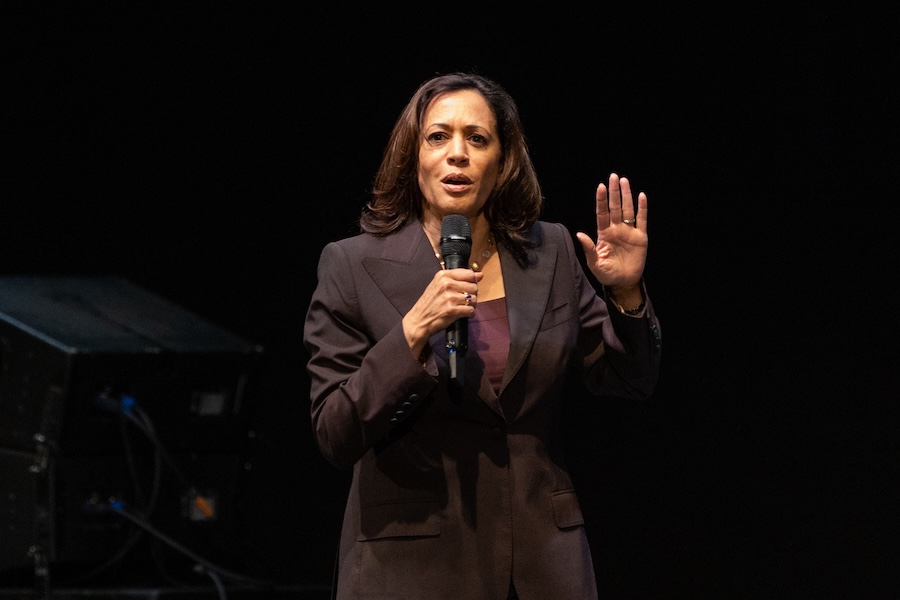
Vice President-turned-political wildcard Kamala Harris is back on the road—and this time, it’s not just another round of party appearances. Her recent swing through South Carolina, Georgia, and North Carolina is quickly being viewed as something bigger: an early test run for a possible 2028 comeback.
Harris has spent the past several weeks headlining Democratic fundraisers and closed-door events across the South, reconnecting with donors, activists, and local party leaders. On paper, the trip is about helping Democrats gear up for the 2026 midterms. In reality, it’s the kind of move seasoned political observers recognize immediately—laying groundwork.
South Carolina now holds a prime position on the Democratic primary calendar, making it a must-win for anyone serious about a presidential run.
Her appearances have focused heavily on energizing core Democratic constituencies, particularly Black voters who remain a cornerstone of the party’s base in Southern primaries. That’s not accidental. It’s a return to familiar political terrain for Harris, who leaned on that support during her rise to national prominence.
From there, the tour extended into Georgia and North Carolina—two states that have become critical battlegrounds in modern elections. Georgia has transformed into a fundraising engine for Democrats, while North Carolina continues to hover just within reach, making it one of the most closely watched swing states in the country.
And while Harris hasn’t formally announced anything, she hasn’t exactly shut the door either. In recent remarks, she acknowledged she is considering her political future and left open the possibility of another presidential run.
The timing is also hard to ignore. The Democratic field for 2028 is wide open, with no clear frontrunner emerging yet. Harris, despite a mixed reception during her previous run at the top of the ticket, still holds one major advantage: name recognition. In a crowded field, that alone can be enough to secure early traction.
“I might. I might. I’m thinking about it… I’ll keep you posted,” Harris said last Friday at the National Action Network’s 35th Anniversary Convention, after being asked by Al Sharpton whether she plans to run for president.
Of course, not everyone is convinced. Critics argue that Harris is still trying to rebuild her political standing after a rocky national campaign and uneven approval ratings. To them, this Southern tour looks less like a launchpad and more like a test to see if the appetite for her candidacy still exists.
By stepping into a fundraising role now, Harris positions herself as a team player—someone helping the party win in the short term while quietly strengthening her own network for the long haul. It’s a strategy that allows her to stay relevant without taking on the risks of an early campaign announcement.
There’s also a practical reality at play. Modern campaigns are built on money and infrastructure, and Harris is tapping into both. High-dollar events in Georgia and North Carolina give her access to donors who could become crucial if she decides to jump in. Meanwhile, grassroots stops help rebuild the kind of ground-level support that often determines primary outcomes.
For now, Harris is keeping things just ambiguous enough to maintain flexibility. She’s visible, active, and engaged—but not officially running.
RELATED: CPAC Straw Poll Clearly Defines 2028 Presidential Race
