
Politics
NEW: Trump Holds Situation Room Meeting After Iran Talks Stall
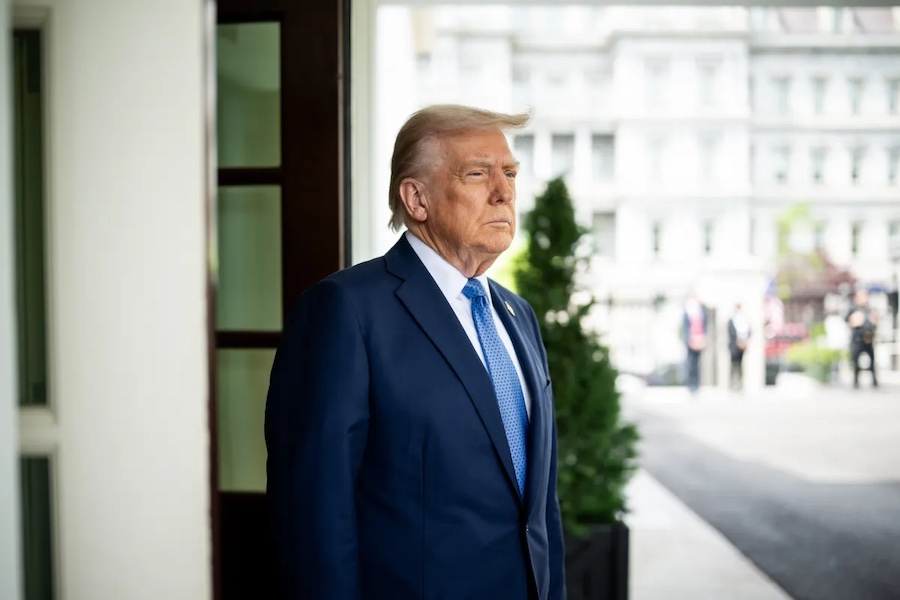
President Donald Trump convened a meeting in the White House Situation Room on Saturday to address the crisis involving the Strait of Hormuz and the status of negotiations with Iran.
The session focused on recent shifts in Iran’s position on the waterway and efforts to advance diplomatic talks amid a fragile ceasefire that is scheduled to expire in coming days.
Attendees included Vice President JD Vance, Secretary of State Marco Rubio, Defense Secretary Pete Hegseth, Treasury Secretary Scott Bessent, White House Chief of Staff Susie Wiles, envoy Steve Witkoff, CIA Director John Ratcliffe, and Joint Chiefs of Staff Chairman Dan Caine, according to a report from Axios.
The White House did not provide comments on the meeting.
The gathering took place as the two-week ceasefire, which began on April 8, is its end. No firm date had been confirmed for the next round of direct US-Iran talks, though mediation involving Pakistan has continued.
A senior US official indicated that differences had narrowed on issues such as Iran’s uranium enrichment levels and its stockpile of enriched uranium, but warned that a breakthrough would be needed soon to avoid resumption of conflict.
In remarks to reporters in the Oval Office on Saturday, Trump described the ongoing discussions as productive despite hardline responses from the Iranian regime. “Very good conversations going on. We’re talking to them,” he said.
Regarding Iran’s actions, Trump said the regime “got a little cute … they wanted to close up the Strait again,” and added, “Iran can’t blackmail us.” He noted that more information on the negotiations’ direction was expected by the end of the day.
The latest developments Cole a day Iranian Foreign Minister Abbas Araghchi announced that passage for all commercial vessels through the Strait of Hormuz would be completely open for the remainder of the ceasefire period. The statement further referenced a separate 10-day ceasefire between Israel and Lebanon that had taken effect.
Trump publicly confirmed the opening and indicated that Iran had agreed not to close the strait again. News of the deal sparked a market rally on Friday and led many to believe that a lasting peace agreement was imminent.
Iranian officials almost immediately presented the reopening as conditional on Friday night, however. Parliament Speaker Mohammad Baqer Qalibaf stated that the strait would not remain open if the US continued its naval blockade of Iranian ports.
A spokesperson for Iran’s president described the measure as a test of US commitments and warned of potential consequences if those commitments were not met.
On Saturday, Iran reversed its position entirely, when the Islamic Revolutionary Guards Corps (IRGC) military command announced that the blockade on shipping through the Strait of Hormuz had been reimposed. Officials cited the ongoing US blockade and what they called repeated breaches of trust during the ceasefire as reasons for the decision.
IRGC gunboats fired on at least one tanker attempting to transit the strait, according to advisories from the UK Maritime Trade Operations and reports from shipping sources. Multiple vessels reported attacks while trying to cross during the brief period of openness.
The US has maintained its naval blockade of Iranian ports, which was put in place after an earlier round of talks stalled. Trump has stated that the blockade will continue until a comprehensive agreement is reached.
The ceasefire remains in effect for the time being, with its expiration adding urgency to diplomatic efforts.
RELATED: US Deployed Groundbreaking, Never Before Used Tech In Iran Rescue Operation
