
Politics
Obama Has Meltdown After Supreme Court Hands Down Blockbuster Ruling
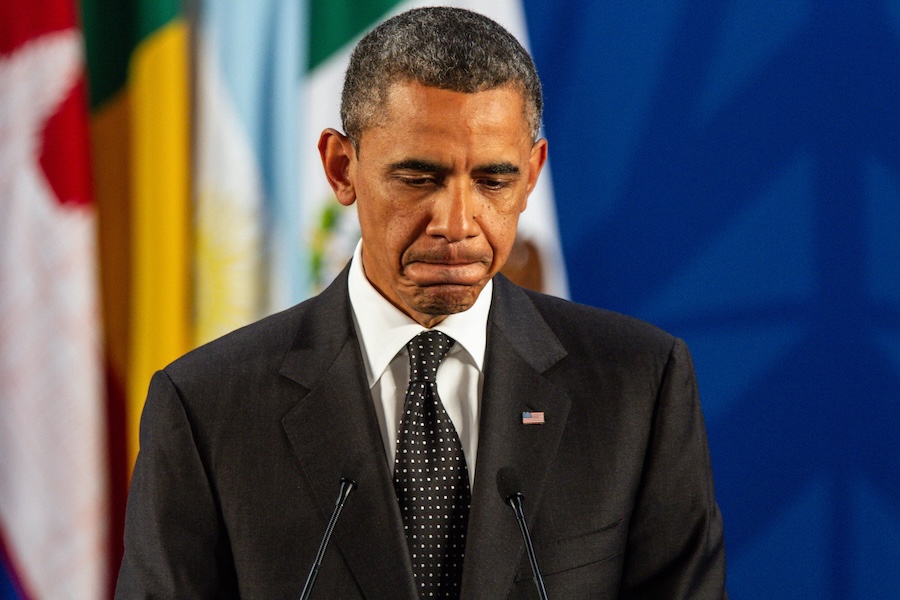
Former President Barack Obama blasted the Supreme Court of the United States on Wednesday following a major decision that reshapes how voting rights law applies to congressional maps nationwide. In a sharply worded post on X, Obama accused the Court’s conservative majority of undermining a “key pillar” of the Voting Rights Act, arguing that the ruling opens the door for states to weaken minority voting power under the cover of partisan map-drawing.
“Today’s Supreme Court decision effectively guts a key pillar of the Voting Rights Act, freeing state legislatures to gerrymander legislative districts to systematically dilute and weaken the voting power of racial minorities,” Obama wrote. He added that the Court appears intent on abandoning its role in protecting minority rights and ensuring equal participation in elections.
The ruling at the center of the controversy stems from a Louisiana redistricting dispute, where the Court struck down a newly drawn congressional map that included a second majority-Black district. In a 6 to 3 decision, the justices determined that the state relied too heavily on race when designing that district, calling it an unconstitutional racial gerrymander under the Equal Protection Clause.
While the immediate outcome invalidates Louisiana’s map, legal experts say the implications are far more significant. For decades, Section 2 of the Voting Rights Act allowed plaintiffs to challenge electoral maps that diluted minority voting power based on their effects, even without proving explicit intent.
The Court’s new ruling raises that bar considerably. Moving forward, challengers must demonstrate intentional racial discrimination.
Today’s Supreme Court decision effectively guts a key pillar of the Voting Rights Act, freeing state legislatures to gerrymander legislative districts to systematically dilute and weaken the voting power of racial minorities – so long as they do it under the guise of…
— Barack Obama (@BarackObama) April 29, 2026
That shift marks a major change in voting rights litigation. The decision also tightens limits on how states can use race when drawing districts.
The Court made clear that even when states attempt to comply with the Voting Rights Act, relying heavily on race as a primary factor can itself violate the Constitution. This creates a legal balancing act for state lawmakers. They remain subject to federal voting rights protections.
Supporters of the decision argue it restores constitutional limits and prevents states from using race as the dominant factor in drawing political boundaries. Obama, however, framed the ruling as part of a trend.
“It serves as just one more example of how a majority of the current Court seems intent on abandoning its vital role,” he wrote, pointing to what he described as a pattern of decisions that reduce protections for minority groups.Despite his criticism, Obama urged political engagement in response.
“The good news is that such setbacks can be overcome,” he added. “But that will only happen if citizens across the country who cherish our democratic ideals continue to mobilize and vote in record numbers.”
Louisiana has been in court over its congressional lines since the last round of redistricting. Black residents make up roughly 30% of the state’s population.
In 2022, Black voters and allied groups successfully sued, arguing the map left them underrepresented and should include a second majority-Black district. Louisiana lawmakers revised the map, and then a separate group of voters who described themselves as “non-African Americans” sued, claiming the revised plan relied too heavily on race.
A three-judge panel agreed with that challenge in 2024, setting the stage for the Supreme Court’s intervention.
Alito framed the decision as a warning that lower courts have stretched Section 2 in a way that can compel race-based decision-making. “Section 2 of the Voting Rights Act of 1965 was designed to enforce the Constitution — not collide with it,” he wrote.
RELATED: BREAKING: SCOTUS Issues Blockbuster Ruling That Could Decide The Midterms
