
Politics
JUST IN: Pentagon Confirms U.S. Adversary Quietly Aiding Iran War Effort
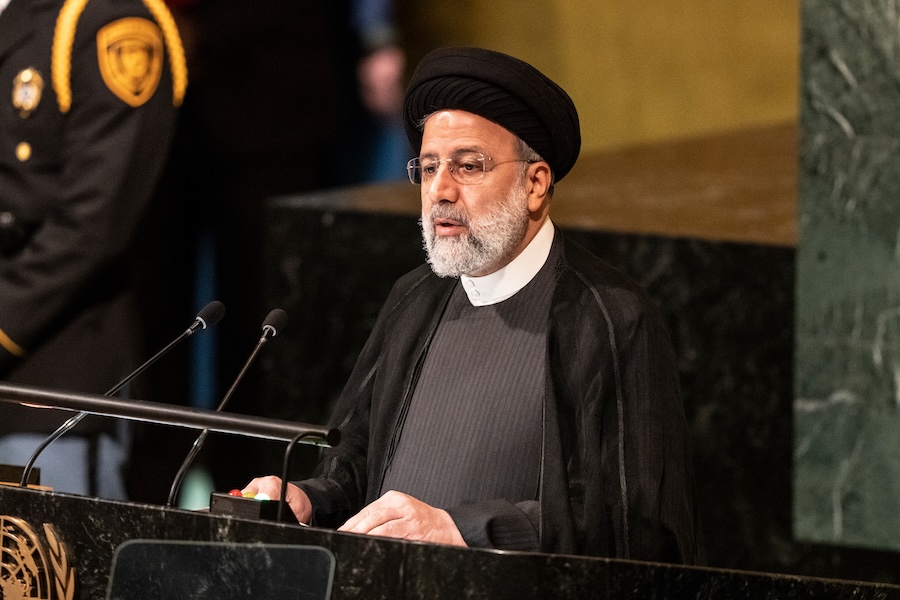
A top Pentagon official confirmed Thursday that a major U.S. adversary is actively assisting Iran behind the scenes as the conflict continues to escalate, raising more concerns about a global alignment against American military operations.
During testimony before the Senate Armed Services Committee, Joint Chiefs Chairman Dan Caine acknowledged that Russian President Vladimir Putin has played a role in supporting Iran’s efforts, though he stopped short of detailing the full extent of that involvement.
“There’s definitely some action there,” Caine told lawmakers, declining to elaborate further due to the public nature of the hearing.
His remarks were quickly reinforced by Committee Chairman Roger Wicker, who made it clear that U.S. officials see Moscow’s involvement as more than symbolic. “There’s no question that Vladimir Putin’s Russia is taking serious action to undermine our efforts for success in Iran,” Wicker said.
The comments come as tensions in the region remain high and U.S. military operations continue under what officials have described as a costly and complex campaign. The Pentagon has estimated that Operation Epic Fury has already cost roughly $28 billion, with defense spending expected to climb further as part of a proposed $1.5 trillion Pentagon budget for 2027.
While officials did not publicly outline Russia’s exact contributions, U.S. intelligence assessments suggest Moscow’s support has largely taken place behind the scenes rather than on the battlefield.
According to defense officials, Russia has been sharing intelligence with Iran, including satellite imagery and surveillance data that can help track U.S. ships and aircraft. This type of assistance allows Iran to respond more effectively to American movements without Russia directly engaging in combat.
Despite this support, Moscow has avoided sending troops or entering the conflict openly, a move analysts say is intentional. Russia remains heavily committed to its ongoing war in Ukraine and appears unwilling to risk a direct military confrontation with the United States or NATO forces.
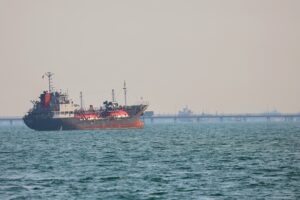
Iran, February 27, 2026: Iran said it would set fire to any ship attempting to pass through the Strait of Hormuz, one of the world’s busiest oil straits.
Instead, officials describe Russia’s role as strategic and calculated, aimed at helping Iran sustain its position while staying below the threshold of outright war.
The relationship between Moscow and Tehran is not new. The two countries have deepened military and economic ties in recent years, particularly as both face heavy U.S. sanctions. Cooperation has included drone technology exchanges, air defense coordination, and broader security partnerships.
Recent reports indicate that Russia may also be providing limited weapons support and technical assistance, though not at a scale that would dramatically shift the balance of power. Beyond the battlefield, Russia has also taken a diplomatic role, frequently condemning U.S. and Israeli actions while calling for negotiations. Moscow has even floated proposals involving the handling of Iran’s enriched uranium as part of potential de-escalation efforts.
Wicker used the hearing to warn that Russia’s actions are part of a larger and more concerning global alignment.
“Xi Jinping leads not only China, but also an axis of aggressors,” Wicker said. “This growing alliance cannot be denied. It includes China, Russia, Iran and North Korea. These four dictatorships support each other’s aggressive endeavors. They prop each other up financially, and they scheme to undermine America’s objectives.”
The hearing also comes ahead of another expected appearance by Pete Hegseth, who has already faced intense questioning from lawmakers over the administration’s handling of the conflict and its long-term strategy.
Complicating matters further, U.S. officials say Iran has continued to find ways to bypass sanctions, including using tankers disguised as Iraqi vessels to move large amounts of crude oil despite ongoing blockades ordered by President Donald Trump.
Analysts say Russia’s involvement serves multiple strategic goals. By supporting Iran indirectly, Moscow can challenge U.S. influence in the Middle East while diverting American attention and resources away from other global priorities, including Eastern Europe.
For now, officials stress that Russia has not crossed the line into direct military engagement. But as the conflict drags on, the growing coordination between U.S. adversaries is becoming harder for policymakers in Washington to ignore.
