
Politics
NEW: Trump Hints At ‘Immediate’ U.S. Action In Cuba
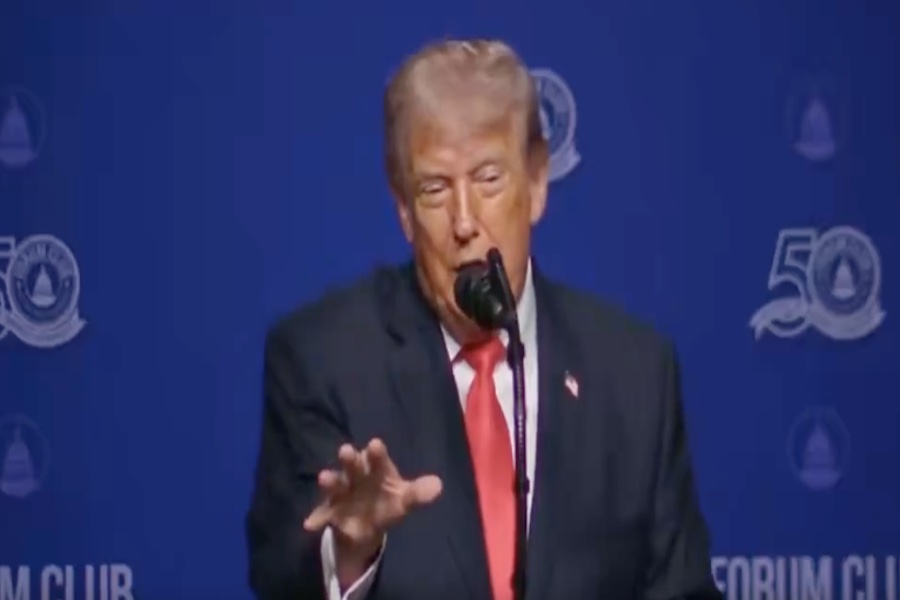
President Donald Trump announced Friday, May 1, that the United States would be “taking control” of Cuba in the immediate future.
“There’s this place called Cuba which we will be taking over almost immediately. Cuba’s got problems. We’ll finish one first…I like to finish one first,” the president declared during a speaking event in West Palm Beach, Florida on Friday evening.
He added that after concluding operations related to the Iran conflict, a U.S. Navy aircraft carrier would be redirected toward Cuba. “On the way back from Iran, we’ll have one of our big…maybe the USS Abraham Lincoln aircraft carrier, the biggest in the world,” the president said.
“We’ll have that come in, stop about 100 yards offshore. They’ll say: ‘Thank you very much. We give up’…I like to finish a job.”
The remarks followed Trump’s signing of an executive order earlier that day expanding U.S. sanctions against the Cuban government and its affiliates. The order targeted individuals, entities, and supporters involved in Cuba’s security apparatus, corruption, or human rights violations.
A White House fact sheet described the measures as addressing “the national security threats posed by the communist Cuban regime” and declared the situation with Cuba an “unusual and extraordinary threat” to U.S. national security and foreign policy.
WATCH:
President Trump has long hinted at action in Cuba, be it military or otherwise. “I do believe I’ll be … having the honor of taking Cuba. That’s a big honor. Taking Cuba in some form,” the president said while taking questions in the Oval Office on March 2026. “I mean, whether I free it, take it. Think I can do anything I want with it. You want to know the truth.”
At the time, Cuba was experiencing an island-wide power blackout amid an economic crisis worsened by a U.S.-imposed oil blockade following the January 2026 U.S. operation in Venezuela. The blackouts sparked intense protests against the communist regime, which had maintained a close relationship with deposed Venezuelan dictator Nicolas Maduro.
Amid the increased economic pressure — which have built upon decades of sanctions on the Cuban regime — negotiations have continued. On April 10, a senior U.S. State Department delegation traveled to Havana for extended talks, marking the first such visit since 2016.
The two sides discussed covered prisoner releases (including high-profile political prisoners), economic reforms such as loosening restrictions on private enterprise, internet connectivity, compensation for properties nationalized after the 1959 Revolution, political freedoms, and greater law enforcement cooperation, according to the State Department.
Cuba has made some concessions, including the release of political and common prisoners through Vatican-mediated amnesties and regulatory changes allowing greater private enterprise and overtures to the Cuban diaspora.
The U.S. has maintained a near-total fuel blockade imposed since February 2026, which has caused widespread power outages and humanitarian challenges, though limited easing occurred in late March with approvals for specific oil shipments and $6 million in humanitarian aid to eastern Cuba.
U.S. officials have indicated openness to a diplomatic solution but have set expectations, including a reported two-week deadline around mid-April for the release of high-profile prisoners as a good-faith measure. The Pentagon has been directed to prepare contingency plans for potential military operations, though no specific imminent action has been confirmed.
RELATED: Trump Tells Congress That The Iran War Is ‘Terminated’
