
Politics
JUST IN: Cargo Ship Attacked In Strait Of Hormuz
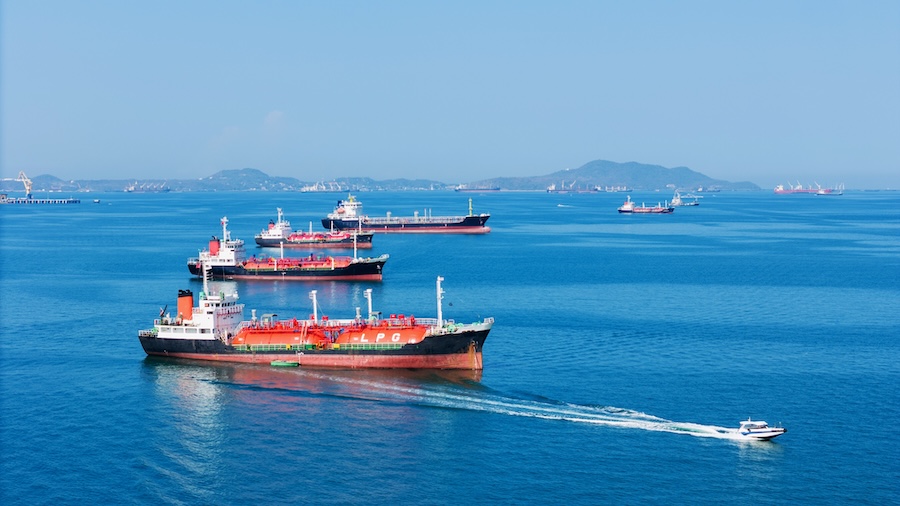
A cargo ship was attacked by multiple small craft while sailing northbound near the Strait of Hormuz on Sunday, May 3, according to the United Kingdom Maritime Trade Operations Center. The incident comes as the Iranian regime has refused to re-open the vital waterway, which has been closed under threat of attack since hostilities erupted on February 28.
The incident occurred approximately 11 nautical miles west of Sirik, Iran, just east of the strait entrance. The master of the vessel reported the attack, and UKMTO issued a warning to other vessels.
“The Master of a northbound bulk carrier has reported being attacked by multiple small craft. All crew reported safe and no environmental impact reported. Vessels are advised to transit with caution and report any suspicious activity to UKMTO, authorities are investigating,” the warning stated.
Tracking data appears to indicate that the vessel involved was the Liberian-flagged bulk carrier Minoan Falcon. No group has claimed responsibility, and the ship’s crew remains safe with no reported damage requiring abandonment or pollution, according to the U.S. Maritime Trade Operations Center.
BREAKING: A large cargo ship reports being attacked by multiple small boats in the Strait of Hormuz just 11 miles from Iran's coast. pic.twitter.com/1t6XIfpw9H
— Fox News (@FoxNews) May 3, 2026
Iran’s military has repeatedly warned that any ship attempting to navigate the strait would face attack unless it pays a toll and demonstrates no affiliation with the United States or Israel. Iran has framed the tolls as part of a broader proposal in ongoing diplomatic efforts, including a provision that would allow it and Oman to collect fees on vessels using the strait.
The Islamic Revolutionary Guard Corps Navy has announced plans to enforce “new equations and rules” for the Persian Gulf and Strait of Hormuz, following a directive from Supreme Leader Ayatollah Seyyed Mojtaba Khamenei.
Officials have stated that unauthorized vessels, particularly those perceived as linked to opposing parties, will face interception.
In response, the United States has enforced a naval blockade on Iranian ports since April 13. The blockade, implemented by U.S. Central Command forces, targets vessels entering or departing Iranian ports and coastal areas along the Strait of Hormuz and the Persian Gulf.
According to a CENTCOM press release, the measure is applied impartially to all nations’ ships in the specified zones, though it does not impede freedom of navigation for vessels transiting the strait to or from non-Iranian ports.
The U.S. has warned shipping companies against making any payments to Iran for passage, with the Office of Foreign Assets Control stating that such tolls — whether in cash, digital assets, or other forms — could result in sanctions.
Negotiations between the two sides remain in a state of limited progress under a shaky ceasefire that has held for approximately three weeks. Iran has submitted new proposals, including 10-point and 14-point plans delivered through Pakistani mediators, though both were rejected by President Donald Trump.
Indirect talks have continued, though a lasting agreement has not been reached.
RELATED: Trump Tells Congress Iran War Is ‘Terminated’
