
Politics
VIDEO: Statehouse Descends Into Chaos As GOP Legislature Votes To Redistrict, Liberals Melt Down
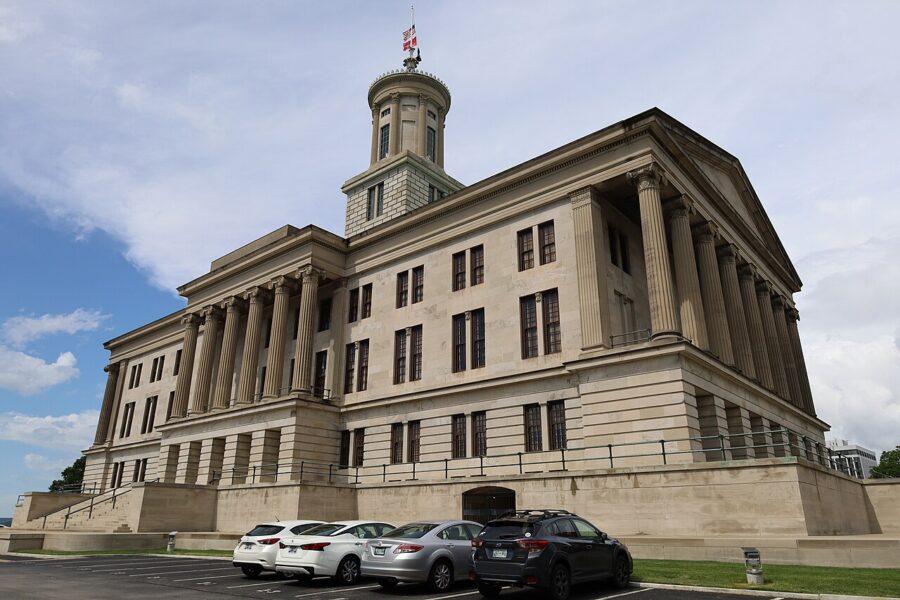
NASHVILLE, Tenn. — Tennessee Republicans on Wednesday pushed a new congressional map through the Legislature, approving a plan that splits Memphis and reshapes the state’s lone Democratic seat in a rapid-fire sprint after last week’s U.S. Supreme Court ruling that narrowed how the Voting Rights Act can be used to challenge district lines.
The plan breaks up Shelby County, home to Memphis, into three separate districts. Democrats and Black leaders say the move is designed to dilute the political power of a majority-Black city that has long anchored the 9th Congressional District, Tennessee’s only Democratic seat in the U.S. House.
Republicans argue they are responding to the Supreme Court’s guidance and protecting the state from legal exposure. They say the new lines are driven by partisan goals, not race, and they have framed the map as a conservative counterpunch in a widening national redistricting fight ahead of November’s midterms.
“This is what it means to be America’s conservative leader,” Senator Marsha Blackburn, the Republican front-runner for governor, said. “Let’s get it done.”
Under the newly approved map, Shelby County is split into three parts. One of the proposed districts runs along Tennessee’s western border before stretching southeast to include part of Williamson County, a suburban county outside Nashville. Two other districts each take pieces of Shelby County and then extend into more rural, Republican-leaning communities in West Tennessee.
Democrats warned the result is a clear attempt to erase Memphis’ influence in Congress by scattering its voters across districts that would be more favorable to Republicans.
Republican leaders pointed to the Supreme Court’s Louisiana decision as the trigger. In that ruling, the court struck down a Louisiana congressional map that included two majority-Black districts, finding it unconstitutional because race was used as the primary factor in drawing the lines. The decision has set off a scramble across Southern states with Republican leadership, where majority-Black districts are now being reassessed ahead of the 2026 elections.
🚨 BREAKING: TENNESSEE HOUSE PASSES 2026 REDISTRICTING — and liberals have thrown the chamber into complete and utter CHAOS
Democrats are going berserk in a frenzy, WALKING OUT and some even being REMOVED by officers! 🤣
9R-0D Congressional map! 🔥
What a glorious sight to… pic.twitter.com/MMMJwnacmq
— Eric Daugherty (@EricLDaugh) May 7, 2026
Tennessee House Speaker Cameron Sexton said the state’s move tracks with the court’s language and reduces the risk of future lawsuits.
“The Supreme Court has opined that redistricting, like the judicial system, should be colorblind — the decision indicated states like Tennessee can redistrict based on partisan politics,” Sexton said in a statement. “Tennessee’s redistricting will reduce the risk of future legal challenges while promoting sound and strategic conservatism.”
The vote came amid loud protests and tense scenes in and around the Capitol, where lawmakers met in a special session environment that has grown increasingly volatile. Hundreds of demonstrators packed hallways and committee areas over multiple days, with chants and boos echoing through the building as state troopers cleared some rooms and lawmakers moved between meetings.
Democrats, whose opposition carried little weight against the Republican supermajority, compared the map to old suppression tactics and said the GOP is using the Supreme Court ruling as political cover.
“History will not look back kindly on you when you had an opportunity to do what was right and you chose to do something else,” said State Senator Raumesh Akbari, a Memphis Democrat, during an emotional plea on the Senate floor.
The shift also puts Rep. Steve Cohen, a white Democrat who has represented Memphis since 2007, squarely in the crosshairs. Cohen has repeatedly maintained support among many Black voters and is facing a primary challenge from State Rep. Justin J. Pearson, a Black Democrat. Both joined a rally against the map earlier in the week.
Cohen blasted the plan online, calling it “a blatant, corrupt power grab that would destroy the Black community’s and our entire city’s voice.”
The new lines are expected to scramble campaign strategies across Tennessee, including the Cohen-Pearson contest. Under the approved map, the proposed 9th District stretches farther east along the Tennessee-Mississippi border, changing which communities are grouped together and altering the electorate.
The map also reshapes Middle Tennessee. Nashville has already been split among three Republican-leaning districts in recent cycles, and under the new plan, the 5th District now represented by Republican Rep. Andy Ogles no longer contains parts of Davidson County, which encompasses Nashville.
Ogles praised the shift, saying the map “affirms a foundational truth: Tennessee must be represented by Tennesseans, not socialist Democrats.”
“To my new district: I will be your America First warrior in Congress,” he added.
Democrats countered that the redesign also shores up Ogles, who has drawn backlash over anti-Islam comments and now faces a well-funded challenger, Mayor Chaz Molder, a Democrat from Columbia, Tennessee..
“They’re trying to redraw the maps to protect him after the game has already begun,” Molder wrote on social media. “I’m not backing down. Game on!”
Across the country, Tennessee joins a growing list of states redrawing maps mid-decade as both parties chase an edge in the battle for the U.S. House. After President Donald Trump urged Republican-led states to move first, Democrats have responded with their own calls for aggressive remaps in blue strongholds.
RELATED: NEW: Marsha Blackburn Proposes 9-0 Congressional Map For Tennessee
With Tennessee’s plan now approved, the next fight is expected in court. A legal challenge is widely anticipated, especially with the state’s primary already on the calendar for Aug. 6 and election administrators facing pressure to implement new district boundaries on a tight timeline.
Download the FREE Trending Politics App to get the latest news FIRST >>
