
Politics
JUST IN: Senate Confirms Trump’s Federal Reserve Pick
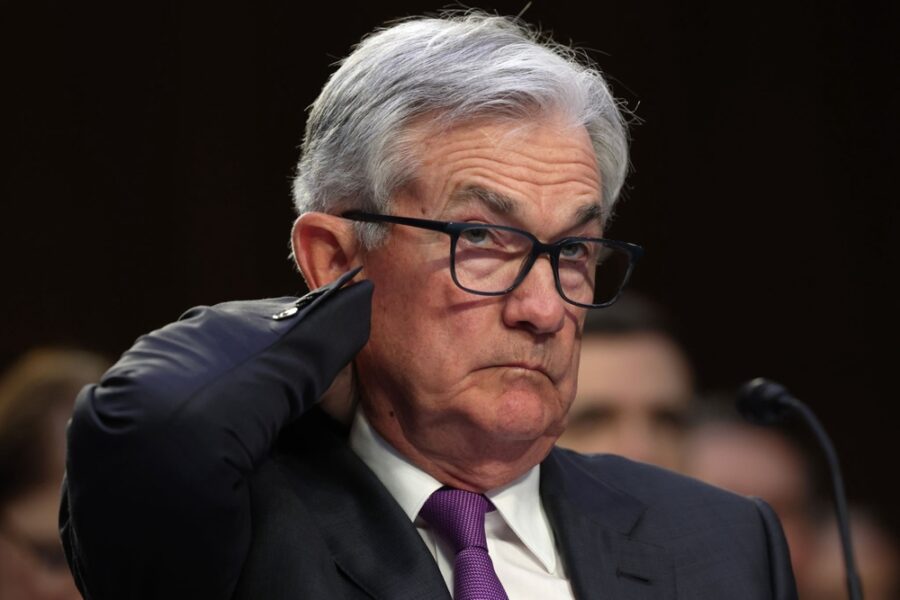
President Donald Trump scored a major win Tuesday after the Senate confirmed Kevin Warsh to the Federal Reserve Board of Governors, clearing the way for the former central banker to potentially become the next face of the Fed.
The Senate voted 51-45 to confirm Warsh to a 14-year term on the Fed’s seven-member board, putting one of Trump’s preferred economic voices in position ahead of a separate vote later this week on whether he will officially replace outgoing Fed Chair Jerome Powell.
The confirmation marks a pivotal moment in Trump’s long-running battle with Powell over interest rates and monetary policy. Trump has repeatedly blasted Powell for refusing to slash rates more aggressively, once calling him a “moron” and a “stubborn mule” as the White House pushed for looser policy to stimulate growth.
The vote also intensifies scrutiny over the Federal Reserve’s future direction as Trump attempts to reshape the central bank with allies more aligned with his economic agenda.
Warsh, 55, is no stranger to the Fed. The Stanford University and Harvard Law School graduate previously served as a Fed governor from 2006 through 2011, including during the height of the global financial crisis. Since leaving the central bank, he has worked at Stanford’s Hoover Institution and advised billionaire investor Stanley Druckenmiller.
Trump allies have increasingly rallied around Warsh as a steady but reform-minded choice to lead the central bank after Powell’s term as chair expires Friday.
Warsh is taking over the board seat previously held by Stephen Miran, a Trump adviser who joined the Fed last fall after an early resignation created a vacancy. Miran’s official term expired in January, though he remained on the board until his replacement was confirmed.
Miran became known for consistently pushing for lower interest rates while serving on the Federal Open Market Committee. He dissented from every rate decision this year after the committee chose to hold rates steady, arguing instead for cuts. During the Fed’s final meetings of 2025, Miran also argued reductions should have gone further.
Warsh has also criticized the Federal Reserve in recent years, targeting everything from the size of the central bank’s balance sheet to its communication strategy and regulatory approach. While he was once viewed as more hawkish on inflation risks, he has recently signaled openness to rate cuts under the right conditions.
Still, during his confirmation hearing, Warsh sought to reassure lawmakers that he would not act as a political operative for Trump.
“He never asked me to predetermine, fix or decide on any interest rate decision, nor would I ever do so,” Warsh told senators last month.
“I will be an independent actor if confirmed as chair of the Federal Reserve,” he added.
The confirmation battle unfolded against the backdrop of growing controversy surrounding Powell, who has faced mounting pressure and uncertainty tied to a criminal probe that has shadowed the final stretch of his tenure.
Warsh’s term on the board will run through 2040, potentially giving Trump’s Federal Reserve pick enormous influence over U.S. monetary policy for years to come.
Download the FREE Trending Politics App to get the latest news FIRST >>
