
Politics
NEW: Top Trump Foe Officially Ousted
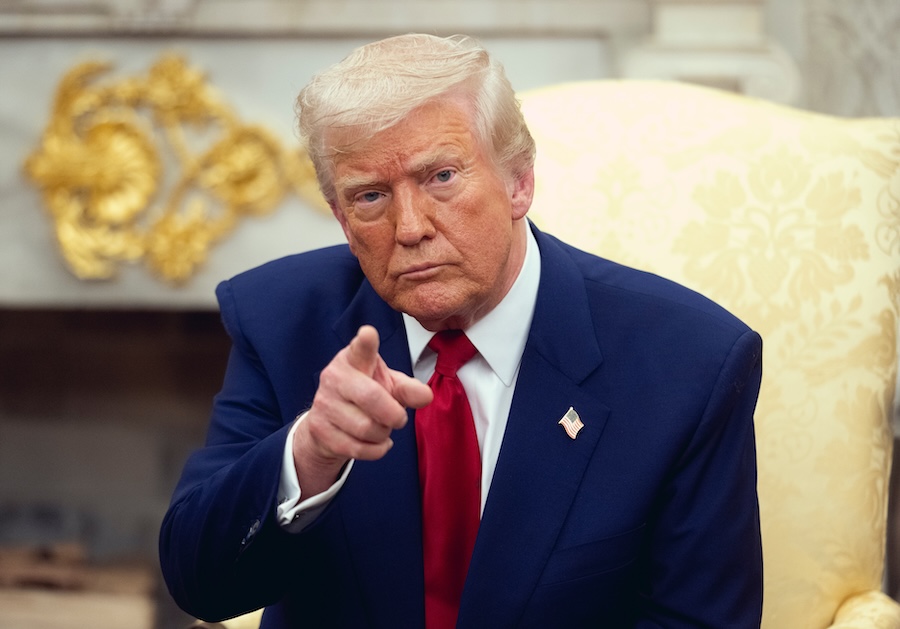
Jerome Powell is out at the Federal Reserve after an eight-year run that saw the wildest economic swings in modern history, from the pandemic crash to the worst inflation in more than four decades and a relentless political pressure campaign from President Donald Trump.
Powell’s term ends Friday. Kevin Warsh has been confirmed by the Senate and is set to take over as chair of the central bank, which is charged with keeping prices stable and maximizing employment.
Former colleagues described Powell as a steady hand who leaned on consensus inside the Fed but could move fast when markets were panicking. They argued the job he faced was unlike anything most modern chairs have dealt with.
“It’s hard to think about another Fed chair who faced such a combination of punches to the US economy,” Patrick Harker, who served as president of the Federal Reserve Bank of Philadelphia from 2015 to 2025, told CNN.
“You really have to go back to Marriner Eccles for a Fed chair who dealt with anything similar to Jay [Jerome Powell]. He dealt with the Great Depression and the second World War,” Harker said.
Powell’s defining crisis hit in early 2020, when COVID-19 froze commerce, hammered output and triggered a historic surge in unemployment. Markets spiraled, investors bolted for cash and credit markets tightened fast.
The Fed responded with rare emergency meetings in March 2020, cutting rates to near zero and launching programs aimed at keeping credit flowing. Powell later called the response an “unprecedented” effort to act “forcefully, proactively, and aggressively” to support the economy. He described the goal as building a “bridge” to recovery.
“The pandemic was not anything that the Fed had experienced before,” Loretta Mester, who served as Cleveland Fed president from 2014 to 2024, told CNN. “It was a health situation that had implications for the economy, fiscal policy and monetary policy.”
After the initial crash, the economy roared back. Businesses scrambled for workers, wages climbed, supply chains struggled to recover and consumer demand stayed hot. The result was a brutal inflation surge that outlasted the early expectations in Washington and on Wall Street.
Powell and other Fed officials initially suggested higher prices would be “transitory,” a call that later became a political and economic boomerang. By March 2022, the Fed began hiking rates. It became the most aggressive tightening cycle since the 1980s, with Powell warning households about the “pain” that could come with higher borrowing costs.
Even so, the economy avoided a recession, a fact allies point to as proof the Fed didn’t wreck the labor market while trying to bring inflation down.
Powell’s critics argue the central bank moved too slowly before inflation hit a four-decade high in June 2022. Mester acknowledged the delay but pointed to how unusual the moment was.
Mester told CNN “we did act too slowly,” but said it was an “unprecedented situation” and no one really knew how it would ultimately play out.
Harker said the misread was widespread, not just inside the Fed.
“The consensus of not just the Fed, but of the economics profession at the time, was that inflation was going to be transient,” Harker said. “This was not just a Fed mistake, it was really a mistake of forecasters on Wall Street and academic economists.”
Powell’s second defining fight wasn’t just about rates. It was about the Fed’s independence.
Trump began hammering Powell months into his chairmanship in 2018 for not cutting rates. The attacks returned and intensified after Trump’s second-term win, with the president arguing rates should be lowered to reduce government borrowing costs and boost growth.
Powell repeatedly insisted the Fed sets policy based on the economy, not political demands. “Independence is what allows us to do our job. It’s critical that we have that so that we can preserve price stability,” he told reporters in March.
But the White House pressure didn’t stop. Trump publicly insulted Powell and floated firing him. Allies also seized on renovations at the Fed’s headquarters as a talking point, and the administration’s push involving Fed Governor Lisa Cook became a major flashpoint headed to the Supreme Court.
Powell, for his part, pushed back in public and in court. At his final news conference as chair, he framed the fight as bigger than one man.
RELATED: JUST IN: Senate Confirms Trump’s Federal Reserve Pick
“It’s not about the Fed or the institutions, it’s about the benefits of a central bank that makes decisions based on analysis and our best thinking rather than trying to help or hurt politicians,” he said.
Powell also signaled he plans to remain a Fed governor for now and said he will not try to steer Warsh’s leadership. He offered one piece of advice to his successor.
“Stay out of elected politics,” Powell said. “If you want democratic legitimacy, you earn it by your interactions with our elected overseers, and so it’s something you need to work hard at, and I have worked hard at it.”
Download the FREE Trending Politics App to get the latest news FIRST >>
