
Politics
JUST IN: US, Iran Trade Strikes As Negotiations Falter
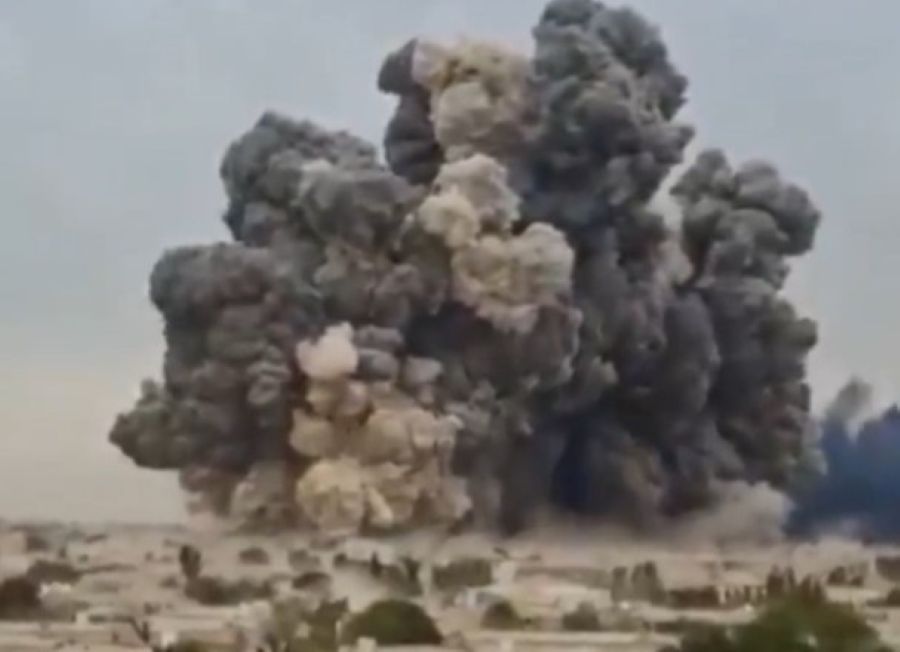
Iran and the United States exchanged fresh military strikes over the weekend and into Monday as negotiations aimed at ending the conflict remained stalled, underscoring the fragile nature of the ceasefire that has been repeatedly tested in recent weeks.
The U.S. military said it carried out what it described as self-defense strikes against Iranian radar and drone-control facilities after Tehran allegedly targeted American assets in the region.
Monday morning, Kuwait’s military announced it was responding to what it called “hostile missile and drone threats.” In a post on X, Kuwaiti officials said explosions heard in the country were the result of air defense systems intercepting incoming threats. The statement did not identify the source of the attack or its intended target, though Kuwait hosts a major U.S. air base that has previously come under attack from Iran and Iranian-backed groups.
U.S. Central Command said Sunday that American forces struck targets in Goruk and on Iran’s Qeshm Island after Iran shot down a U.S. MQ-1 drone operating over international waters.
According to CENTCOM, U.S. fighter aircraft destroyed Iranian air-defense systems, a ground-control station and two one-way attack drones that officials said posed a direct threat to ships moving through regional waterways.
“No U.S. service members were harmed,” CENTCOM said.
Iran quickly responded. The Islamic Revolutionary Guard Corps said Monday that its aerospace forces targeted the source of what it described as a U.S. attack on a telecommunications tower located on Sirik Island in Hormozgan province. Iranian officials did not disclose the location of the base they targeted.
RELATED: Iran Lashes Out, Issues Sinister Warning To Trump
In a statement carried by state media, the Guard warned that if American strikes continue, Iran’s response would be “completely different” and that Washington would bear responsibility for the consequences.
The latest exchange marks another escalation in a conflict that has continued despite a ceasefire reached in early April. The U.S. and Iran have traded strikes multiple times since then, including an Iranian attack on a military air base last week.
Meanwhile, efforts to negotiate a broader peace agreement remain bogged down by disputes over Iran’s nuclear and missile programs.
President Donald Trump addressed criticism of the slow-moving talks in a social media post Monday morning.
“Just sit back and relax,” Trump wrote. “Iran really wants to make a deal, and it will be a good one for the U.S.A. and those that are with us.”
The war has killed thousands, primarily in Iran and Lebanon, along with 13 American service members. The conflict has also rattled global energy markets after Iran effectively shut down the Strait of Hormuz, one of the world’s most critical oil shipping routes.
Trump has insisted that any final Iran agreement must include a permanent commitment that Tehran will never obtain a nuclear weapon. He has also demanded the full reopening of the Strait of Hormuz for “unrestricted shipping traffic, in both directions,” along with the removal of any naval mines from the waterway.
Iranian officials have accused the Trump administration of delaying a deal through what they call “excessive demands.”
Complicating matters further is the ongoing conflict in Lebanon, where Israeli forces continue military operations against the Iran-backed Hezbollah terror group despite a ceasefire arrangement.
Israeli Prime Minister Benjamin Netanyahu said Sunday that Israel intends to maintain control over additional territory in Lebanon after Israeli troops captured Beaufort Ridge, a strategically important hilltop fortress and the deepest Israeli advance into the country in more than two decades.
As fighting continues, diplomatic efforts remain underway.
A U.S. official said Secretary of State Marco Rubio recently spoke with both Netanyahu and Lebanese President Joseph Aoun as part of negotiations aimed at reducing tensions. The official said Rubio proposed a framework that would “create space for gradual de-escalation and an effective cessation of hostilities” but did not provide additional details.
Iranian Foreign Ministry spokesman Esmail Baghaei said Monday that developments in Lebanon remain directly tied to broader negotiations.
Baghaei said a ceasefire in Lebanon was “integral” to both the current ceasefire and “any final agreement to end the war.”
He also accused the United States of violating the ceasefire through attacks on Iranian commercial shipping, calling the actions “both a violation of the ceasefire and an act of aggression against Iran.”
Despite ongoing communications between the two sides, Baghaei acknowledged that negotiations remain unresolved.
He said the U.S. and Iran continue to exchange messages, but “no final result has been reached.”
Download the FREE Trending Politics App to get the latest news FIRST >>
