
Politics
Mojtaba Khamenei Breaks His Silence After Signing Of US-Iran Peace Memo
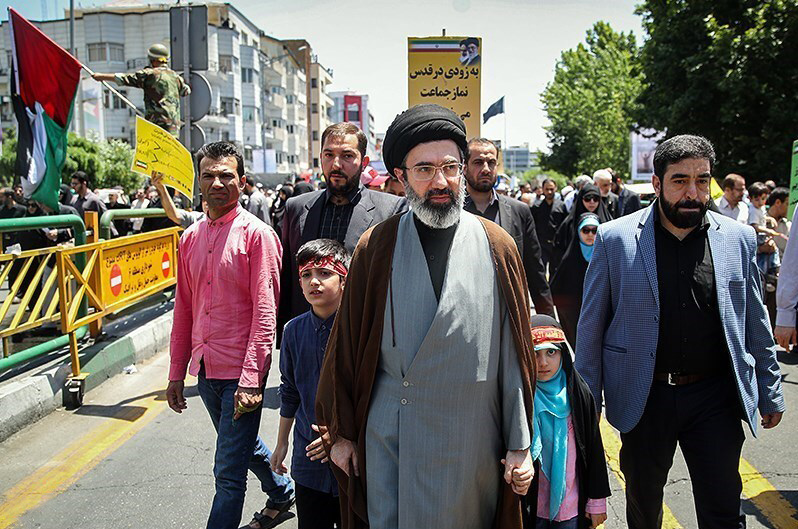
Iran’s Supreme Leader Ayatollah Mojtaba Khamenei has issued his first public comments on the memorandum of understanding (MOU) signed the previous day between Iranian President Masoud Pezeshkian and U.S. President Donald Trump. In the written message, shared through Iranian state media, Khamenei addressed his decision to authorize the agreement despite personal reservations.
The supreme leader — who was reportedly several injured by an Israeli airstrike in the opening days of the conflict — stated that he had a different opinion” on the agreement “but due to the commitment that the honorable President gave me on behalf of himself and other members in safeguarding the rights of the Iranian nation and the resistance front, and explicitly accepted responsibility for it, I granted permission.”
He further noted that if the American side pursued what he called excessive or greedy demands, Iran would not accept them. Khamenei emphasized that future negotiations would not involve yielding to the opposing side’s position.
The full text of the message of Imam Sayyid Mojtaba Khamenei, the Leader of the Islamic Revolution, addressing the Iranian nation regarding the Memorandum of Understanding between the presidents of Iran and America, June 18, 2026 pic.twitter.com/9nSD2NfkVe
— Ayatollah Mojtaba Khamenei (@MKhamenei_ir) June 18, 2026
The statement comes just a day after the MOU was signed by both sides. The agreement, sometimes referred to as the Islamabad Memorandum due to mediation efforts by Pakistan’s Prime Minister Shehbaz Sharif, was initially prepared digitally and witnessed earlier in the process before formal presidential signatures.
The 14-point MOU establishes an immediate ceasefire across relevant fronts, including operations in Lebanon, and takes effect upon signing. Key provisions include the reopening of the Strait of Hormuz for commercial shipping, the lifting of the U.S. naval blockade on Iranian ports, and initial sanctions relief measures, such as waivers for Iran’s fossil fuel sector and the unfreezing of certain Iranian assets.
A core element is a 60-day period for further negotiations toward a more comprehensive agreement. This phase is expected to address Iran’s nuclear program— with Iran reaffirming it will not pursue nuclear weapons while maintaining rights to peaceful nuclear activities—missile capabilities, sanctions relief details, and potential reconstruction support estimated around $300 billion in some discussions.
The MOU is framed as an interim step, not a final treaty, allowing either side to reassess progress. U.S. officials have described it as non-binding in the traditional sense but with firm language on immediate actions like the ceasefire and Hormuz reopening.
RELATED: Trump Sends Ominous Message To Iran At G7
