
Politics
U.S. Strikes Iran In Response To Attack On Commercial Vessel
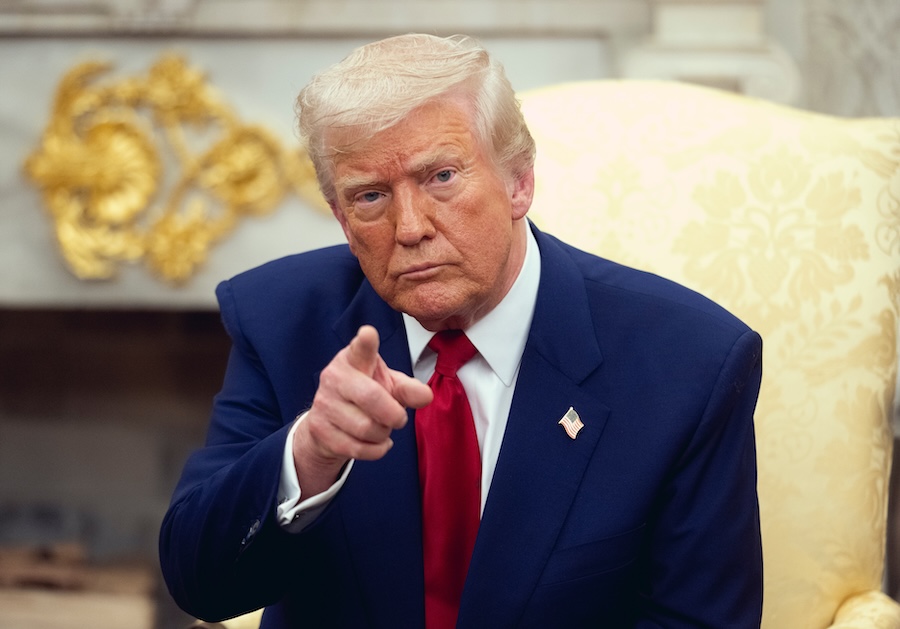
The United States launched a series of military strikes against Iranian targets on Friday after Tehran allegedly violated the recently negotiated ceasefire by attacking a commercial cargo vessel transiting the Strait of Hormuz, prompting a swift response ordered by President Donald Trump.
U.S. Central Command (CENTCOM) announced that American forces carried out strikes against Iranian missile and drone storage facilities as well as coastal radar sites on June 26. The operation came just one day after Iran allegedly launched a one-way attack drone that struck the Singapore-flagged cargo ship *M/V Ever Lovely* while it was exiting the Strait of Hormuz along the Omani coast.
According to CENTCOM, the strikes were intended as a direct response to what military officials described as an “unwarranted aggression” against commercial shipping that violated the ceasefire agreement reached earlier this week.
“The unwarranted aggression against commercial shipping by Iranian forces clearly violated the ceasefire,” CENTCOM said in a statement. “Furthermore, Iran’s dangerous behavior undermined freedom of navigation as commerce increasingly flows through the vital international trade corridor.”
The military said U.S. aircraft targeted missile and drone storage locations used by Iranian forces, along with coastal radar installations believed to support attacks on vessels operating in the region.
President Trump earlier Friday accused Iran of breaking the ceasefire after launching multiple drones toward commercial vessels traveling through one of the world’s busiest shipping lanes.
“The Islamic Republic of Iran shot at least four One Way Attack Drones at Ships transversing the Strait of Hormuz,” Trump wrote in a Truth Social post. “One of the Drones solidly hit the upper deck of a large and very expensive Cargo Carrying Ship. Damage was done, but the Ship was able to proceed on its way. We knocked down three other Drones. Obviously, this is a foolish violation of our Ceasefire Agreement.”
Trump warned that Iran’s actions could have serious consequences, though he did not specify what additional steps his administration might take if attacks continue.
The attack marked the first major breach of the ceasefire announced earlier this week following months of heightened tensions and military exchanges between the United States, Israel and Iran. While the cargo ship sustained damage after being struck, officials said it remained operational and was able to continue its voyage.
The incident has once again raised concerns over the security of the Strait of Hormuz, the narrow waterway through which roughly one-fifth of the world’s oil supply passes. Maritime traffic through the corridor remains below normal levels as several shipping companies continue delaying or rerouting vessels because of security concerns.
Iran has maintained that it has authority to regulate shipping through the strait and has reportedly turned back several foreign tankers that it claimed were using unauthorized routes. Iranian officials have instructed vessels to use shipping lanes approved by Tehran, further escalating tensions with Western governments and commercial operators.
The United Nations has also reportedly paused portions of its voluntary maritime assistance program in the region amid the renewed security concerns.
Despite the latest military confrontation, global energy markets reacted with surprising calm. Oil prices fell roughly 3 to 4 percent Friday as traders appeared to conclude that the conflict would remain contained and that exports from Gulf producers would continue uninterrupted. Analysts, however, cautioned that any additional attacks on shipping could quickly reverse that trend and send prices higher.
Diplomatic efforts to prevent a broader regional conflict also continued Friday. The United Arab Emirates reportedly held a rare high-level conversation with Iranian officials, urging Tehran to protect international shipping lanes and resolve disputes through diplomacy rather than military action.
CENTCOM said U.S. forces will continue coordinating safe passage for commercial vessels traveling through the Strait of Hormuz while maintaining a military presence in the region.
“The U.S. military remains present and vigilant to ensure all aspects of the agreement with Iran are adhered to, obeyed, and in full force and effect,” the command said.
