
Entertainment
Ark Of The Covenant Mystery Takes Shock Turn As ‘Biblical Relic’ Is Uncovered
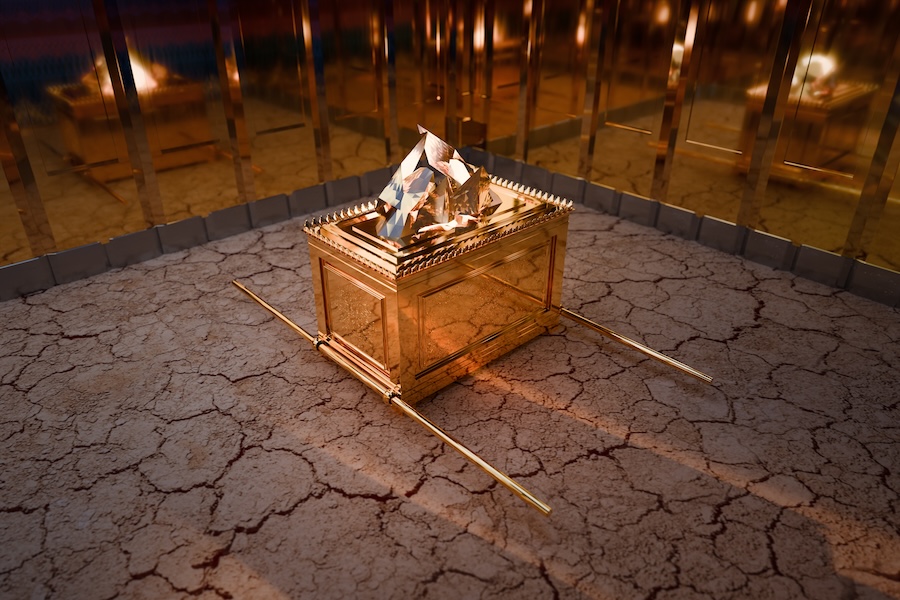
Archaeologists working at biblical Shiloh say new ruins uncovered in Israel may strengthen the case that they have found the ancient home of the Ark of the Covenant.
The team has not found the Ark itself, and researchers are not claiming they have definitively proven the site is the Tabernacle.
But the latest excavation season at Tel Shiloh has revealed new walls, worship-related artifacts and fortifications that appear to line up with parts of the biblical account.
The Ark of the Covenant is described in the Bible as a sacred, gold-covered chest that held the Ten Commandments after Moses received them.
According to scripture, the Ark was kept inside the Tabernacle, the portable sanctuary built after the Israelites’ Exodus from Egypt.
The fate of the Ark remains one of history’s greatest religious mysteries, disappearing from the biblical record before the Babylonian sack of Jerusalem in 586 B.C.
Now, archaeologists with the Associates for Biblical Research working at Tel Shiloh in the West Bank say they have uncovered more evidence tied to the ancient city where the Bible says the Tabernacle stood for more than 300 years.
The team found additional walls belonging to a massive structure that may have been part of the Tabernacle complex.
Dr. Scott Stripling, director of the Tel Shiloh excavation, said the discovery of the structure’s southern wall is helping researchers better understand the size and layout of the building.
The most significant breakthrough came with the discovery of the structure’s southern wall.
The building is oriented east to west and has proportions similar to those described for the biblical Tabernacle, according to the excavation team.
Last year, Stripling’s team announced it had uncovered a monumental Iron I period building whose dimensions appeared to align with the biblical description of the Tabernacle.
The latest findings do not prove that identification, but archaeologists said they strengthen the case.
‘The discovery of the southern wall now enables our researchers to reconstruct the full dimensions of the building and better evaluate its function and significance,’ Stripling said in a blog post on the Bible Archaeology Report.
Excavators also found objects associated with worship activity in and around the structure, including altar horns, ceramic pomegranates and murex shells.
The murex shells are especially notable because they were used to produce blue dye associated with priestly garments described in the Bible.
The new finds build on earlier discoveries at Shiloh, where researchers uncovered more than 100,000 animal bones, mostly from sheep, goats and cattle.
Many of the bones reportedly came from the right side of the animals, a detail the team says mirrors Leviticus 7, which describes portions from the right side being reserved for priestly offerings.
Shiloh holds a central place in biblical history.
The ancient city is located about 19 miles north of Jerusalem and is described in the Book of Joshua as the place where the Israelites established the Tabernacle after entering the Promised Land.
It was also where Joshua divided the land among the tribes of Israel.
Shiloh later became associated with Eli the high priest and the prophet Samuel, who was raised there.
The Bible portrays Shiloh as Israel’s first major religious and political center.
In 1 Samuel 4, the Israelites bring the Ark of the Covenant from Shiloh to the battlefield during a war with the Philistines, hoping it will guarantee victory.
Instead, the Ark is captured, and Eli’s sons, Hophni and Phinehas, are killed.
Declassified file on government’s search for the Ark of the Covenant…🧐🤔
This 1988 Project Sun Streak document records a government remote viewing session in which the target was identified as the Ark of the Covenant.The declassified file includes the evaluator’s comments,… pic.twitter.com/LZTrn5CY3R
— UFO mania (@maniaUFO) June 29, 2026
When a messenger returns to Shiloh and tells Eli that the Ark has been taken, the elderly priest falls backward from his seat near the city gate, breaks his neck and dies.
This year, excavators also uncovered additional walls tied to Shiloh’s northern fortification system.
The finds suggest the complex was built as a bent-axis gate with multiple rooms, giving researchers new insight into the city’s defenses and layout.
The discovery also adds weight to earlier suggestions by Stripling that his team may have identified the gate complex mentioned in the biblical account of Eli’s death.
In another section of the site, archaeologists uncovered three large Canaanite storage jars dating to the period before the arrival of the Israelites.
The jars contained charred remains of common food staples, including olives, wheat and lentils.
Researchers plan to conduct radiocarbon testing on the contents to establish a more precise date for the destruction layer connected to the finds.
‘These discoveries provide an important window into the earliest occupational phases of Shiloh and help us better understand the site’s history before the Israelite settlement,’ Stripling said.
Despite the excitement, archaeologists are urging caution.
The Ark of the Covenant has not been uncovered, and the monumental structure has not been conclusively identified as the Tabernacle.
Still, the discoveries are likely to fuel fresh debate among archaeologists, biblical historians and believers over whether Shiloh is finally giving up clues to one of the Bible’s most famous lost relics.
POLL: Will You Support Trump And His Candidates In The Midterms?
