
Politics
NEW: Iran Strikes Key US Ally’s Critical Infrastructure In Major Escalation
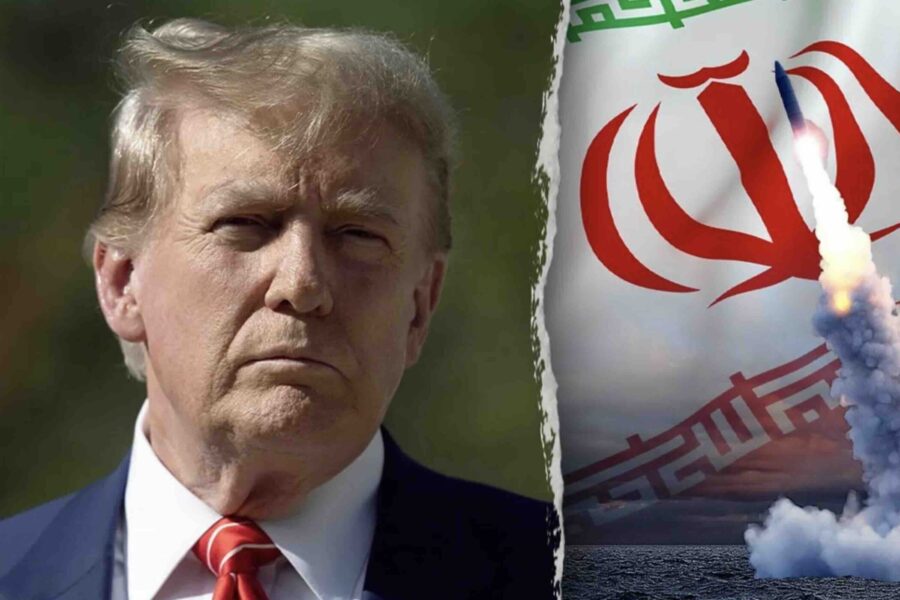
Iran launched missile strikes on critical infrastructure in Kuwait, hitting a power and desalination facility in a major escalation against one of America’s key Gulf allies.
The attack came as the U.S. completed a sixth straight day of strikes on Iran, expanding its target list to bridges and an airport while President Donald Trump signaled that power plants could be next.
The strike on Kuwait marked a dangerous turn in the war, with Tehran moving beyond military targets and toward the kind of civilian infrastructure Gulf nations rely on to survive.
In Kuwait, desalination is not a luxury.
It is how the country gets much of its drinking water.
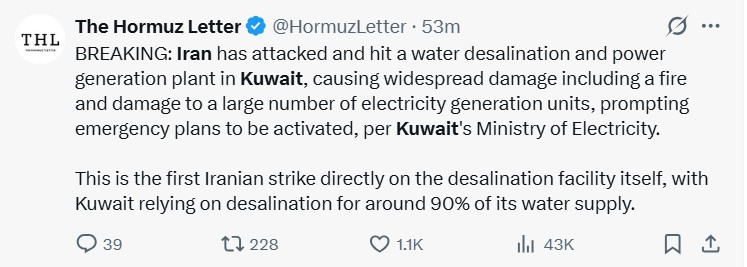
Iran’s attack reportedly sparked fires and disrupted power service, raising fresh fears that Tehran is now willing to threaten water and electricity supplies across the region.
Additional Iranian attacks targeted other U.S. allies, including Qatar, Jordan and the Kurdish population in Iraq.
Iran also claimed strikes on U.S. military bases in Bahrain, Qatar and Kuwait, as well as a radar station in Oman.
Explosions were reported in Doha.
The escalation followed the U.S. expansion of strikes inside Iran, including attacks on bridges, airport infrastructure and military-linked targets.
Iran’s Energy Ministry asked citizens to use less power after the American strikes.
U.S. forces have also redirected three commercial vessels that were trying to avoid a renewed U.S. naval blockade in the Strait of Hormuz.
The blockade is aimed at ships going to and from Iranian ports as Washington tries to stop Tehran from using the waterway as a weapon against global oil markets.
BREAKING: After the U.S. Army targeted water infrastructure in Iran with ATACMS tactical ballistic missiles launched from HIMARS systems in Kuwait, the Iranian military responded by striking Kuwait’s water desalination and power plants.
Kuwaiti authorities have now issued a… pic.twitter.com/lsvEP6JVqr
— Babak Taghvaee – The Crisis Watch (@BabakTaghvaee1) July 17, 2026
The Strait of Hormuz remains one of the world’s most important energy chokepoints, and Iran has repeatedly threatened to use it as leverage against the West.
Now the regime is showing it may be willing to hit the infrastructure of U.S. allies to raise the cost of standing with Washington.
For Kuwait, the attack exposed a frightening vulnerability shared by several Gulf nations.
Desalination plants convert seawater into drinking water for millions of people in a region with little natural freshwater.
RELATED: NEW: US-Iran Ceasefire Crumbles, War Takes Explosive Turn
Damage to even a small number of those facilities could create a national crisis.
The Gulf’s water systems are often clustered along the coast and paired with power plants, making them tempting targets in a wider conflict.
That is exactly the kind of pressure Iran appears to be testing.
Donald Trump has warned Tehran that civilian infrastructure could be targeted if the regime refuses to return to the negotiating table.
Iran also killed at least eight people in attacks on America’s Kurdish allies in Iraq, according to the president of the Kurdistan Region.
Nechirvan Barzani, president of the Kurdistan Region of Iraq, condemned the strikes as a dangerous escalation.
“Targeting the region and the resumption of violence are a serious escalation and a blatant violation of Iraq’s sovereignty,” he said in a statement.
RELATED: Oil Prices Make Major Move After Iran Hits Two US Allies
Iraqi air defenses shot down Iranian drones over Erbil, the capital of Iraqi Kurdistan, the Times of Israel reported.
Iran answered by striking the infrastructure of America’s allies.
The message from Tehran is obvious, if the regime cannot control the Strait of Hormuz, it will try to spread pain across the Gulf.
But the move also gives Trump a clearer case for hitting back harder.
Iran is no longer just harassing ships or firing at military bases.
It is targeting the power and water systems of U.S. partners.
That is not deterrence.
That is a rogue regime threatening civilians to gain leverage.
The war that began around Hormuz is now spreading into the infrastructure that keeps Gulf states running.
And with every new strike, Iran is making it harder for Washington to treat this as anything less than a direct challenge to American power and its allies.
