
Politics
REPORT: NYT Columnist Praised Bill Gates For Years Without Mentioning Epstein Connection
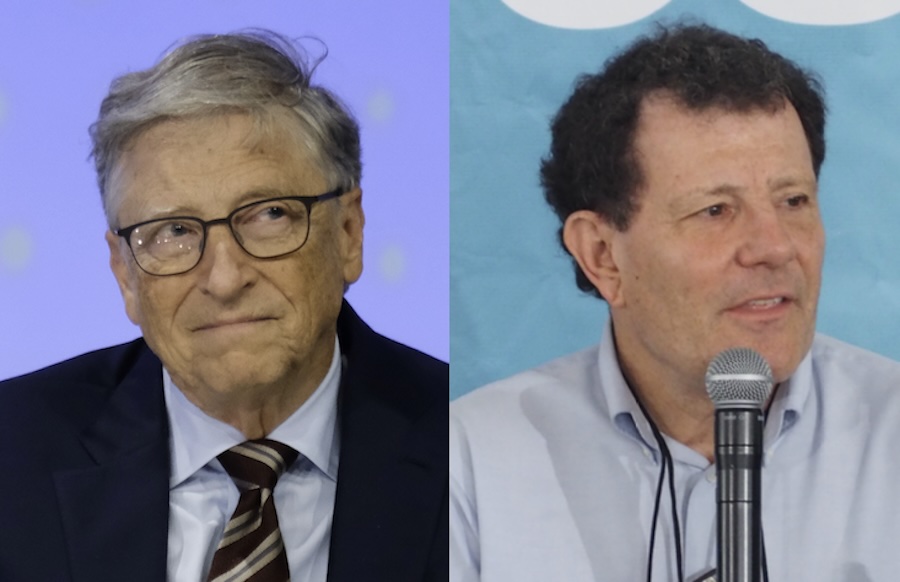
New questions are being raised about whether one of the New York Times’ most prominent opinion writers gave readers the full picture while repeatedly praising billionaire Bill Gates, even after Gates’ well-documented relationship with convicted sex offender Jeffrey Epstein had become public.
The scrutiny centers on longtime Times columnist Nicholas Kristof, whose decades-long career has included extensive reporting on human trafficking, sexual exploitation and human rights. Despite those issues being among his signature topics, critics say Kristof repeatedly highlighted Gates’ philanthropy in columns and books without acknowledging the Microsoft co-founder’s ties to Epstein.
The criticism gained renewed attention after the Washington Free Beacon reported that Kristof had praised Gates on numerous occasions while never mentioning his association with Epstein in columns discussing sex trafficking or Epstein’s victims. The report also noted that Bill and Melinda Gates each contributed $50,000 to Kristof’s unsuccessful 2022 campaign for governor of Oregon, raising additional questions about disclosure and journalistic ethics.
Those campaign contributions had already drawn attention in June, when Semafor reported that Kristof had referenced several former campaign donors in New York Times opinion columns without disclosing their financial support. According to the outlet, the Times had previously indicated that Kristof would either avoid writing about campaign contributors or disclose those relationships to readers.
After Semafor’s reporting, a New York Times spokesperson said the newspaper was reviewing the columns to determine whether editor’s notes or clarifications were appropriate.

DAVOS/SWITZERLAND, 30JAN10 – Nicholas D. Kristof, Columnist, The New York Times, USA is captured during the session ‘Redesign Your Cause’ of the Annual Meeting 2010 of the World Economic Forum in Davos, Switzerland, January 30, 2010.
Gates’ relationship with Epstein has been under scrutiny since a 2019 New York Times investigation revealed that the billionaire met with Epstein numerous times after Epstein had already pleaded guilty in Florida to soliciting prostitution from a minor. Gates has repeatedly acknowledged those meetings, calling them a “grave error in judgment,” while maintaining that the relationship was focused on philanthropic discussions and that he regrets ever associating with Epstein.
An independent review commissioned by the Gates Foundation earlier this year found that Gates and foundation representatives met with Epstein roughly 30 times between 2011 and 2014. The review concluded there was no evidence that the foundation knowingly participated in criminal activity or paid Epstein, but it also found that foundation employees had repeatedly warned about the reputational risks posed by maintaining contact with the disgraced financier.
Kristof has long been one of the country’s most recognizable voices on combating human trafficking. Through his New York Times columns and bestselling books, he has frequently urged governments, businesses and influential individuals to take stronger action against sexual exploitation around the world. That history has fueled criticism from some observers who argue Gates’ ties to Epstein should have been disclosed whenever Kristof held him up as an example of philanthropic leadership.
The Free Beacon also pointed to a February opinion column in which Kristof wrote about Epstein’s victims and criticized powerful institutions for failing to protect vulnerable women. According to the report, Gates was not mentioned despite his widely reported relationship with Epstein and the years of media attention surrounding the issue.
Whether those omissions constitute an ethical lapse remains a matter of debate. Still, the renewed attention has added to questions about transparency and disclosure standards in journalism, particularly when prominent media figures write about individuals who have also supported them financially.
