
Politics
SpaceX Rocket Slams Into The Moon
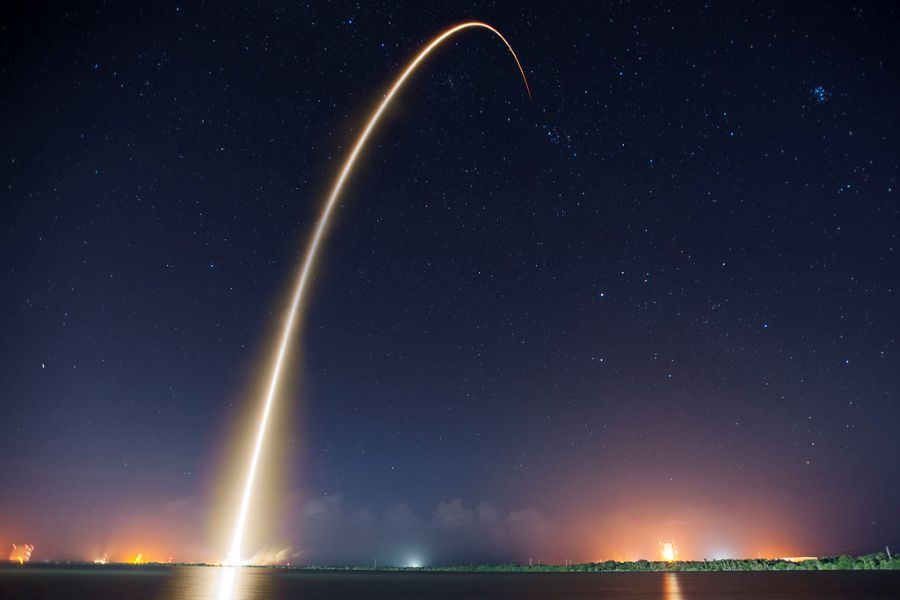
A discarded piece of a SpaceX Falcon 9 rocket slammed into the moon early Wednesday, striking near the Einstein Crater at an estimated 5,400 mph.
The abandoned upper stage was expected to hit the lunar surface at roughly 2:35 a.m. Eastern time on Aug. 5, traveling at more than seven times the speed of sound.
Scientists believe the collision carved a fresh crater into the moon’s northern side and may have kicked up a plume of lunar dust large enough to be detected from Earth.
The rocket stage could not burn up before impact because the moon has no atmosphere. NASA said the collision posed no threat to Earth.
The exact impact site had not been immediately confirmed, but researchers tracking the debris predicted it would crash close to the Einstein Crater.
Libby Jackson, head of the Science Museum in London, told Sky News that satellite images of the impact are likely to be released “in a few days” and “there’s no reason” to think the collision didn’t occur.
A telescope operator in Chile also reportedly detected changes in light near the expected time of the crash, offering another possible sign that the rocket stage struck as predicted.
Benjamin Fernando, a postdoctoral researcher at Los Alamos National Laboratory in New Mexico, previously said experts expected the collision to produce several visible effects.
The rocket would “create a flash of light” and a “plume of ejecta — dust, regolith, other stuff mixed into it,” Fernando said.
The impact gives scientists another opportunity to study how high-speed objects reshape the moon’s surface. With no wind, rain or active weather system, evidence of the collision could remain preserved for years.
NEW: A SpaceX rocket has crashed into the Moon, leaving a 100 foot crater. pic.twitter.com/rrS32GdU5O
— Valuetainment (@valuetainment) August 5, 2026
The rocket stage was left behind after a January 2025 mission that carried a lunar lander toward the moon. After completing its role in the launch, the hardware remained trapped in a long orbit around Earth.
It reportedly took approximately 26 days to complete each orbit and never dropped low enough to re-enter Earth’s atmosphere.
Instead, the spent stage continued circling until its path eventually lined up with the moon.
RELATED: Artemis II Astronauts Break Apollo 13 Record In Historic Deep Space Milestone
The Falcon 9 is SpaceX’s reusable workhorse rocket. According to the company, it stands nearly 230 feet tall and can carry about 50,000 pounds of cargo into orbit.
SpaceX says the rocket was built for the “reliable and safe transport of people and payloads into Earth orbit and beyond.”
Since its first flight in 2010, Falcon 9 rockets have launched hundreds of times from Vandenberg Space Force Base in California and Florida’s Space Coast.
The launches have carried astronauts, commercial spacecraft, military payloads and thousands of Starlink broadband satellites into orbit.
The company has dramatically reduced launch costs by landing and reusing Falcon 9’s first-stage boosters. The upper stages, however, are generally discarded after delivering their payloads.
Scientists are expected to review satellite photographs and telescope data to determine the precise location of Wednesday’s collision, the size of the new crater and whether the impact produced a measurable dust cloud.
POLL: Should Foreigners Be Banned From Buying American Farmland?
