
Politics
Disturbing Images Emerge As Drug Addicts Overtake Seattle’s $165 Million Library
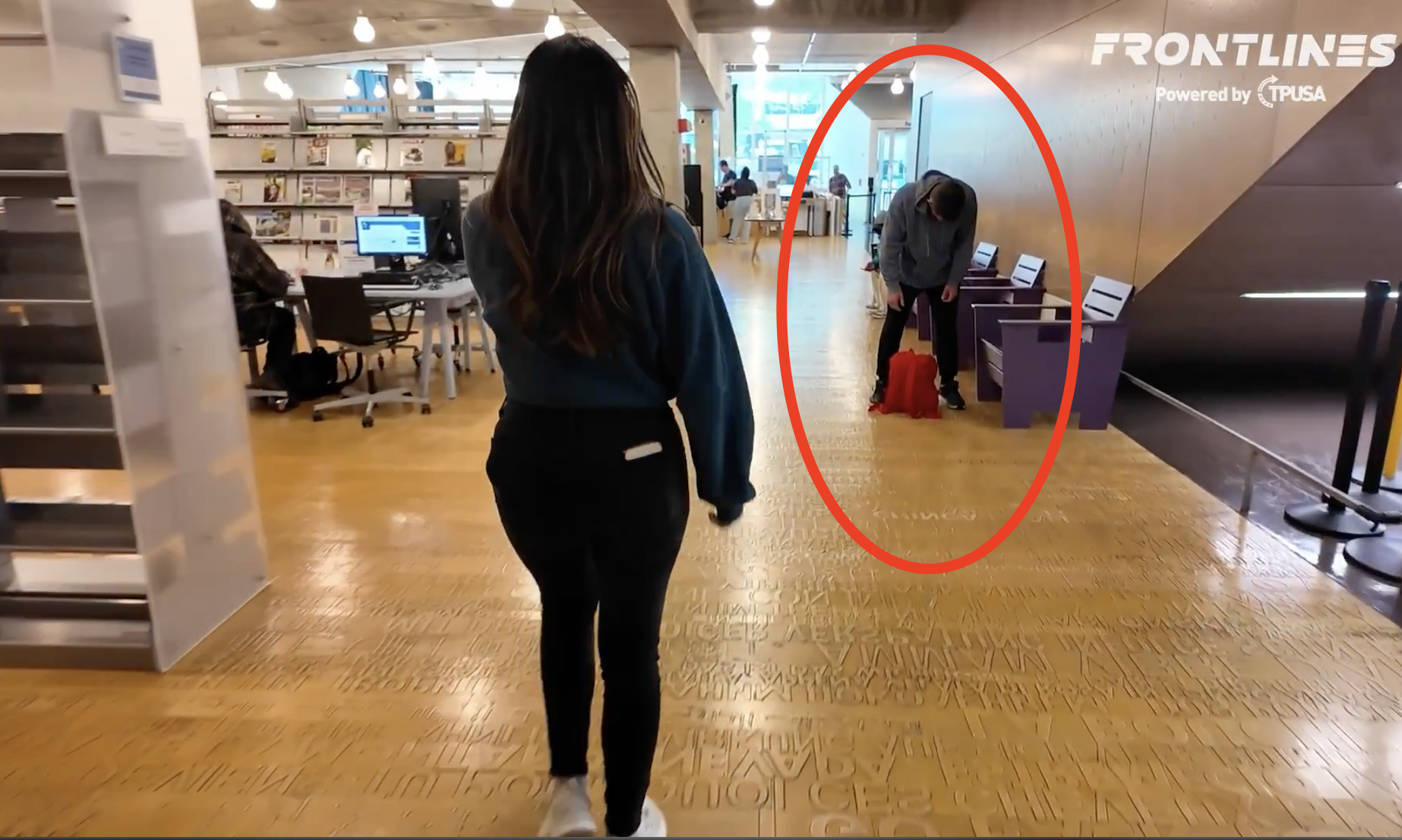
Disturbing images obtained by Savanah Hernandez of Turning Point USA’s Frontlines highlighted the extent of decay and disorder inside Seattle’s $165 million library, which has been plagued by vagrancy and open drug use.
“I visited Seattle’s $165 million dollar downtown library and it was OVERRUN with drug addicts. Not only is this library filled with adults who are high on drugs, but they also offer FREE fentanyl test strips, syringes and injectable narcan that anyone, including children, can access,” Hernandez said in a new video report released on August 6.
“Visitors have complained of ‘foul odors’, unusable restrooms and harassment by the homeless and I experienced all of this while at this location. Seattle residents just passed a tax increase to raise $480 million dollars for libraries just like this one and this is unfortunately the state that they’re in.”
The accompanying video shows Hernandez outside the library’s distinctive glass-and-steel structure before moving inside. Footage includes interior walkways lined with bookshelves, open seating areas with purple chairs and wooden floors, and individuals present in various spaces, including one person bent over near a red backpack in an area Hernandez identified in a related post as the floor containing the children’s section.
Close-up shots focus on free supplies available at the library, including vials of naloxone (labeled for injectable use), packaged syringes, and green fentanyl test strip packets arranged on a table. The video also overlays a Google review from a visitor noting foul odors and safety concerns related to transients, along with a Seattle Times excerpt discussing maintenance needs for the building’s windows.
In a prior post, Hernandez shared a photograph from inside the library showing her standing near magazine racks and seating while a person in a gray hoodie is bent forward beside a red backpack on the floor. This posture is commonly observed in individuals using fentanyl or other opioid substances.
POLL: Should Sanctuary Cities Be Banned From Federal Funding?
I visited Seattle’s $165 million dollar downtown library and it was OVERRUN with drug addicts.
Not only is this library filled with adults who are high on drugs, but they also offer FREE fentanyl test strips, syringes and injectable narcan that anyone, including children, can…
— Savanah Hernandez (@Savsays) August 6, 2026
The Seattle Central Library, located at 1000 Fourth Avenue, opened to the public on May 23, 2004. It was constructed as the centerpiece of the “Libraries for All” program, funded primarily by a $196.4 million bond measure approved by Seattle voters in November 1998. The total cost for the central library building itself was approximately $165.5 million, which included about $10 million for a temporary central library facility used during construction.
The 11-story structure spans about 363,000 square feet of interior space plus underground parking and was designed by the Office for Metropolitan Architecture in collaboration with LMN Architects. It features open platforms, a continuous book spiral, meeting rooms, and specialized areas for children and teens.
In recent months, the Seattle Public Library system has addressed drug-related activity across its branches, including the central location. Beginning in April 2025, the library system started distributing free naloxone (available as nasal spray or intramuscular injection) and fentanyl test strips at branches in partnership with Public Health – Seattle & King County and the Washington State Department of Health.
These supplies are provided without requiring identification or a library card, with the central library receiving allocations as part of monthly distributions of hundreds of kits. Library officials have described the effort as a means to combat drug overdoses.
By early 2026, air-quality sensors detecting vapor from substances such as fentanyl and methamphetamine were installed in restrooms at several branches, including Lake City, Ballard, Capitol Hill, and the International District. When sensors register elevated levels, restrooms are closed for at least 15 minutes or until air quality improves.
A library spokeswoman stated that staff members had reported feeling unwell from drug-related fumes prior to the sensors and framed the new technology as a way to help maintain a safer environment.
Hernandez’s report comes shortly after Seattle voters approved a new seven-year library levy of approximately $480 million to support operations, maintenance, security, collections, and related services across the system’s 27 locations.
POLL: Should Foreigners Be Banned From Buying American Farmland?
