
Politics
Solar Eclipse To Cross The Sky August 12: Here’s What Time To Watch
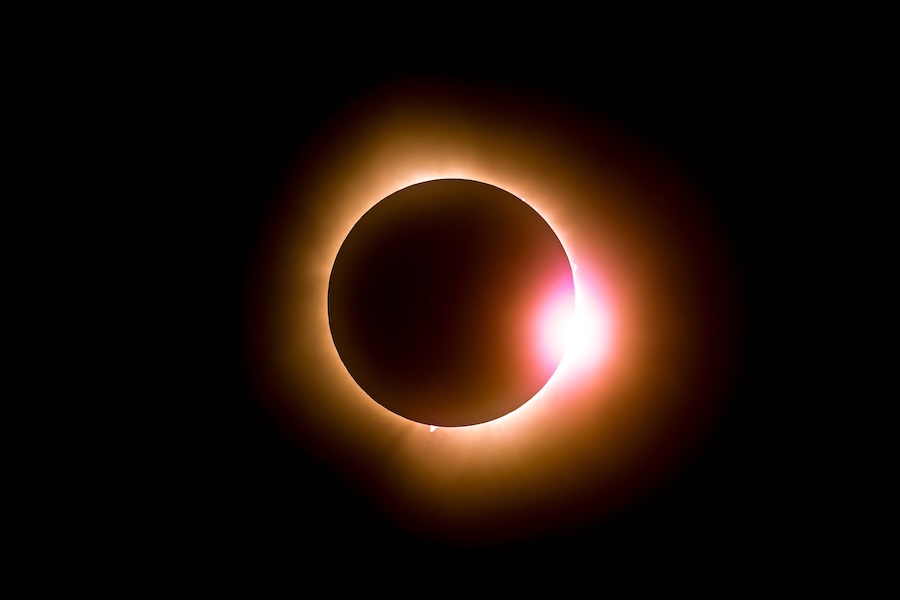
Millions of skywatchers are turning their attention upward Wednesday as a total solar eclipse sweeps across portions of the Northern Hemisphere, producing a dramatic celestial event that will completely block the sun in several countries.
The August 12 eclipse will cross Greenland, Iceland, northern Russia, the Atlantic Ocean, Spain and a small section of Portugal, according to NASA. Much larger portions of Europe, Canada and the northern United States will experience a partial eclipse rather than totality.
So what time does the eclipse happen?
The answer depends heavily on location. NASA’s live eclipse broadcast is scheduled to begin at 1:15 p.m. Eastern Time, or 10:15 a.m. Pacific Time, on Wednesday. Totality is expected to begin in Iceland at approximately 1:45 p.m. Eastern, followed by totality in Spain beginning around 2:28 p.m. Eastern.
That means viewers in the United States who want to follow the main event online should tune in during the late morning or early afternoon, depending on their time zone. NASA is providing live views from locations along the eclipse path along with commentary and interviews with scientists.
A total solar eclipse will be visible from mainland Western Europe on August 12 for the first time since 1999.
Where to see the total solar eclipse and when to catch the next one: https://t.co/NUjaaA7SpN pic.twitter.com/iTfbZoKcZs
— Reuters (@Reuters) August 12, 2026
The timing is particularly unusual for observers in Spain. The eclipse arrives there late in the day, with the sun already approaching the western horizon. NASA says the sun will not become completely eclipsed in Spain and the northwestern tip of Portugal until the late evening, shortly before sunset.
Iceland will experience totality earlier. The country has attracted eclipse watchers from around the world for an event that has been decades, and in some locations centuries, in the making. As many as 80,000 visitors were expected in Iceland for the eclipse, while millions were preparing to watch from Spain.
The period of complete darkness will be relatively brief. NASA says totality will last less than two minutes for most people positioned inside the path. Locations near the center of the eclipse path in Greenland, northern Russia and the North Atlantic could experience totality for slightly longer, though still less than two and a half minutes.
Total solar eclipse today! The Moon blocking the Sun.
Late afternoon for folks in Greenland & Iceland, sunset hour for Spain (the yellow band on the map).
Partial eclipse visible in N America, Europe and Africa.
Details: https://t.co/8ft0WzH8MP
Astronaut reminder – don’t look… pic.twitter.com/fRiYza1k0H— Chris Hadfield (@Cmdr_Hadfield) August 12, 2026
Americans should also know that this is not another coast-to-coast U.S. eclipse like the one witnessed in April 2024.
Only portions of the United States will see Wednesday’s eclipse, and those areas will experience a partial eclipse. NASA says visibility stretches across parts of the northern U.S., from Alaska to North Carolina. In those areas, observers will see the moon cover only a portion of the sun. The partial eclipse begins around midday in the northern contiguous United States and continues into the midafternoon farther east.
Eye protection remains critical for anyone attempting to watch the eclipse directly. NASA warns that eclipse glasses or another approved solar viewer must be used during all partial phases. Ordinary sunglasses are not sufficient protection. Only observers experiencing totality can safely remove their eclipse glasses during the brief period when the moon completely covers the sun.
For Americans outside the eclipse’s viewing area, the easiest way to catch the spectacle will be online. NASA’s coverage begins at 1:15 p.m. ET / 10:15 a.m. PT, with Iceland reaching totality roughly 30 minutes later and Spain following at approximately 2:28 p.m. ET / 11:28 a.m. PT.
