
Politics
Catastrophic Flash Flood Devastates Nepal-Tibet Border, Hundreds Missing
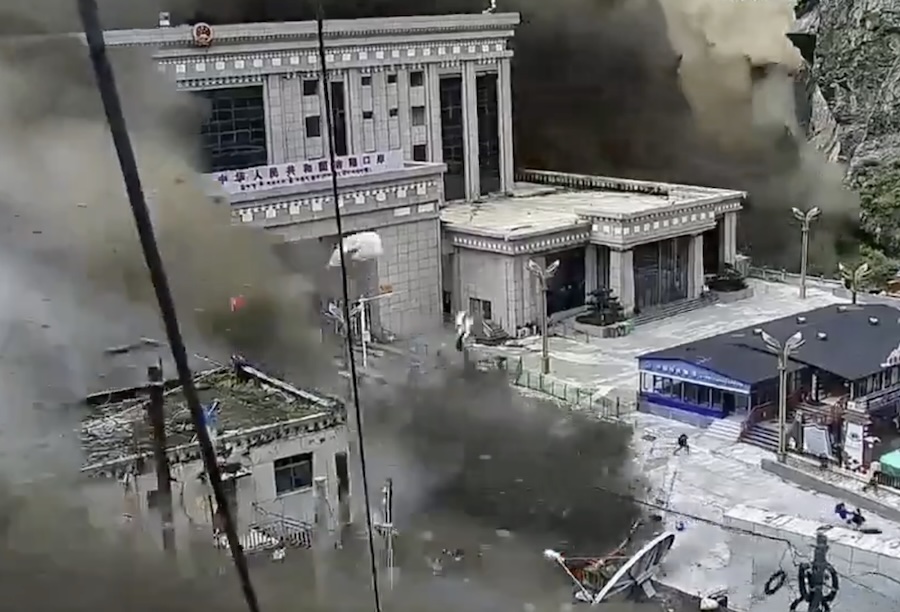
A catastrophic flash flood tore through the mountainous border region between Nepal and Tibet on Wednesday, leaving scores dead and hundreds missing as rescue crews raced to reach communities buried beneath mud, rocks and debris.
The disaster struck Nepal’s Rasuwa district near the Chinese border after a massive surge of water and debris rushed into the river system and swept downstream. Nepalese officials said at least 95 bodies had been recovered by Wednesday, while hundreds of tourists and local residents remained unaccounted for.
Chinese authorities separately reported at least three deaths and hundreds missing in Tibet. Early figures from the Nepal Tourism Board listed 384 travelers as missing, including 291 foreign nationals and 93 Nepalis.
As officials gathered more information from tour operators and communities cut off by the disaster, the number grew. Nepal’s prime minister’s office later reported 484 tourists missing, including 391 foreigners and 93 Nepalis.
The missing foreigners include travelers from India, the United States and the United Kingdom. The region is a popular route for tourists and Hindu pilgrims traveling toward Kailash Manasarovar in Tibet.
BREAKING: New footage shows absolutely horrifying scenes along the China-Nepal border amid devastating flash floods, hundreds missing, many feared dead pic.twitter.com/hwXTz8IzjP
— Insider Paper (@TheInsiderPaper) August 26, 2026
The disaster appears to have started roughly 12 miles northeast of the Rasuwagadhi border crossing. An initial analysis of satellite imagery by Nepal’s National Disaster Risk Reduction and Management Authority indicated that a massive collapse of ice and rock triggered a debris-filled flood in the Lhende River.
Officials are still investigating exactly what caused the collapse. A magnitude 4.4 earthquake was detected near the region shortly before the disaster, raising questions about whether the quake may have triggered an avalanche or glacier collapse.
The resulting torrent sent an enormous wall of muddy water, rocks and debris rushing through the mountainous region.
🇳🇵| URGENTE: Video muestra las inundaciones en Nepal, con más de 1.000 personas reportadas como desaparecidas según las autoridades locales. pic.twitter.com/mWaRTh89Mw
— Alerta News 24 (@AlertaNews24) August 26, 2026
Videos from the disaster zone showed buildings being swallowed by floodwaters, vehicles carried away and bridges collapsing under the force of the water. Entire settlements located close to the river were reportedly destroyed.
The flooding also severely complicated rescue operations. Helicopters were initially unable to land in some of the hardest-hit areas, including Syapru Besi and Timure, because of dangerous water levels and the mountainous terrain. Destroyed roads, communications infrastructure and power lines created additional obstacles for emergency crews.
Nepal has asked neighboring India and China for assistance with the massive rescue operation.
यो भिडियो हेर्दा जिउनै सिरिङ्ग हुन्छ। 😓 pic.twitter.com/NY2cG4g3Qh
— 𑐩𑐵 𑐟𑐺 𑐎𑐵 ( मातृकालिकोटे ) (@JoMatrika) August 26, 2026
Across the border, Chinese authorities reported extensive destruction around Gyirong County. A mudslide struck the Gyirong border crossing, severing roads, electricity and communications. Chinese President Xi Jinping ordered an intensified search for missing residents and called on authorities to watch for additional disasters.
The destruction also damaged Nepal’s critical energy infrastructure. Hydropower projects were hit by the flood, disrupting hundreds of megawatts of electricity generation.
Officials farther downstream were taking precautions as the enormous volume of water moved through the region. Authorities in northern India issued flood warnings, while thousands of residents in Bihar were evacuated from vulnerable areas.
Rescue crews continued searching Wednesday as officials warned the casualty figures could rise significantly. With hundreds still unaccounted for and entire communities difficult to reach, the full scale of the Himalayan disaster remained unclear.
