
Politics
BREAKING: Lindsay Clancy Trial Ends In Dramatic Fashion: ‘With A Heavy Heart…’
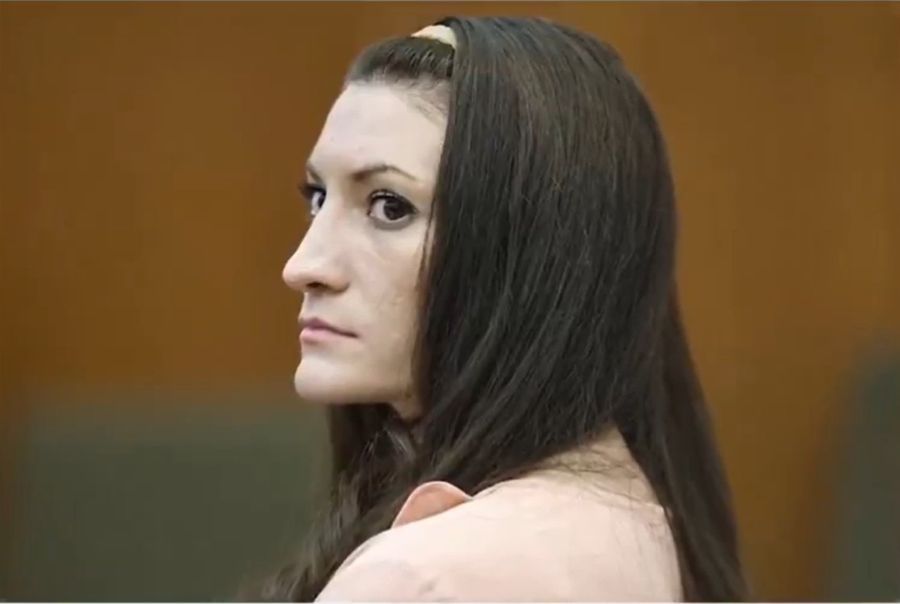
Editor’s note: Judge Sullivan has delayed his mistrial decision as the defense issues an emergency plea to the Supreme Court. See the latest here.
The closely watched murder trial of Lindsay Clancy ended in a mistrial Friday after jurors failed to reach a unanimous decision on whether the Massachusetts mother was criminally responsible for killing her three young children.
The 12-member jury, made up of nine women and three men, told Plymouth Superior Court Judge William Sullivan they remained hopelessly divided after seven days of deliberations.
With no verdict following nearly five weeks of testimony from roughly 85 witnesses, Sullivan declared a mistrial.
BREAKING UPDATE: Judge DELAYS Mistrial In Clancy Case
Clancy, 36, has admitted killing her children, Cora, 5, Dawson, 3, and Callan, 8 months, inside the family’s Duxbury home on Jan. 24, 2023.
The central question at trial was whether she was criminally responsible when she strangled the children with exercise bands before attempting to take her own life.
Jurors first reported being deadlocked on the fourth day of deliberations after nearly 18 hours, but Sullivan instructed them to keep trying.
The following day, after close to 28 hours of deliberations, the panel again told the judge it could not reach a unanimous decision.
Sullivan then issued a Tuey-Rodriguez instruction, a last-resort charge used in Massachusetts to encourage a deadlocked jury to reconsider the evidence and continue deliberating.
The drama intensified Thursday when defense attorney Kevin Reddington revealed that the foreperson had accused one juror of refusing to follow the law on reasonable doubt.
🚨 BREAKING: LINDSAY CLANCY JURY UNABLE TO REACH A VERDICT. PROSECUTORS RECOMMEND A MISTRIAL
Unable to reach a unanimous verdict.
THE LONE JUROR HELD OUT!
He refused to cave. He refused to let Clancy off!
If there’s a mistrial, prosecution can try again with a new jury pic.twitter.com/4uduelDvec
— Eric Daugherty (@EricLDaugh) September 4, 2026
Reddington sought to have the juror removed, but Sullivan rejected the request.
On Friday morning, Reddington again pushed for the holdout juror, whom he identified as a man, to be questioned individually and accused him of lying. Sullivan again refused and sent the jury back to deliberate.
Those efforts ultimately failed to produce a unanimous verdict.
The mistrial does not mean Clancy will be released. She will remain in custody at Tewksbury Hospital while the Plymouth County District Attorney’s Office decides how to proceed.
Prosecutors could retry Clancy, seek a plea agreement or ultimately dismiss the charges.
RELATED: NEW: Tensions Erupt In Clancy Trial As Judge Snaps Back At Attorney’s Shocking Accusation
Reddington has previously suggested that Plymouth County District Attorney Timothy Cruz could reduce the charges to second-degree murder if the case is tried again.
Such a move could allow Clancy to choose a bench trial before a judge rather than another jury, an option Reddington said would not be available while she faces first-degree murder charges.
The prosecution and defense spent weeks presenting sharply different accounts of Clancy’s mental state on the day her children were killed.
Reddington argued that Clancy was suffering from postpartum psychosis, worsened by a long list of psychiatric medications, and hallucinated a man’s voice ordering her to kill the children and herself.
Prosecutors countered that Clancy understood exactly what she was doing and deliberately created an opportunity to be alone with the children by sending her then-husband, Patrick Clancy, out to pick up medication and takeout.
During opening statements, Plymouth County prosecutor Shanan Buckingham painted the killings as calculated rather than psychotic.
“Lindsay made a calculated decision. She was a woman who no longer liked the life she thought she wanted. It was getting harder and harder for her to control and when she saw the opportunity to escape, she made the selfish choice to take it,” Buckingham said during opening statements.
“She chose to manipulate her providers, seeking out a quick and easy fix when she was feeling depressed and anxious. And when she didn’t get what she expected, she chose the alternate route.”
Eventually, “She made a choice, a deliberate and intentional decision, that she did not want to try anymore. And because no one could take care of her kids the way she wanted them to, she had to take them with her too,” Buckingham told jurors.
The defense presented a far different picture.
Renowned psychiatrist Dr. Phillip Resnick testified that Clancy was experiencing a command hallucination and could not be held criminally responsible.
“It was almost like she was a puppet and someone was pulling the strings,” he said.
Resnick also said Clancy had a “distorted” belief that she was doing the children “a favor” by killing them before taking her own life.
Prosecution experts rejected that conclusion.
RELATED: JUST IN: Lindsay Clancy Trial Nears Conclusion As Jury Sends Fourth Note To Judge
Forensic psychiatrist Dr. Gregory Saathoff testified that there were “inconsistencies” in Clancy’s account and described her behavior during the killings as “methodical, quite controlled and organized.”
Jurors also heard deeply emotional testimony from Patrick Clancy, who described his former wife’s deteriorating mental health in the months before the killings.
He testified that she sought psychiatric help, called a suicide hotline twice, spent five days in a mental health facility and visited two perinatal clinics, but still “kept getting worse and worse.”
The jury heard the harrowing 911 call Patrick made after returning home and discovering what had happened.
“She killed the kids,” the father could be heard screaming during the 911 call played for jurors.
Clancy, who is paralyzed from the waist down after jumping from a second-story window following the killings, attended the trial in a wheelchair and was frequently seen crying during emotional testimony.
Had jurors unanimously convicted her of first-degree murder, Clancy would have faced mandatory life in prison without the possibility of parole.
A unanimous finding that she was not guilty by reason of lack of criminal responsibility would have kept her committed to a state psychiatric facility, with any future release dependent on whether doctors determined she no longer posed a danger.
Instead, after weeks of testimony, days of deadlock and a bitter fight over a lone juror, the first trial ended without either side getting a verdict.
The next move now belongs to prosecutors, who must decide whether to put one of Massachusetts’ most divisive murder cases before another jury.
POLL: Should The Ten Commandments Be Allowed In Every Public School?
