
Politics
Oil Prices Take Shocking Turn
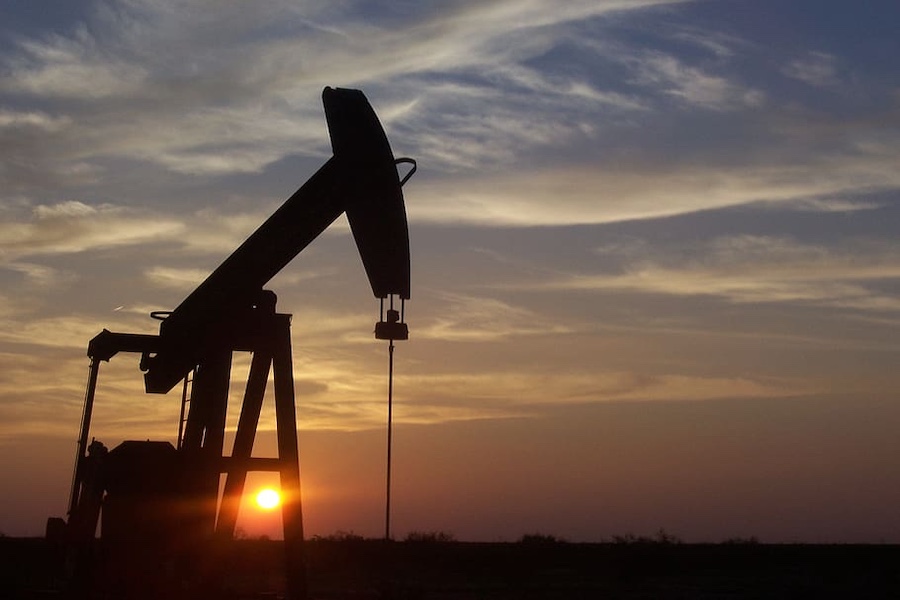
Oil prices surged past $100 a barrel Wednesday for the first time since July as escalating attacks on tankers and energy facilities across the Middle East raised fresh fears of a deeper global supply crunch.
Brent crude, the international benchmark, jumped nearly 3% to $100.72 a barrel in early trading. U.S. benchmark crude rose 2.4% to $95.25.
The latest oil spike quickly hit American drivers.
The national average for regular gasoline jumped 7 cents overnight to $4.22 a gallon, according to AAA. That puts prices more than $1 above where they stood at the same point last year.
Diesel has climbed even higher. Prices hit an all-time high Friday before continuing to rise, reaching an average of $5.94 a gallon overnight Wednesday. That was another 9 cents higher than Friday.
Those costs extend well beyond the gas pump. Diesel is heavily used in shipping and production, meaning rising prices can quickly increase costs throughout the economy.
Jet fuel has also become increasingly expensive, prompting U.S. and international airlines to cut flights while raising fares and fees.
The latest jolt to energy markets followed another dangerous round of fighting in the Middle East.
U.S. Central Command said American forces destroyed five Iranian crude oil tankers Tuesday after Iran’s Islamic Revolutionary Guard Corps twice targeted a U.S. Navy warship with ballistic missiles over the previous two days.
The American warship evaded the attacks and no U.S. personnel were injured. U.S. forces directed the crews of the five tankers to abandon the vessels before they were struck.
At the same time, Iran-backed Houthi rebels launched attacks on Saudi Arabia that hit energy infrastructure, further threatening oil supplies.
Oil markets have been on edge since Israel and the United States went to war with Iran more than six months ago. The conflict has severely disrupted shipping through the Strait of Hormuz, the critical waterway that handled roughly one-fifth of the world’s oil supply before the war.
That disruption has sent crude prices on a wild ride.
Brent traded between roughly $70 and $100 a barrel for much of March, April and May. Prices swung between $72 and $102 in July as markets reacted to changing prospects for an agreement between Washington and Tehran that could allow stranded tankers to safely move oil out of the Persian Gulf.
POLL: Will You Support Trump And His Candidates In The Midterms?
Those hopes have faded.
“In our view, reaching a durable deal before the U.S. midterm elections is increasingly unlikely, and it could remain elusive even beyond that,” Bank of America analysts said in a Tuesday research note.
Bank of America raised its oil price forecast for the second half of the year to $83 a barrel “in light of more persistent disruptions to Hormuz,” although analysts still expect shipping through the strait to gradually increase.
The risks are considerably higher if that recovery fails to materialize.
Bank of America analysts projected that continued attacks restricting traffic could send oil to between $95 and $120 a barrel. Significant damage to major energy infrastructure could trigger temporary spikes as high as $150.
Efforts to reach even a preliminary agreement between the United States and Iran have stalled over control of the Strait of Hormuz.
Tehran maintains that it has the right to impose conditions and collect fees from vessels traveling through waters off its coast. Washington wants passage to remain free.
RELATED: Iran’s Assault Against US Military Backfires In Humiliating Fashion
The U.S. has also imposed a blockade on Iranian ports, with U.S. Central Command saying this week that it had redirected dozens of commercial vessels accused of attempting to violate it.
The situation has been further complicated by intensified attacks from Yemen’s Houthis, who have targeted an alternative shipping route that Saudi Arabia has increasingly relied on while traffic through Hormuz remains severely disrupted.
The result is mounting pressure on an already strained global energy system.
Refinery outages in Russia, reduced refining activity elsewhere and falling fuel inventories have contributed to sharp increases in gasoline and diesel prices around the world, according to Bank of America.
Americans have so far been somewhat better insulated from the economic fallout than consumers in several other countries, but the rapidly rising cost of gasoline threatens to bring the crisis closer to home.
And the timing could hardly be more politically sensitive.
With the U.S. midterm elections just eight weeks away, another sustained surge in oil and gasoline prices could become a major pocketbook issue for voters already watching energy costs climb.
POLL: Will You Support Trump And His Candidates In The Midterms?
