
Politics
Rural Alaskans Push Back On Murkowski’s SAVE America Act Warning
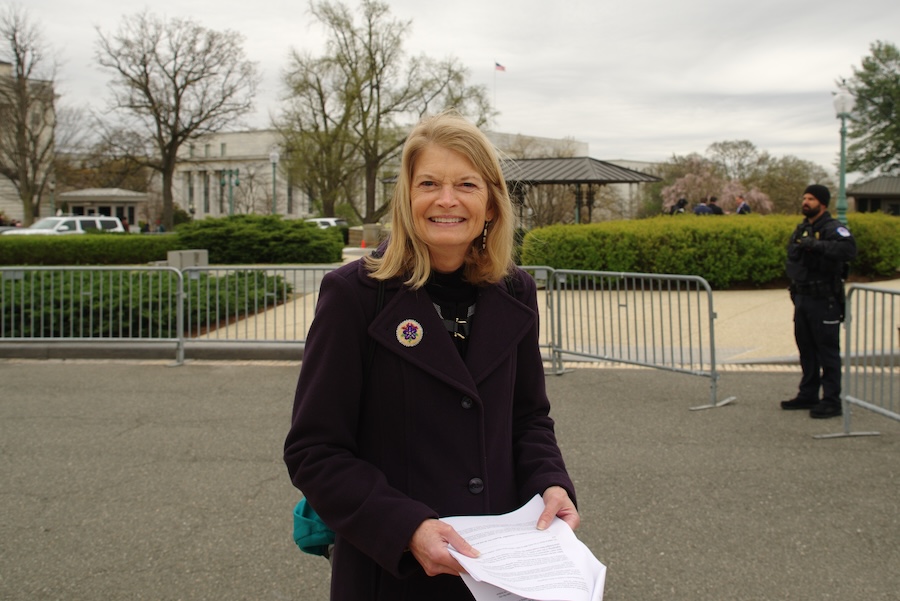
Alaska Sen. Lisa Murkowski is facing criticism from residents of a remote Native village after she cited the challenges facing rural voters while opposing President Donald Trump’s SAVE America Act.
A report published by Frontlines TPUSA focused on Savoonga, a village of fewer than 900 people on St. Lawrence Island. The community is closer to Russia than mainland Alaska and can only be reached regularly by air.
Murkowski has argued that the legislation’s identification and citizenship requirements could make voting more difficult for Alaskans living in isolated communities. Residents may be forced to take expensive flights to larger cities to obtain the necessary documents, according to the senator’s concerns.
Reporters traveled to Savoonga during Alaska’s primary election to ask residents whether the proposal would prevent them from voting. While locals acknowledged the serious logistical and financial difficulties involved, several suggested that government officials could bring identification services directly to their community.
“Everybody here that’s voting has registration cards to vote,” one resident said. “So even if the Save America Act passed, it wouldn’t really impact Savoonga. I don’t think it would really impact anybody.”
Village official Ben Pungowiyi agreed that flying elsewhere to secure documentation would be a financial burden. However, he argued that identification cards could be processed through the mail or delivered to residents without requiring them to leave the island.
“You know, I get my driver’s license through the mail,” he said. “That’s simple.”
EXCLUSIVE: Alaska Senator Lisa Murkowski is facing mounting criticism from rural villagers who accuse her of using them as political pawns.
Murkowski claims they would struggle to vote if President Trump’s Save America Act passes.
So we went straight to these remote areas to… pic.twitter.com/WgM4DMYZdu
— FRONTLINES TPUSA (@FrontlinesTPUSA) August 27, 2026
Savoonga Police Chief Michael Wongittilin also supported an alternative proposed during the visit: a traveling Department of Motor Vehicles office. Such a program could allow residents to obtain identification without paying hundreds of dollars for airfare.
“That’s a great solution,” Wongittilin said when asked about bringing a temporary DMV office to the village.
Murkowski’s office declined the outlet’s request for an on-camera interview but provided a statement disputing the suggestion that the senator had ignored those options.
“Flying in election officials or DMV employees or even mailing new voting documentation to rural communities are terrific suggestions,” the statement read, adding that Murkowski had offered similar proposals through amendments and negotiations. Her office claimed those suggestions were dismissed by supporters of the legislation, though it did not publicly identify the lawmakers involved.
The SAVE America Act would require documentary proof of citizenship when registering for federal elections while establishing identification rules for voting. The House passed the legislation in February by a 218-213 vote, with one Democrat joining Republicans. The measure has since encountered resistance in the Senate, where supporters have struggled to overcome the chamber’s 60-vote threshold. Reuters reported that Murkowski remained among the Republican holdouts.
The White House argues the bill would strengthen election security and ensure that only American citizens participate in federal elections. Opponents contend its documentation provisions could create new obstacles for eligible voters, particularly those living far from government offices.
Residents interviewed in Savoonga indicated that their most pressing concerns were closer to home. They cited expensive groceries, limited transportation, deteriorating infrastructure and inadequate public services.
Several also said they wanted elected officials to visit the village and listen to residents before using their circumstances in the national debate over election law.
